"The center, jointly maintained and operated by both sides, is aimed at helping Laos strengthen the training of its air force pilots," the China’s Ministry of Defense said.
Ban Keun Airport: new airfield and aviation academy
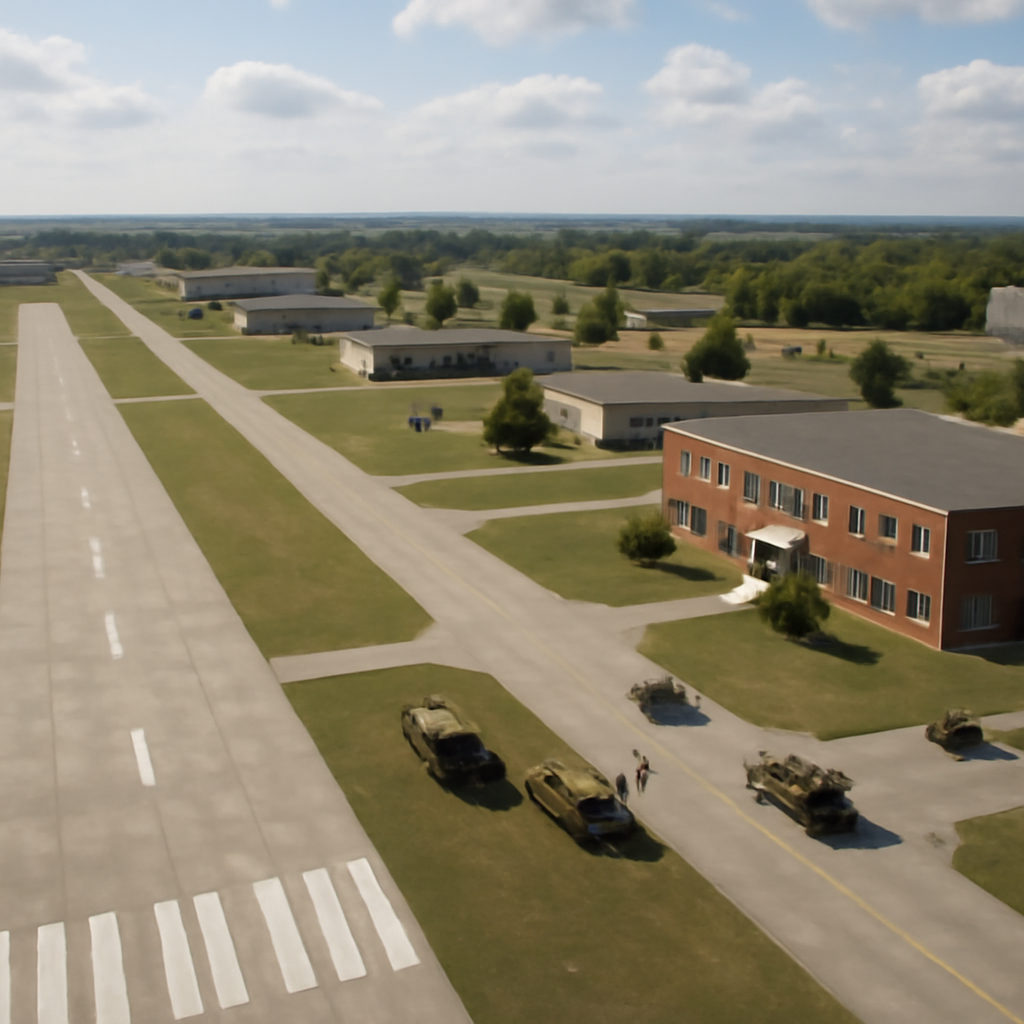
This week China and Laos inaugurated the China-Laos Military Joint Support and Training Center at Ban Keun Airport, located near the Nam Ngum River about 50 kilometers north of Vientiane. The site also includes a China-Laos Friendship Aviation Academy, and satellite imagery shows an extensive new airfield: a large paved runway, a parallel taxiway, an apron and a number of new buildings. According to Reuters, work on the new airfield began in late 2025 and was ongoing as of early September.
China’s stated purposes and legal framing
In its statement, China’s Ministry of Defense framed the center as a bilateral training and logistics facility “jointly maintained and operated by both sides.” The ministry said the project reflects “mutual respect and equal consultation between China and Laos,” and that it “complies with both countries’ domestic laws, relevant international law and common practice.” The statement added that the facility is “not directed against any third party and contributes to enhancing practical military cooperation as well as promoting regional peace and stability.” The ministry offered no public details about specific personnel or equipment that will be based at Ban Keun.

Audit-ready is a season. It shouldn't be.
Evidence in spreadsheets, controls drifting between audits, frameworks multiplying on flat headcount. Nubivance runs continuous compliance on Rapid7 Cyber GRC - SOC 2, HIPAA, ISO 27001, PCI, CMMC.
End the scrambleDjibouti, Ream and the pattern of overseas PLA facilities
The Ban Keun facility joins a small but growing set of overseas facilities associated with the People’s Liberation Army. The PLA opened its first official overseas base in Djibouti in 2017, and Beijing funded a major refurbishment at Cambodia’s Ream Naval Base that was officially inaugurated by Prime Minister Hun Manet in April 2025. Ream’s refurbishments include a 300‑meter-long deep-water pier, a 5,000‑ton dry dock and a 1,000‑ton slipway. Observers have noted that the new Ban Keun complex complements the facility at Ream by covering inland airspace in mainland Indochina while Ream addresses maritime directions in the Gulf of Thailand.
Analysts’ reactions and regional concern
Commentators quoted in reporting drew direct comparisons between Ban Keun and existing PLA footprints. Collin Koh of the S. Rajaratnam School of International Studies in Singapore wrote on X that, unlike Ream, the Laos site is “more ostensibly similar to the one in Djibouti,” and suggested it “may not be wrong to conclude this is the first full‑fledged PLA overseas base in Southeast Asia.” A Chinese security analyst, speaking to the Global Times, described Ban Keun as a way to provide the Lao People’s Liberation Army Air Force with a “systematic training system for pilots, maintenance crew and flight personnel,” reducing Laos’ reliance on overseas training and deepening “practical exchanges” in talent training, joint exercises and equipment support.
What this means for Laos, Vietnam, and China
- Laos: The government and military gain a domestic training and logistics hub. The Ministry of Defense says the center is aimed at strengthening Lao air force pilot training; the Global Times analyst framed it as moving from equipment assistance toward long‑term integrated cooperation.
- Vietnam: Nguyen Khac Giang, a visiting fellow at ISEAS‑Yusof Ishak Institute, told Bloomberg that Vietnam could have “serious grounds for concern” if Ban Keun becomes a foothold for a more permanent PLA presence. He said such developments could give Beijing greater leverage over strategic access routes around Vietnam and affect Vietnam’s ability to maneuver “in time of crisis.” Vietnam had not officially commented on the opening as of the reporting.
- China: Beijing gains an expanded regional logistics and training footprint that, together with facilities such as Ream and Djibouti, broadens its operational reach—particularly when paired with strengthened bilateral defense mechanisms. In June, Lao President Thongloun Sisoulith and Chinese President Xi Jinping agreed to enhance defense cooperation, and Xi proposed a “3+3” strategic dialogue involving foreign, defense and public security ministers as an avenue for deeper law enforcement and security cooperation. The two countries also concluded “Peace Train 2026,” a 16‑day joint exercise focused on “humanitarian assistance and military medical services.”
The Ban Keun complex sits on land once occupied by Lima Site 44, an airstrip used during the Vietnam War by the U.S. military and the CIA; satellite imagery makes clear the new facility expands far beyond that narrow, red‑earthed strip. Taken together with Ream, Ban Keun alters the balance of military infrastructure on both inland and maritime approaches in the Indochina Peninsula—a fact analysts cite when warning that “much depends on how the facility is used.”
For now, the Chinese Ministry of Defense emphasizes legal compliance and non‑directed intent, Laos highlights training benefits, and analysts flag the strategic implications for neighboring capitals. The next concrete signals will be the scale and nature of personnel rotations, the types of training conducted at the China‑Laos Friendship Aviation Academy, and whether Vietnam or other regional actors change force posture or diplomatic approaches in response.
Read the original reporting: https://thediplomat.com/2026/10/chinas-military-open-new-logistics-and-training-facility-in-laos/