"Delivering reliable power to remote and contested locations remains one of the military’s most persistent operational challenges," Christopher DePuma, combat power portfolio lead at OECIF, said in the announcement.
Overview Energy's homing beacon: what the Pentagon contracted
Overview Energy, a Virginia-based startup, has been awarded a contract by the Pentagon’s Operational Energy Capability Improvement Fund (OECIF) to design, build and test a homing beacon for a satellite-based solar energy system, the company said in a Sept. 30 announcement. The system converts sunlight into near-infrared light that Overview would use to transmit power to terrestrial receiver sites.
The company’s announcement did not disclose the contract’s dollar value or the projected date of the on-orbit experiment. A company spokesperson told Breaking Defense that the demonstration is planned for early next year but declined to provide a contract value, citing customer constraints on releasing that information.
How the homing beacon is meant to work — and why security is central
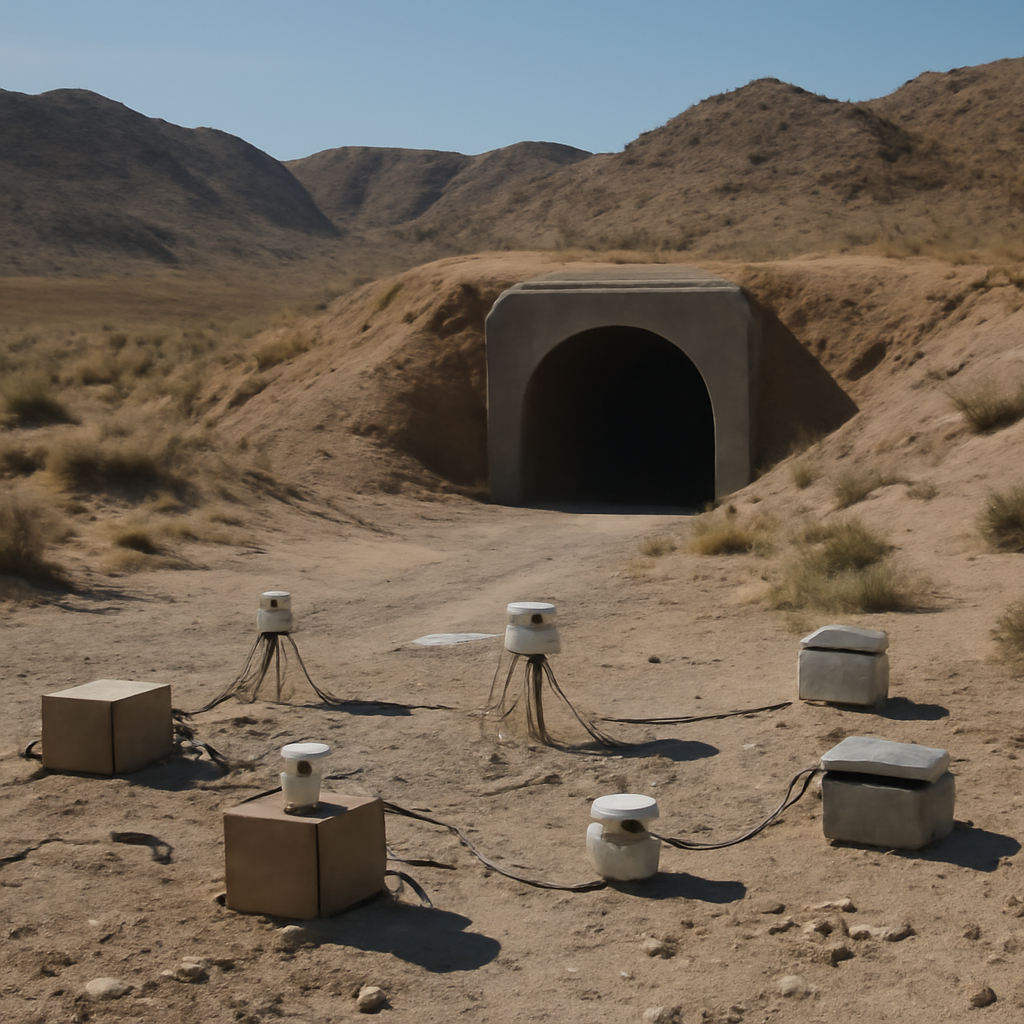
Overview’s description of the beacon is specific: ground crews will install the beacon at solar receiver sites, enabling Overview satellites to locate the site, lock on, and beam power with high precision. The company said the system requires an active, authenticated beacon before a satellite transmits energy, a safeguard the announcement described as preventing signal spoofing and hijacking.
That emphasis on authentication is notable in the announcement’s wording: the beacon is presented not just as a navigation aid but as an operational gatekeeper that conditions the transmission of energy on a validated, active signal at the receiver site.

The cyber insurance questionnaire just landed. Now what?
SOC 2, HIPAA, insurance renewals - someone has to own security strategy. Nubivance provides fractional CISO leadership without the full-time salary.
Get a security leadOECIF’s stated mission and the Defence Department’s interest
The OECIF contract is part of a recent uptick in Defense Department research programs on space-based solar power after decades of intermittent effort, the announcement said. A Pentagon fact sheet from the Office of the Assistant Secretary of Defense for Energy Resilience and Optimization describes OECIF as a "joint operational energy investment program" aimed at "pre-commercialization" technology.
The fact sheet says OECIF guides and matures "advanced, first-of-a-kind operational energy technologies across warfighting platforms and domains," framing this award as an example of that pre-commercialization focus. OECIF’s stated goal in the announcement is to bring resilient energy safely to the warfighter by advancing key enabling technologies.
Katalyst Space, microwaves, and parallel DoD activity
The Overview award is not the only recent OECIF contract for space-based solar power. On Sept. 21, Katalyst Space announced it had been selected by OECIF to develop and launch a robotic spacecraft that will assemble a large-format power beaming system on orbit and transmit power back to Earth. Katalyst’s program, called Advanced Scalable Growth Architecture for Robotic Deployment (ASGARD), uses microwaves rather than near-infrared light to transmit energy.
Katalyst said the microwaves will be generated on board by conversion tiles developed by the Naval Research Laboratory. Like Overview’s announcement, Katalyst did not disclose the contract’s value or the planned date of the demonstration. Katalyst did not respond to a request for comment, and the Pentagon’s Office of Public Affairs did not respond to a request for comment about the two contracts and OECIF’s broader interest in space-based solar power.
What this means for technologists, procurement leaders, and warfighters
- Technologists: Engineers and systems integrators will be watching the homing-beacon design and authentication mechanisms closely — the beacon is framed as both a precision-guidance device and a security control that conditions energy transmission on an active, authenticated signal.
- Procurement leaders: The OECIF characterization of "pre-commercialization" suggests these contracts are intended to mature technologies toward fieldable systems; contract values and demonstration timelines remain undisclosed, factors procurement teams will need to price and schedule into future acquisition plans.
- Warfighters (operators and logistics planners): The announcements frame space-based solar as a possible source of reliable power for "remote and contested locations," making the technology relevant for planners who must weigh logistics alternatives that now include orbital-to-ground power delivery concepts.
Overview Energy’s beacon contract and Katalyst Space’s ASGARD award together illustrate two concurrent technical paths — near-infrared beaming with authenticated ground beacons and microwave beaming using on-board conversion tiles — being advanced under the same OECIF umbrella. Both programs leave open concrete near-term questions: the contract values and the specific dates and operational parameters for the planned on-orbit demonstrations remain undisclosed, while the Overview spokesperson confirmed only that a demo is planned "early next year." How those demonstrations perform will determine whether the concepts move beyond pre-commercial experimentation toward operational use.
Source: Breaking Defense — DoD demo contract takes a step closer to beaming solar power from space