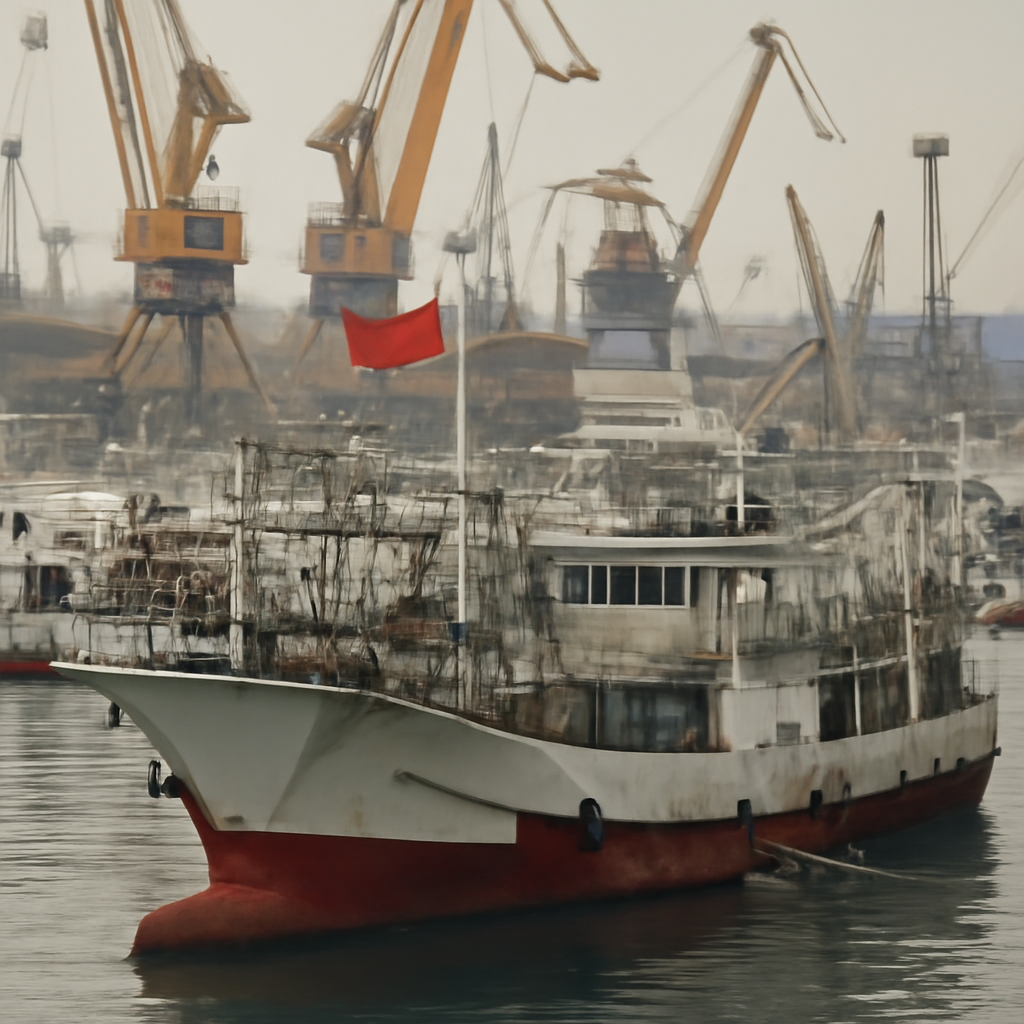
"Chinese companies control nearly two‑thirds of Argentina’s own squid fleet."
Chinese companies and Argentina’s squid fleet
The central fact reported is stark and specific: Chinese companies control nearly two‑thirds of Argentina’s squid fleet. That single statistic concentrates ownership and operational influence in the hands of firms registered or identified as Chinese, and it frames every subsequent question about access to fishing grounds, local supply chains, and regulatory oversight.
What concentrated control can change on the water
When ownership of a national fleet is concentrated in a small group of foreign companies, a few operational realities tend to follow: decisions about where and when vessels fish, how catch is processed, and which ports are used can be coordinated by those owners rather than dispersed among many local operators. The reported extent of Chinese control — nearly two‑thirds — suggests those operational levers could now fall disproportionately under non‑Argentine corporate influence, with effects that ripple to crew employment, vessel maintenance, and local service providers.

Audit-ready is a season. It shouldn't be.
Evidence in spreadsheets, controls drifting between audits, frameworks multiplying on flat headcount. Nubivance runs continuous compliance on Rapid7 Cyber GRC - SOC 2, HIPAA, ISO 27001, PCI, CMMC.
End the scrambleWhat this means for policymakers and regulators, Argentine fishers, and seafood buyers
- Policymakers and regulators: They will need to consider how fleet ownership maps onto domestic licensing, enforcement, and reporting regimes, and whether existing rules address control by foreign companies at this scale.
- Argentine fishers and coastal communities: Local crews, small‑boat operators, and port economies will be watching for changes to hiring practices, berth allocation, and the share of processing and value‑added activity that remains in Argentine hands.
- Seafood buyers and supply‑chain managers: Buyers that rely on Argentine squid for domestic markets or export will want to examine traceability, continuity of supply, and any contractual arrangements that reflect the new ownership pattern.
Supply‑chain and market questions tied to ownership concentration
Concentrated ownership raises practical questions about supply‑chain resilience and market dynamics. If nearly two‑thirds of a fleet is controlled by companies from a single country, buyers and logistics partners may face a smaller set of counterparties for contracts and risk management. That concentration can simplify coordination in some cases, and increase systemic exposure in others: disruptions affecting those owners would have outsized effects on volume and timing of squid landings. Traceability and certification schemes, meanwhile, often depend on multiple independent actors; a shift in ownership patterns will test whether existing mechanisms remain fit for purpose.
Because the reported fact refers specifically to control of Argentina’s own squid fleet, questions also arise about how much of the on‑shore processing, marketing, and employment remains domestically based versus tied into the owners’ broader corporate structures.
Closing observation
The statistic is simple and consequential: nearly two‑thirds. It establishes a clear pivot point for policy, industry planning, and community concern. From here, concrete next steps follow naturally and selectively: mapping who the controlling companies are, clarifying the legal basis for their control within Argentina’s maritime and corporate frameworks, and auditing how that control affects employment, port services, and exports. Those are the precise questions the single reported fact compels Argentine authorities, local fishing communities, and market participants to answer.
Original story: https://www.schneier.com/blog/archives/2026/06/the-chinese-control-the-majority-of-argentinas-squid-fleet.html