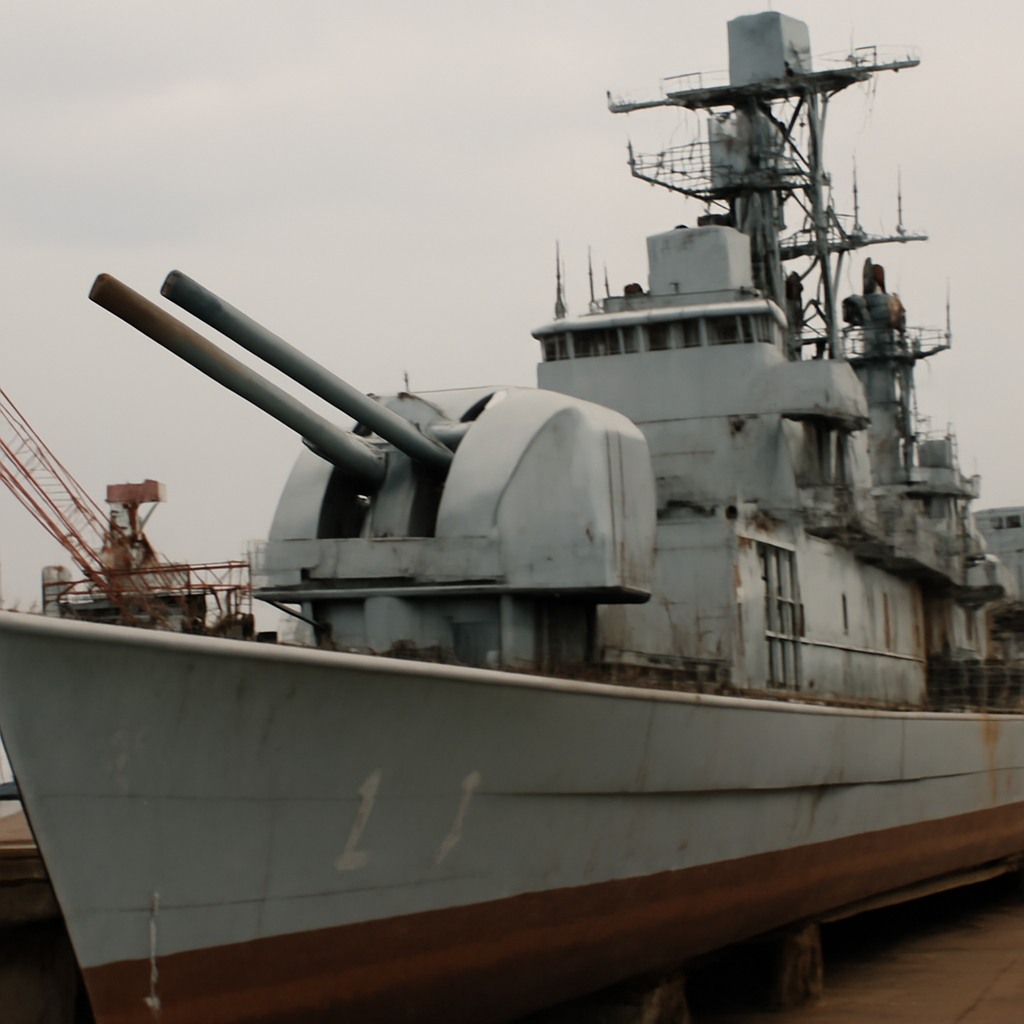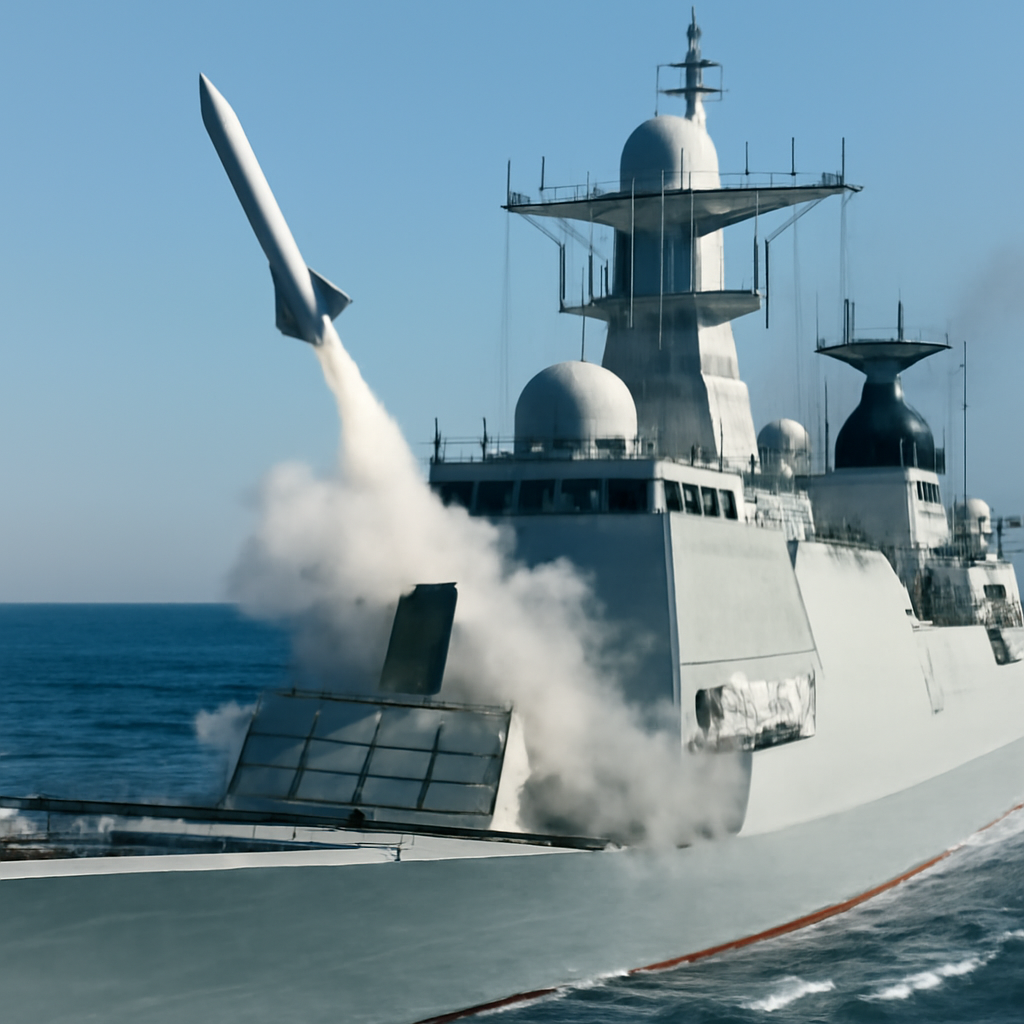
Approximately 35 Type 052D destroyers have entered People's Liberation Army Navy (PLAN) service — and new official footage appears to show one of them launching a YJ-20 hypersonic anti-ship missile from its forward cold‑launch vertical launch system (VLS).
The footage: YJ-20 launch from a Type 052D destroyer
A video apparently originating from the PLAN shows a missile being ejected from a foredeck cold‑launch VLS on an unidentified Type 052D (Luyang III) destroyer, after which the missile’s solid rocket motor ignites and it accelerates away. The clip shows no target engagement. The imagery follows earlier official Chinese footage of a “finalization test” of the YJ-20 from the Type 055 destroyer Wuxi released late in 2025, and a prior public appearance of the weapon during a 2025 parade.
YJ-20: speed, range, and flight profile
The YJ-20 is described in the footage and prior reporting as a hypersonic anti-ship weapon optimized for extremely high terminal speed and unpredictable maneuvering. Estimates in the reporting place cruise speeds at Mach 6 or higher, terminal speeds up to about Mach 10, and ranges commonly assessed between 1,000–1,500 km (and elsewhere described as more than 620 miles). Chinese sources cited variously describe the weapon employing either an aero‑ballistic flight profile (quasi‑ballistic maneuvers such as skip‑glide or “porpoising”) or a conical boost‑glide vehicle that uses a rocket booster to reach high altitude before sustained gliding and terminal maneuvering.
Guidance is reported to combine satellite navigation and mid‑course updates with an active radar and/or infrared seeker in the terminal approach. The combination of speed, maneuvering, and terminal seekers is presented as intended to complicate interception and defeat modern naval air defenses.

This site is the portfolio.
OSINTSights runs on Cloudflare Workers, D1, R2, and Vectorize, with an AI pipeline on Hetzner ARM. Nubivance designed, built, and operates it. We do the same for clients.
See what we buildType 052D VLS capacity versus Type 055 and fleet scale
The 7,500‑ton Type 052D carries a 64‑cell VLS, split 32 forward and 32 aft. Typical VLS loads for the class have included HHQ‑9 surface‑to‑air missiles, YJ‑18 subsonic anti‑ship cruise missiles, CJ‑10 land‑attack cruise missiles, and CY‑5 anti‑submarine missiles; it is unclear from available footage whether each 052D VLS cell can accommodate the larger YJ‑20. By contrast, the Type 055 ‘super destroyer’ has a 112‑cell VLS and has been the PLAN’s premier surface strike platform, but only 10 Type 055s are currently reported in operational service while additional hulls remain under construction.
That numerical contrast — roughly 35 Type 052Ds in service versus 10 Type 055s — is central to analysts’ emphasis on the significance of the new launch footage: placing the YJ‑20 on the more numerous Type 052D would distribute hypersonic anti‑ship capability across a much larger portion of the surface fleet.
Operational effects on the western Pacific A2/AD posture
Observers in the reporting argue that expanding launch capability from the Type 055 to the Type 052D would materially increase the number of PLAN hulls capable of long‑range hypersonic anti‑ship strikes, strengthening Beijing’s layered anti‑access/area‑denial (A2/AD) posture across the western Pacific. Weapons with the YJ‑20’s described characteristics are presented as particularly well suited to high‑value naval targets such as aircraft carriers, amphibious assault ships, and major surface combatants, with a likely secondary land‑attack role against fixed targets.
Hypersonic weapons’ speed and maneuverability are reported to compress an opponent’s decision‑making timeline and reduce interception opportunities, and they may require “very high‑end interceptors, if they can be intercepted at all.” The Pentagon’s most recent annual report to Congress noted in late 2025 that “China has the world’s leading hypersonic missile arsenal and continued to advance the development of conventional and nuclear‑armed hypersonic missile technologies during the past year.”
How the U.S. military, allied navies, and the PLAN are positioned
- U.S. military and policymakers: The expansion of launch platforms capable of fielding the YJ‑20 is described as complicating U.S. naval operations across the western Pacific by increasing the number of long‑range hypersonic launch platforms that can threaten high‑value warships from greater stand‑off ranges.
- Allied navies in the region: Wider distribution of hypersonic anti‑ship capability among PLAN destroyers is presented as a factor that would complicate tasking, force posture, and defensive planning for allied surface groups operating within the First Island Chain and beyond.
- The PLAN and Chinese shipbuilders: The reporting highlights that Chinese shipyards are “churning out” increasingly capable warship designs and that production of the Type 052D continues; placing the YJ‑20 on the more numerous 052D class would distribute hypersonic capability more broadly rather than concentrating it on a small number of flagship destroyers.
It remains unclear whether the YJ‑20 has formally entered full operational service; nevertheless, official test footage, parade appearances, and launches from both the Type 055 and a Type 052D point toward the missile transitioning from development toward broader fielding. The key open questions are whether the Type 052D VLS cells will be routinely loaded with the larger YJ‑20 and how rapidly that distribution will proceed across the roughly three dozen hulls already in service.