By 2014, China had already imported more than 300 Mi‑17/Mi‑171‑series helicopters.
85th Army Aviation Brigade: emergence and stationing in Lhasa
References to a “new LH brigade in Tibet” began appearing in official reporting around 2018, and over subsequent years imagery and aircraft serials filled in the unit’s identity: the 85th Army Aviation Brigade, based in Lhasa under the Western Theater Command. The formation’s presence has been reconstructed from open photographic evidence and serial-number tracking rather than from a formal PLA commissioning announcement.
Mi‑17V‑7 and Mi‑171E: the plateau workhorses
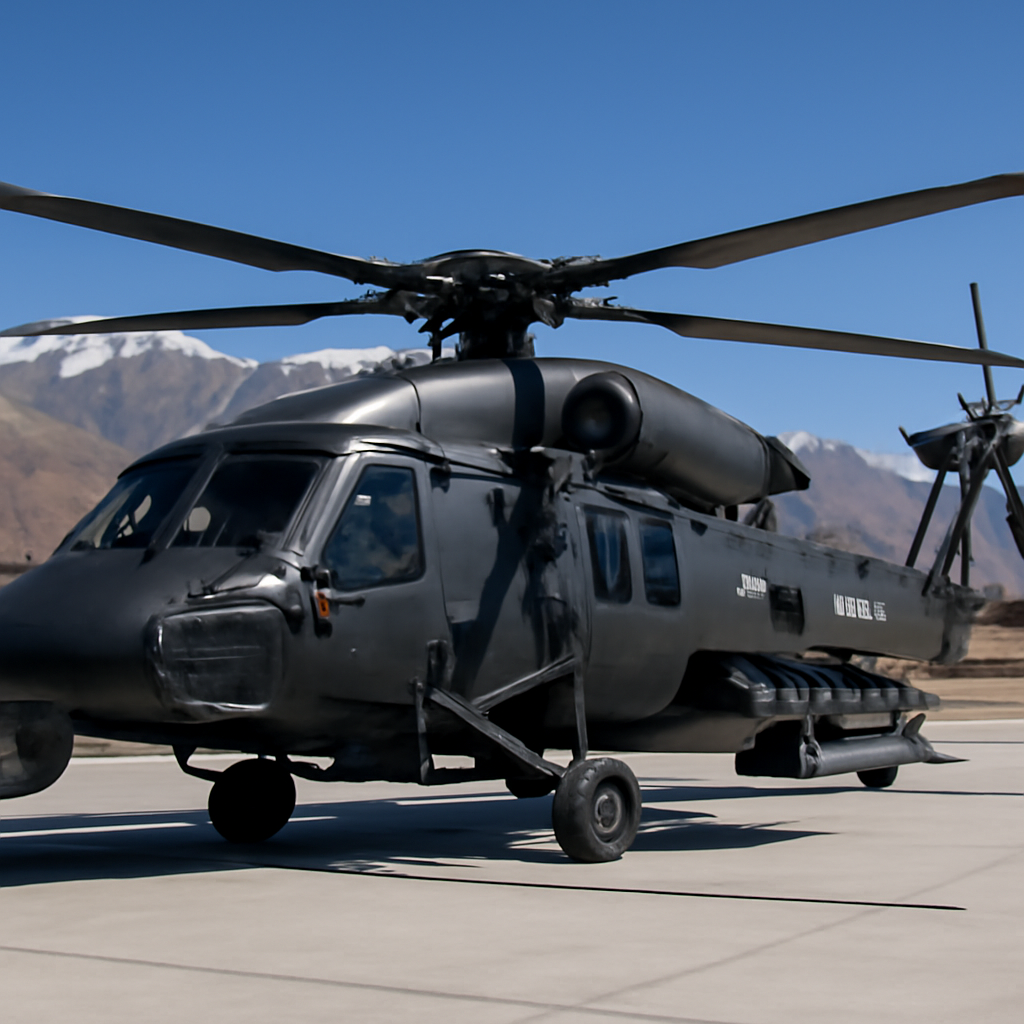
Early imagery shows the brigade built largely around Mi‑17V‑7 and Mi‑171E helicopters, commonly identified by 9217×× serials. The V‑7 variant is described in the reporting as an export Mi‑8MTV‑5 fitted with higher‑power engines and improved lift, features that made it particularly suited to Tibet’s thin‑air environment. Those characteristics, and the broader fleet of Mi‑17/Mi‑171 aircraft imported in the years before 2014, established the baseline transport, rescue and logistics capability on the plateau.

Audit-ready is a season. It shouldn't be.
Evidence in spreadsheets, controls drifting between audits, frameworks multiplying on flat headcount. Nubivance runs continuous compliance on Rapid7 Cyber GRC - SOC 2, HIPAA, ISO 27001, PCI, CMMC.
End the scrambleMid‑2022 shift: Z‑10 attack helicopters arrive in Lhasa
The brigade’s Table of Organization and Equipment began shifting in mid‑2022. Observers confirmed at least 14 Z‑10 attack helicopters, recorded with 9211×× serials, in Lhasa. This marked a move away from a purely transport‑focused inventory toward a mixed force that included dedicated attack platforms.
Heavy lift in 2023: Z‑8G joins the brigade
By February 2023 the unit was reported to field at least seven Z‑8G heavy transports (serials 9218××), providing an improved heavy‑lift capability for the brigade for the first time. The addition of heavy transports broadened the brigade’s ability to move larger loads and to support missions that exceed the capacity of medium transports already in service.
Z‑20 and Z‑20T: assault capability and plateau‑oriented design
In September 2025, the report notes, “official channels confirmed what observers had already suspected”: the 85th LH Brigade is now receiving Z‑20 and Z‑20T assault helicopters. The reporting highlights a design through‑line linking past lessons to current equipment choices. It recalls that China imported 24 UH‑60A Black Hawks in the mid‑1980s “specifically because their engines and rotor system handled plateau conditions better than anything the PLA had at the time,” and that for over a decade after those imports the Black Hawks were the only helicopters that could reliably operate across Tibet for transport, rescue, and logistics.
Two specific technical details are emphasized for the Z‑20T. First, its stub wings can carry external fuel tanks, an echo of the Black Hawk’s ESSS‑style long‑range configuration and a direct signal that range and endurance are priorities for plateau operations. Second, the Z‑20T’s public unveiling at Zhuhai in November 2024 described an armed variant tailored to assault and special operations: a nose-mounted forward-looking infrared suite akin to the Apache’s PNVS; a target acquisition/marking system (TADS) with white‑light, thermal imaging and laser channels; heavy short wings able to carry rocket pods and AKD‑10 laser semi‑active air‑launched anti‑tank missiles; and the possible carriage of longer‑range Blue Arrow‑21 anti‑tank missiles. The Z‑20T is presented in the reporting as configured to support infiltration attacks and versatile air assault missions.
What this means for the Western Theater Command, procurement leaders, and aircrew/maintenance planners
- Western Theater Command: The brigade’s evolving mix — from Mi‑17 family transports to Z‑10 attack helicopters, Z‑8G heavy lifts, and Z‑20/Z‑20T assault platforms — reflects a move toward a more flexible, multi‑role aviation force in Tibet, emphasizing lift, range, and assault capability adapted to high‑altitude conditions.
- Procurement and equipment planners: The timeline in the report — long use of imported UH‑60A Black Hawks, large Mi‑17/Mi‑171 imports by 2014, and the more recent induction of indigenous Z‑20 family helicopters — illustrates a procurement arc from reliance on imports toward domestically produced designs built with plateau performance in mind.
- Aircrew and maintenance planners: A more diverse fleet with heavier lifts and armed assault variants implies expanded training and sustainment needs specific to thin‑air operations, plus the logistics of supporting external fuel configurations and new weapons and sensor suites described for the Z‑20T.
The 85th Brigade’s arc, as assembled from photographic evidence, serial tracking, and official confirmations, shows a deliberate layering of capabilities: established high‑altitude transports, added attack helicopters in 2022, heavy lift in 2023, and purpose‑built assault platforms by 2025. Together these changes paint a clear operational intent — more lift, more range, and aircraft designed or selected with plateau operations as a baseline requirement. The next concrete milestones to watch, according to the reporting, will be the pace of Z‑20/Z‑20T integration and how the brigade employs the new aircraft in training and operational patterns across Tibet.
https://china-defense.blogspot.com/2026/06/pla-army-aviation-update-85th-lh.html