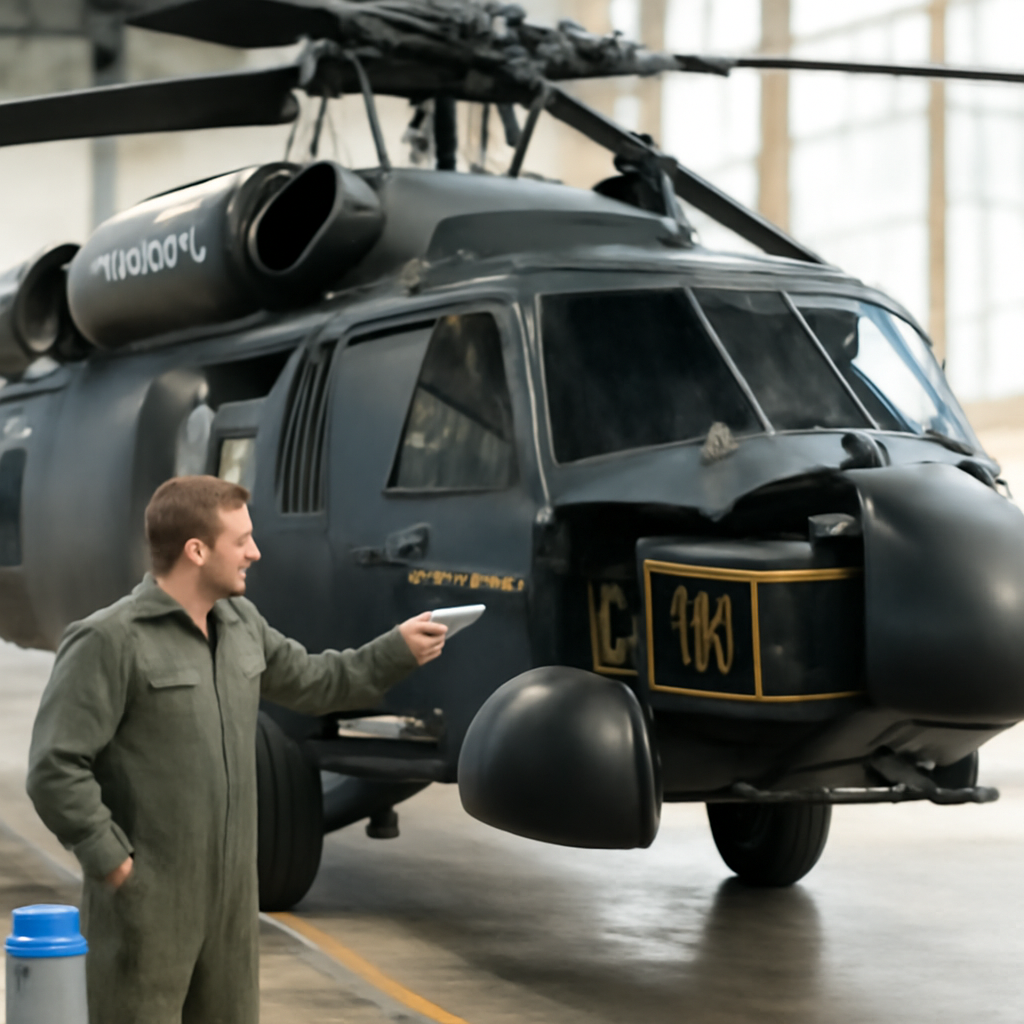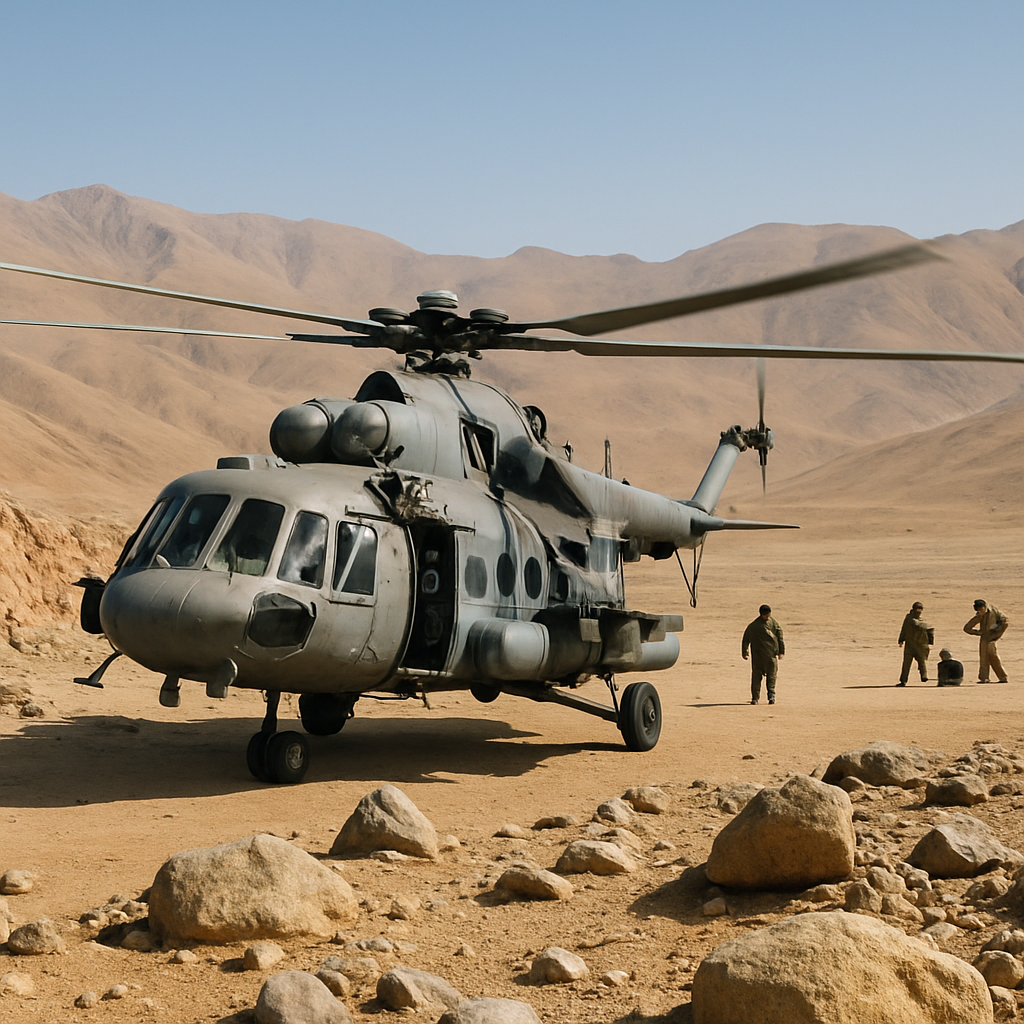
Three of eighteen Russian‑exported Mi‑171Sh armed combat‑transport helicopters were received in 2023 by the 3rd Transportation and SAR Brigade, a unit now practicing the highest‑risk mission sets for search and rescue in rugged terrain.
What the 3rd Transportation and SAR Brigade has added to its toolkit
Since taking delivery of three Mi‑171Sh helicopters in 2023, the 3rd Transportation and SAR Brigade — assigned to the Northern Theater Command — has staged a string of high‑profile exercises. The latest, noted in the reporting, took place on May 30 and simulated the recovery of a downed pilot in high‑altitude desert terrain. The deployment of these Mi‑171Sh airframes followed a 2020 order of heavily armed Mi‑171Sh military transport helicopters from Russia, and it is now confirmed that some of those helicopters have been placed under a PLAAF “search and rescue” brigade in the Northern Theater Command.
May 30 exercise: a focused combat search‑and‑rescue (CSAR) scenario
The May 30 exercise specifically simulated recovering a downed pilot in high‑altitude desert terrain — a mission profile the reporting highlights as demanding both survivability and firepower. The narrative accompanying the exercise notes that such scenarios are precisely why the Mi‑171Sh was imported: to operate in rough, high‑altitude environments where armor protection, payload, and onboard weapons matter. The piece also asks, rhetorically, whether that scenario resembles a recent real‑world event, explicitly leaving that comparison as an open question.

Audit-ready is a season. It shouldn't be.
Evidence in spreadsheets, controls drifting between audits, frameworks multiplying on flat headcount. Nubivance runs continuous compliance on Rapid7 Cyber GRC - SOC 2, HIPAA, ISO 27001, PCI, CMMC.
End the scrambleHow the Mi‑171Sh compares to domestic rotary and transport platforms
The 3rd Brigade also flies domestic types: Z‑9 and Z‑20 helicopters and Y‑8 turboprop transports. According to the reporting, however, none of those domestic platforms match the Mi‑171Sh in armor protection, payload, or onboard weapons. That capability gap is presented as the principal reason the rugged Russian airframe was chosen for the brigade’s most dangerous mission set: combat search and rescue (CSAR).
Related units and published PR: Eastern Theater Command’s SAR activity
Reporting on related formations notes that the 1st Transportation and SAR Brigade of the Eastern Theater Command Air Force — described as the PLA’s main SAR unit (SN 51*1*) — began with Z‑8 and Mi‑171 aircraft adapted into SAR roles and has since expanded with Z‑20 SAR helicopters. Public‑release photos of that brigade were referenced in May 2025, and the Eastern Theater Command Air Force’s area of operations was identified as the Taiwan Strait in that reporting.
What this means for the Northern Theater Command, procurement leaders, and adversaries
- Northern Theater Command: The placement of Mi‑171Sh helicopters under a Northern Theater Command SAR brigade directly enhances the unit’s ability to attempt recoveries in high‑altitude, hostile environments, a mission the reporting identifies as among the brigade’s most dangerous.
- Procurement leaders: The source frames the Mi‑171Sh acquisition as a deliberate solution to capability shortfalls in armor, payload, and onboard weapons on domestic platforms — a procurement decision tied to a specific operational requirement (CSAR in rough terrain).
- Adversaries: The reporting highlights that the imported Mi‑171Sh was chosen for survivability and firepower in difficult environments, a fact adversaries would likely factor into operational planning around contested recovery scenarios.
The record presented in the reporting ties a distinct procurement choice — importing heavily armed Mi‑171Sh helicopters beginning with a 2020 order and delivering three to the Northern Theater Command brigade in 2023 — to concrete training activity: repeated high‑profile exercises culminating in a May 30 simulation of a high‑altitude rescue. That linkage frames the Mi‑171Sh not as a general transport add‑on but as a purpose‑bought platform for the riskiest CSAR tasks the brigade expects to face.