“Iran can ‘no longer threaten regional partners, or the United States, in ways that they were able to do before, across every domain,’” Admiral Brad Cooper told the Senate Armed Services Committee on May 14, asserting a sharp break with recent press reporting that Tehran has largely restored its missile and launcher inventories.
Admiral Brad Cooper’s testimony to the Senate Armed Services Committee
Asked to respond to published intelligence assessments, Cooper declined to discuss classified details but pushed back on figures circulating in open sources. “I think the numbers that I’ve seen in open source are not accurate,” he said, and added that “it’s more than just the numbers” — pointing to what he described as “command and control that’s been shattered,” a “significant degradation and capability,” and “the lack of any ability to then produce any missiles…on the back end.”
On Iran’s maritime harassment, Cooper said the observable tempo has dropped sharply: in his experience “in 100 transits through the Strait of Hormuz, you would typically see 20 to 40 fast boats, and lately we’ve seen two or three.” He acknowledged residual threats remain, saying “some residual capability does exist,” but characterized those capabilities as “significantly degraded.”
Published intelligence assessments that Cooper disputed
Cooper’s claims came after a May 12 New York Times story citing “classified assessments” that Iran “has regained access to most of its missile sites, launchers and underground facilities.” The Times reported that Iran had restored operational access to 30 of the 33 missile sites it maintains along the Strait of Hormuz, and that Iran “still fields about 70 percent of its mobile launchers across the country and has retained roughly 70 percent of its prewar missile stockpile.”
The Washington Post offered similar numbers last week, reporting that “Iran retains about 75 percent of its prewar inventories of mobile launchers and about 70 percent of its prewar stockpiles of missiles,” a figure noted during the hearing as one of the open-source claims Cooper disputed.

This site is the portfolio.
OSINTSights runs on Cloudflare Workers, D1, R2, and Vectorize, with an AI pipeline on Hetzner ARM. Nubivance designed, built, and operates it. We do the same for clients.
See what we buildCENTCOM’s account of strikes and material effects
Cooper provided the committee with CENTCOM’s own tallies for Operation Epic Fury. He said CENTCOM has carried out “more than 450 strikes on ballistic missile storage and systems and roughly 800 strikes on Iran’s drone‑launching units and storage.” He added that CENTCOM had “destroyed or buried much of Iran’s ballistic missiles, launcher vehicles, and long‑range attack drones.”
On the air domain, Cooper asserted Iranian fixed‑wing sorties — which he said had flown between “30 and 100 sorties each day” before the operation — are now zero, that CENTCOM had knocked out “82 percent of its air defense missile systems along with the radar and command architecture that tied them together,” and that Iran’s air forces are “functionally and operationally irrelevant.”
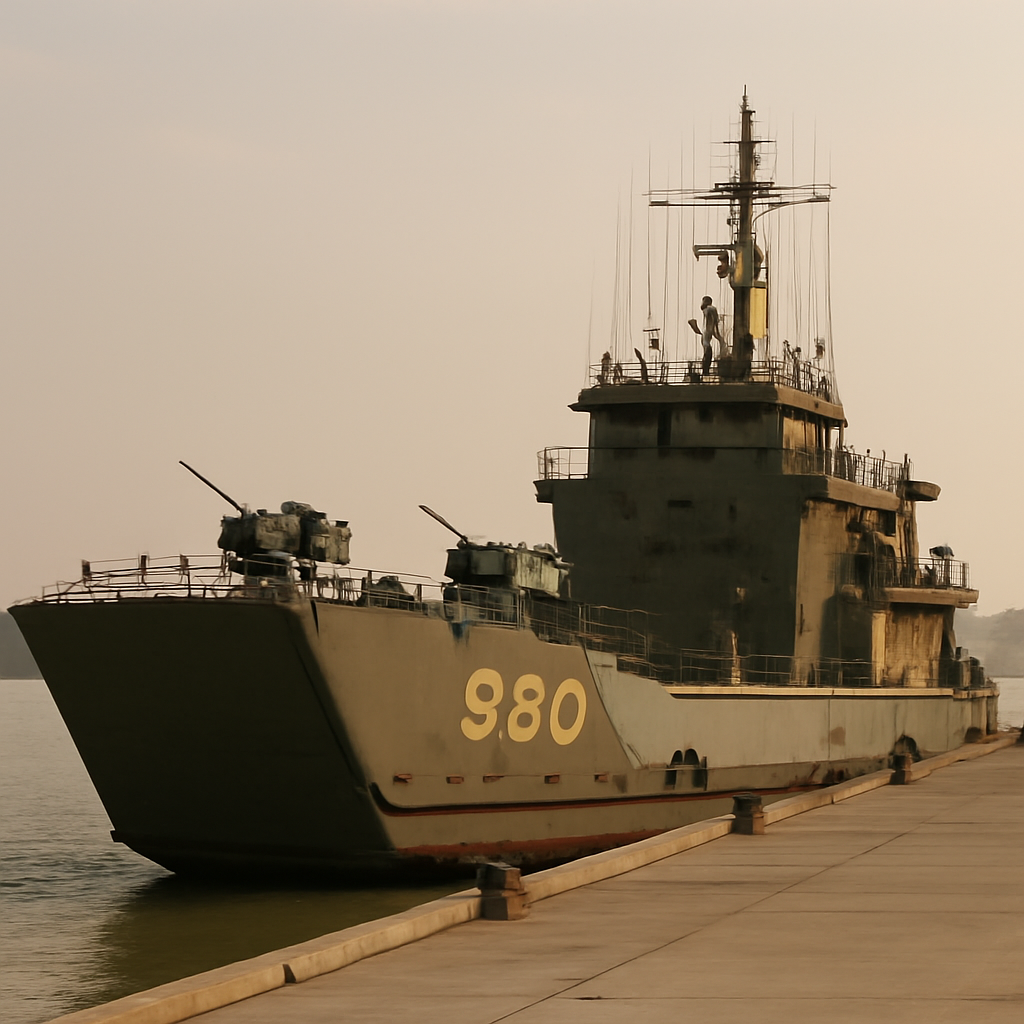
At sea, Cooper told the committee CENTCOM “destroyed 161 vessels in total across 16 classes of warships” and “eliminated more than 90 percent of Iran’s once‑massive inventory of over 8,000 naval mines, with more than 700 airstrikes on Iranian naval mine targets.” He characterized Iran’s remaining maritime capacity as “nuisance capability” — harassment, low‑end drone and rocket attacks, and proxy support — but not a maritime power able to project into the Gulf of Oman or the Indian Ocean.
Recent incidents that demonstrate residual Iranian reach
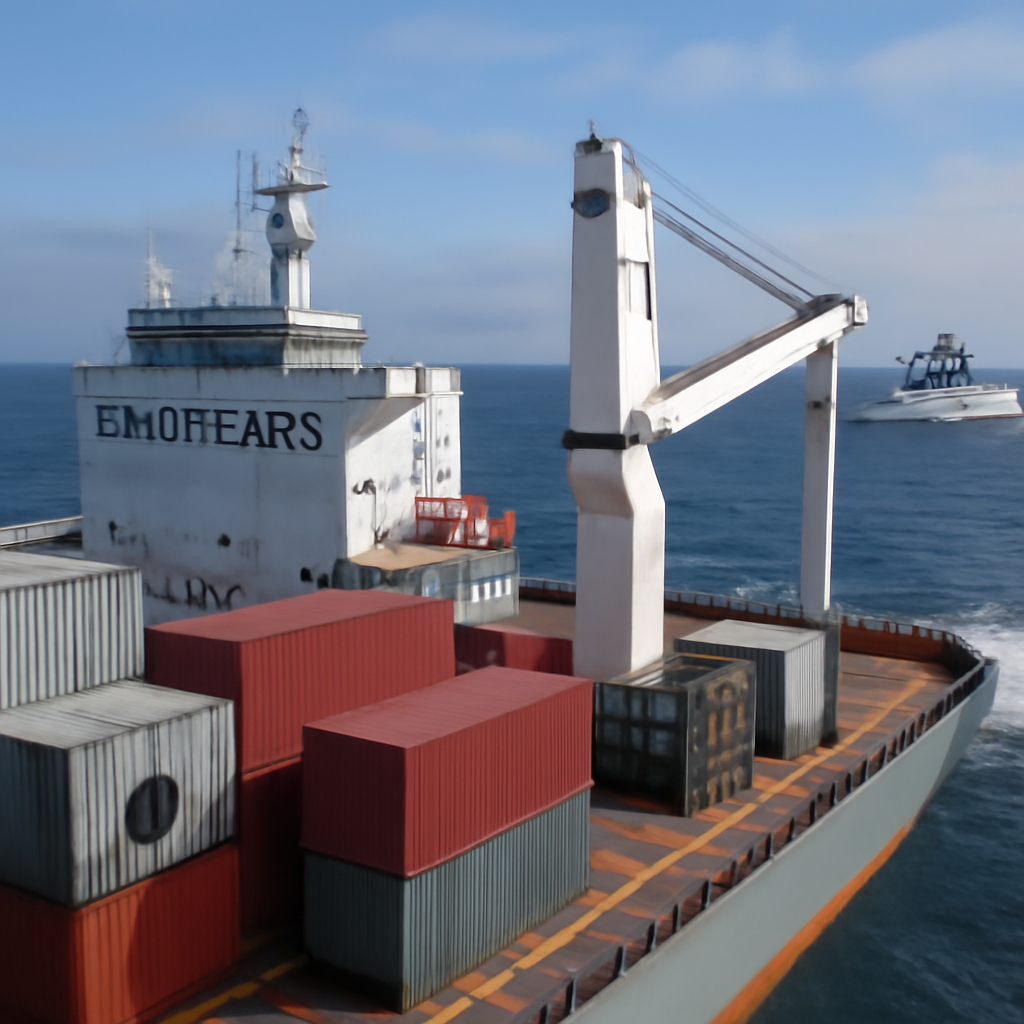
Yet events on the water and in the region show Tehran retains some ability to act. Hours before Cooper’s testimony, the Islamic Revolutionary Guard Corps Navy seized the Honduras‑flagged fisheries research vessel Hui Chuan while it was at anchor approximately 38 nautical miles northeast of Fujairah, UAE, at 05:45 UTC, a maritime security official told TWZ. The vessel — IM O: 8316895 — is reportedly operated as a “floating armory” by the Chinese private security company Sinoguards, and UKMTO said the ship was “bound for Iranian territorial waters.”
TWZ also reported that Tehran had repeatedly struck the United Arab Emirates before and after the April 7 ceasefire, and that Iranian forces have previously attacked U.S. warships and commercial vessels during the short‑lived Project Freedom operation — incidents that underscore the uneven mix of degradation and ongoing threat described by CENTCOM.
How policymakers and regional actors are responding
Diplomacy and domestic politics have moved in parallel with the fighting and military claims. The White House readout of a May meeting between President Donald Trump and Chinese leader Xi Jinping said the two agreed the Strait of Hormuz “must remain open to support the free flow of energy,” and that Xi “expressed interest in purchasing more American oil.” Secretary of State Marco Rubio, who accompanied the president, highlighted Xi’s opposition to “militarizing the Strait” or establishing a tolling system.
At the same time, press reports have suggested China may be enabling transits through limited payments; the Guardian reported Tehran claimed China had agreed to limited charging for transits, a report TWZ said it could not independently verify. The New York Times has also reported U.S. intelligence that Chinese companies have discussed arms sales with Iran, though the Times said it is unclear whether any arms have been shipped or approved by Chinese officials.
On Capitol Hill, the Senate narrowly blocked a resolution aimed at preventing the president from continuing the war effort, with the vote failing 49‑50. TWZ noted that, for the first time, Republican Senators Lisa Murkowski, Susan Collins and Rand Paul voted with Democrats on the measure; all Democrats but Senator John Fetterman supported it.
Admiral Cooper’s testimony framed the situation as one in which Iran’s conventional deterring capacity has been deeply wounded even as it retains asymmetric means to harass and strike. The competing public claims — press accounts pointing to large inventories restored versus CENTCOM’s metrics of destruction and degradation — leave a live contest over how much of Iran’s prewar military posture remains operational and where the balance of risk lies for ships, neighbors, and U.S. forces.