Cybersecurity
General cybersecurity news and analysis

Criminal IP Enhances ThreatQ with Real-Time Exposure Intelligence
Criminal IP's integration with ThreatQ supercharges threat intelligence by delivering real-time exposure insights, empowering organizations to analyze and respond to threats faster and more effectively. Analysts can now access crucial IP intelligence directly within ThreatQ, streamlining investigations and threat validation.
Microsoft Fixes Remote Desktop Security Warning Display Flaw
Microsoft just dropped an optional update, KB5083631, to squash a bug that's been causing Remote Desktop security warnings to display incorrectly - a fix that's especially crucial for those using multiple monitors with different scaling settings. This targeted update is part of a larger release that includes 34 other changes to improve your Windows 11 experience.
Anthropic Unveils Claude Security for AI-Powered Vulnerability Scanning
Boost your organization's security with Claude Security, now in public beta, which scans codebases to detect and fix software vulnerabilities with just a few clicks. Say goodbye to tedious API integrations and custom agent builds - simply access the feature from the Claude.ai sidebar and start scanning today!

MSPs Face Hurdles in Capturing Cybersecurity Revenue
The managed security services market is booming, expected to surge from $38.31 billion to $69.16 billion by 2030, but MSPs are struggling to turn this growth into revenue, stuck in an "execution gap" between technical expertise and business-focused sales strategies. To bridge this gap, MSPs must shift their sales messaging from technical jargon to tangible business outcomes like risk reduction and compliance success.

Microsoft Enhances App Removal Policy for Windows 11 Enterprises
Microsoft just made it easier for IT admins to manage Microsoft Store apps on Windows 11 devices - you can now dynamically remove preinstalled apps across your enterprise using a simple policy update. Just reference the Package Family Name (PFN) to uninstall any unwanted MSIX/APPX apps.

Microsoft Releases KB5083631 Update, Bolstering Windows 11 Security and Performance
Boost your Windows 11 security and performance with the latest optional update, KB5083631, which introduces a more secure processing mode for batch files and other quality improvements. Get ahead of the curve by installing this preview update now and be ready for the next Patch Tuesday release.

FCC Fortifies Telecom Rules to Combat Robocalling and Cyber Threats
The FCC is cracking down on telecom companies that aren't doing enough to stop robocalling and cyber threats, with Chair Brendan Carr slamming those who do the bare minimum to verify callers as complicit in illegal schemes. New rules aim to tighten verification and supply-chain security to protect US phone networks.

State CISOs Eroding Confidence Amid AI-Driven Threat Surge
State CISOs are losing faith in their ability to protect sensitive data, with confidence plummeting to just 22% - a drastic drop from 48% in 2022 - as AI-driven threats intensify. This sharp decline in confidence extends beyond state governments, with 63% of CISOs also doubting the ability of local governments and public higher education institutions to safeguard public data.

Security Leaders Face New Risk Calculus with AI-Driven Workforces
The modern workforce has a new equation: humans and AI agents working together, facing the same dynamic threats and risks. This emerging reality demands a fresh approach to security, one that recalibrates risk and rethinks trust in a blended workforce.

Socket Expands Supply-Chain Visibility with Secure Annex Acquisition
Socket is supercharging its supply-chain visibility with the acquisition of Secure Annex, a cutting-edge extension security startup, to give developers unprecedented control across the entire software development life cycle. This strategic move combines Socket's expertise in application dependencies with Secure Annex's innovative approach to browser and IDE extensions.

Romanian Swatting Ring Leader Draws 4-Year Prison Sentence
Thomasz Szabo, the ringleader of a notorious swatting ring, has been sentenced to four years in prison for orchestrating a campaign of fake bomb threats and swatting calls that targeted high-profile figures, including members of Congress and federal law enforcement officials. Szabo's malicious scheme sent armed police to the doors of innocent victims, causing fear and chaos.

AI Agents Expose Identity Security Gaps
Imagine an AI agent that can uncover thousands of hidden security vulnerabilities, some of which have gone undetected for nearly 30 years - and the potential risks that come with it falling into the wrong hands. A single powerful AI agent can scan for weaknesses faster and more persistently than hundreds of human hackers, highlighting a pressing need for secure deployment.
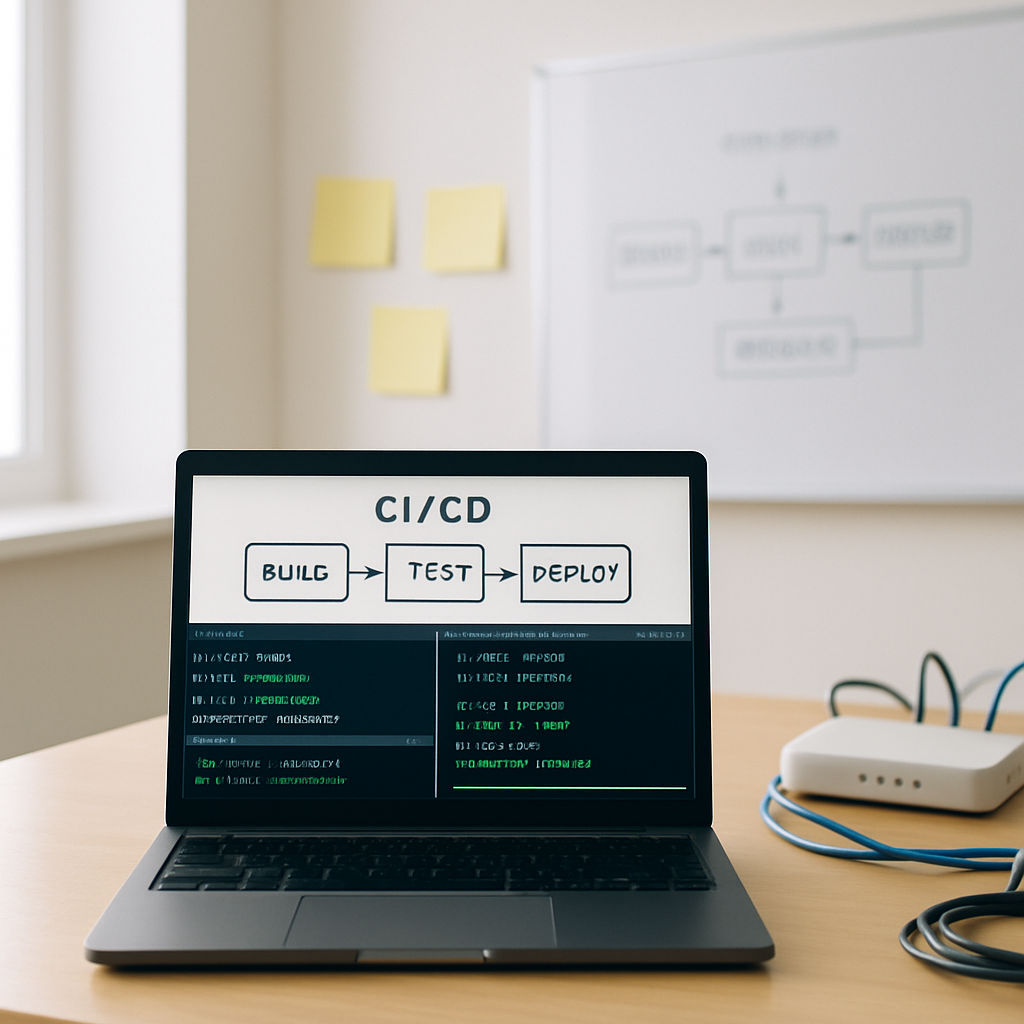
Google's Gemini CLI Fix Sparks CI/CD Pipeline Disruptions
A recent patch for Google's Gemini CLI has sparked disruptions in CI/CD pipelines, ironically caused by a critical infrastructural flaw - not an AI quirk - that allowed remote code execution due to over-permissive workspace trust in headless mode. The fix, while swift, may trip automated pipelines that relied on the old settings.

Linux Flaw Exposes Root-Level Access Across Major Distros
A newly discovered Linux flaw, nicknamed "Copy Fail," allows unprivileged users to gain root-level access to major distributions, putting countless systems at risk. This vulnerability, which involves a temporary write of just four bytes during a crypto operation, can be exploited by attackers to take full control of an operating system.

Microsoft Update Disrupts Backup Software on Windows 11
Beware: the latest Windows 11 update, KB5083769, is causing backup software to fail on systems running versions 24H2 and 25H2 by triggering Volume Shadow Copy Service (VSS) timeouts. This disruption can lead to frustrating backup failures, affecting users of popular software like Acronis.

US Agencies Issue Zero Trust Guidance for OT Security
US government agencies have just released a game-changing guide to help protect critical infrastructure systems with practical, layered security strategies. The new zero-trust guidance provides a tailored approach for operational technology environments, balancing safety and uptime needs with robust security measures.

Linux Flaw Exposes Major Distros to Root Access
Meet CVE-2026-31431, aka "Copy Fail," a newly discovered Linux flaw that leaves major distros vulnerable to root access - and it's surprisingly easy to exploit, affecting a wide range of systems from 2017 to 2026.

cPanel Vulnerability Exposes Millions of Domains to Root Access Attacks
A critical cPanel vulnerability, rated 9.8 under CVSS, has been discovered, allowing attackers to craft a simple sequence of requests to bypass authentication and gain root access to servers, putting millions of domains at risk. Emergency patches are available to fix this gaping security flaw.

Cyber Risks Expose Organizations to Increased Threats
Organizations are facing a harsh reality: understanding cyber risk is only half the battle, as the real challenge lies in responding effectively when a threat strikes. Marsh's 2026 People Risks report reveals that cyber-related challenges, including cyber-threat literacy, top the list of people risks, ahead of technological change and skills shortages.
Linux Flaw Enables Unprivileged Root Access on Major Distributions
A newly discovered Linux flaw, dubbed "Copy Fail," allows unprivileged users to gain root access on major distributions by exploiting a logic error in the kernel's cryptographic subsystem. This high-severity vulnerability, tracked as CVE-2026-31431, poses a significant threat to Linux systems, enabling attackers to write controlled bytes into the page cache of readable files and escalate privileges.

Google Fixes Critical Gemini CLI Flaw Enabling Remote Code Execution
Google patched a critical flaw in Gemini CLI that allowed hackers to inject malicious code and take control of host systems, thanks to a report from Novee Security. The vulnerability, scoring a perfect 10.0 on the CVSS scale, has been fixed in recent updates to the @google/gemini-cli and google-github-actions/run-gemini-cli packages.

US Weighs Critical Infrastructure Status for Data Centers
Protecting data centers is a must, and considering them part of the country's critical infrastructure is a crucial step towards achieving that goal. This idea was recently discussed at a House Homeland Security Subcommittee hearing, where lawmakers and industry experts explored the possibility of designating data centers as a standalone critical infrastructure sector.

Linux Flaw Enables Fast Root Access via Cryptographic Code
A newly discovered Linux flaw, dubbed Copy Fail, allows unprivileged users to gain root access by writing controlled bytes into the page cache of readable files, enabling a swift and stealthy privilege escalation. This vulnerability, tracked as CVE-2026-31431, poses a significant threat to Linux systems, putting them at risk of exploitation.

Silverfort Injects AI into Access Decisions with Fabrix Buy
With Fabrix acquisition, Silverfort supercharges access decisions with AI, aiming to revolutionize identity security by automating routine tasks and reserving human oversight for high-stakes situations. This game-changing move enables businesses to scale security efficiently, freeing up human experts to focus on critical decisions.