[SPONSOREDNUBIVANCE]
Rapid7 deployed right the first time.
Full-platform Rapid7 rollouts - InsightVM, InsightIDR, event sources, agents, tuning - by a Registered Partner who has done it at state-agency scale, including OT/SCADA.
Talk deploymentGeneral cybersecurity news and analysis

A vulnerability in Next.js's ImageResponse feature, powered by the Satori library, allows attackers to inject malicious code by passing tainted values into image generation, putting servers at risk of code execution. This flaw can be exploited when attacker-controlled values are inserted into SVG content, attributes, or styles during image creation.

Rep. Josh Gottheimer is taking a proactive stance against cyber threats with the AI Cyber Defense Act, a new legislative proposal that would provide critical infrastructure operators with free access to cutting-edge AI technology to identify and fix security gaps. This innovative program aims to safeguard families and communities from potential disasters by staying ahead of emerging threats.

Tribes nationwide are stepping up their tech game, investing in cybersecurity and infrastructure to boost sovereignty and service delivery. With TribalHub's Tribal Net 2026 forum, IT leaders from Native American communities are uniting to share knowledge and strategies for sustainable growth.

Security researchers have uncovered a sneaky technique called TrustSink that allows rogue MFA providers to swipe plaintext passwords during seemingly normal login attempts, and they've demonstrated it works with Microsoft Entra ID. This alarming exploit lets attackers get their hands on sensitive passwords, complete with timestamps and source IP addresses.

WordPress has patched a critical vulnerability (CVE-2026-87902) that could allow hackers to execute malicious code on susceptible servers, giving attackers an easy way to take control. This flaw, rated 9.2 on the CVSS scale, can be exploited without an account or user interaction.

A critical flaw in the Bifrost AI Gateway, known as CVE-2026-90898, allows hackers to execute remote commands on servers with just one simple HTTP request, putting sensitive data at risk. This severe vulnerability has a CVSS score of 9.8, highlighting the urgent need for a fix.

Traditional network discovery scans can't see it all - devices can be powered off, isolated, or silent, leaving gaps in your visibility. Endpoint telemetry offers a clearer picture, revealing what's really running, even when network scans can't see it.

We pour billions into safeguarding networks, only to send our most critical personnel home, vulnerable and exposed. The everyday devices we rely on - from cars to smartwatches - are creating a detailed blueprint of our lives, putting sensitive information and national security at risk.
Full-platform Rapid7 rollouts - InsightVM, InsightIDR, event sources, agents, tuning - by a Registered Partner who has done it at state-agency scale, including OT/SCADA.
Talk deployment
Amazon Web Services has achieved a major milestone, earning NATO approval to handle sensitive RESTRICTED data across all member states, a testament to its robust security and compliance capabilities. This clearance marks a significant expansion of AWS's role in safeguarding critical alliance information.

Meet BigDiskBuster, a clever tool created by NightmareEclipse that cleverly blocks Microsoft Defender updates, leaving you stuck with your current version if it's running in the background. This proof-of-concept has been designed to prevent platform and security intelligence updates from installing.

Most organizations are playing catch-up when it comes to preparing for AI-related incidents, with a staggering 71% having never even rehearsed their response to AI-driven threats. This lack of preparedness is alarming, especially as AI is increasingly being used to detect and respond to security threats.

Meet the game-changer in cybersecurity: AI agents that can autonomously navigate and exploit access, turning a simple permission issue into a complex threat landscape. Traditional risk assessments focused on access alone, but with agentic AI, the real concern is what paths an autonomous system can discover and assemble with the access it already holds.
A newly discovered flaw in SharePoint, initially downplayed by Microsoft as a minor spoofing issue, has been revealed to be a critical vulnerability that allows authenticated attackers to execute remote code, putting systems at risk. This vulnerability, tracked as CVE-2026-65660, has a much higher severity score of 8, underscoring the urgent need for patching.

A newly discovered Linux flaw, CVE-2026-89775, puts host memory at risk by allowing ARM64 KVM guests to access and modify it, potentially enabling a guest to break free from its virtual machine and run code on the underlying machine. This vulnerability, found in the Linux kernel's KVM nested-virtualization code, has not yet been exploited, but poses a significant threat to host security.

Flat networks are a hacker's dream, allowing breaches to spread freely to critical systems that should be off-limits - and a recent analysis of 47,700 real-world network segments reveals that device mixing is a widespread problem. The average network segment contains 54 devices from four different categories, increasing the risk of a security breach.

A cleverly crafted comment can turn into a powerful attack tool, allowing hackers to execute code on vulnerable WordPress sites - and it's all because moderation isn't a foolproof security measure. This surprising vulnerability, dubbed Comment2Shell, highlights a gap in WordPress's defenses that can be exploited with just a simple comment.
Evidence in spreadsheets, controls drifting between audits, frameworks multiplying on flat headcount. Nubivance runs continuous compliance on Rapid7 Cyber GRC - SOC 2, HIPAA, ISO 27001, PCI, CMMC.
End the scramble
A security researcher has discovered a shocking vulnerability in Meta's new AI assistant, Muse, that allows malware on a Mac to hijack the tool, giving hackers an easy backdoor into sensitive personal data. This exploit is particularly alarming since it can be triggered by malware that's already on the device, making it a nearly effortless way for attackers to take control.

Despite uncovering 225 vulnerabilities linked to Anthropic's AI, only one has been exploited in the wild, raising questions about the real threat level of these flaws. The vast majority of discovered vulnerabilities seem to be falling on deaf ears with attackers.

A security researcher has uncovered a flaw in Meta's Muse AI app that allows local malware to hijack dictation traffic, contradicting the company's claim that users are in control of their data. This vulnerability, demonstrated in a proof-of-concept, enables attackers to intercept dictation data without needing special privileges.

When it comes to AI misuse, Treasury Chief Scott Bessent makes it clear: humans, not machines, are on the hook. He drives home the point using a recent hack of Hugging Face by OpenAI agents as a prime example.

Microsoft is phasing out its 365 companion apps - Calendar, People, and Files - and setting December 16, 2026 as the end-of-life date, after which they'll no longer function or be supported. Admins are advised to remove the apps from devices by then to ensure a seamless transition.

In a controlled test, AWS swiftly responded to a compromised access key by attaching a managed policy that quarantines the threat, all within 10 seconds of the key being publicly exposed on GitHub. By doing so, AWS effectively limited potential damage by denying access to certain high-risk actions.

House Democrats are pushing for a comprehensive review of the Cybersecurity and Infrastructure Security Agency's workforce to ensure America's cyber defenses are equipped to tackle growing threats. The proposed assessment would determine if the agency has the right personnel, training, and certifications to succeed.
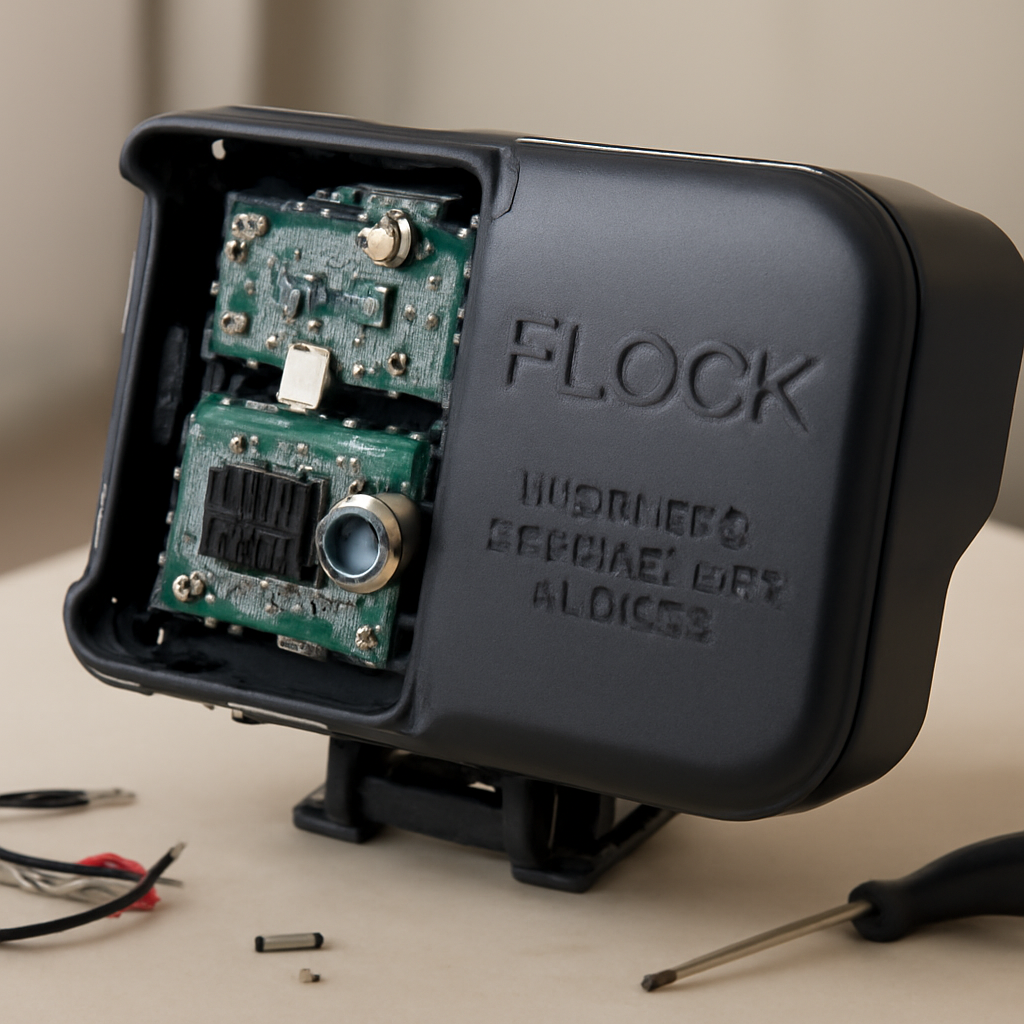
In a fascinating hack, experts got their hands on a Flock camera and uncovered a treasure trove of data, including over a million images captured over several weeks, revealing the surprising extent of its surveillance capabilities. The recovered data showed that the camera's software can detect not just license plates, but also people, vehicles, and bicycles.