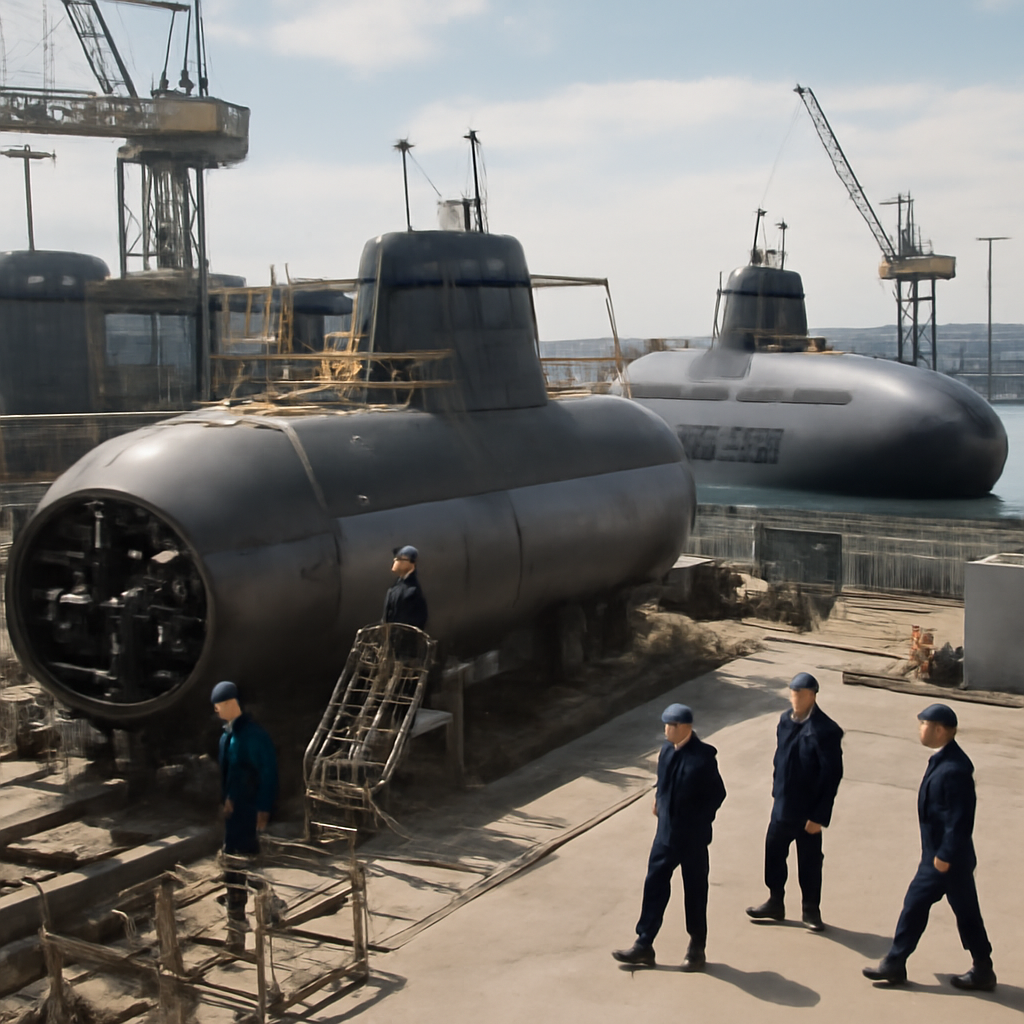
Canada will buy a dozen German-made Type 212CD submarines, a decision announced today by Prime Minister Mark Carney that will replace the four aging Victoria-class boats and expand the Royal Canadian Navy’s underwater fleet threefold.
Why Ottawa chose the Type 212CD over Hanwha’s KSS-III Batch II
Carney named ThyssenKrupp Marine Systems (TKMS) the winner after a competition that included South Korea’s Hanwha Ocean offering the KSS-III Batch II. The source says both designs met Canada’s military requirements, so the selection “likely came down to cost and industrial offsets.” Canada and TKMS must still enter negotiations to finalize the contract.
What the Type 212CD brings: design, endurance, and Arctic focus
The Type 212CD is an evolved descendant of the Type 212A already in service with several navies and has been ordered by Germany and Norway. The Canadian variant includes an improved air-independent propulsion (AIP) system with new‑generation batteries (most likely Lithium‑Ion), improved diesel generators, greater speed and range, enhanced self‑defense capabilities, and reduced signatures enabled by a specially designed diamond‑shape hull. Specifications published in the announcement put surface displacement at approximately 2,750 tons — a 65 percent increase over the Type 212A — with a length of about 240 feet and six 533 mm torpedo tubes.
Crucially for Ottawa’s Arctic planning, the Type 212CD is optimized to operate under ice for extended periods, addressing an operational requirement the older Victoria class was not designed to meet. The announcement also notes these will be the first brand‑new submarines Canada has ever bought.

Audit-ready is a season. It shouldn't be.
Evidence in spreadsheets, controls drifting between audits, frameworks multiplying on flat headcount. Nubivance runs continuous compliance on Rapid7 Cyber GRC - SOC 2, HIPAA, ISO 27001, PCI, CMMC.
End the scrambleCost, production cadence, and the maintenance tail
The 12‑boat deal is estimated to be worth more than $12 billion, according to the announcement; because the contract will include roughly half a century of maintenance, the total value could exceed $70 billion. TKMS has previously said it could produce around three to four boats per year for Canada beginning in 2027, while the Canadian government wants the first submarine delivered no later than 2035.
The need is pressing: the Victoria class was acquired secondhand from the Royal Navy in 1998 after entering British service as the Upholder class. The first three Canadian boats entered service between 2000 and 2003; the fourth suffered a fatal onboard fire during its delivery voyage in 2004 and was not formally commissioned until 2015. Currently, three of the four Victoria‑class boats are undergoing maintenance.
Germany’s and South Korea’s industrial and diplomatic offers
Germany framed its bid around deeper defense cooperation. Berlin offered Canada the option to join the Type 212CD program alongside Norway, and to manufacture components — or even complete submarines — in Canadian shipyards. Germany also proposed broader economic links, including potential purchases of special‑mission aircraft from Canada’s Bombardier and access to Canadian rare earths, mining, artificial intelligence, and battery production.
South Korea countered in kind by proposing domestic industrial work: if successful, it said it would use Canadian steel to build armored fighting vehicles in Canada. The announcement emphasizes industrial offsets and broader economic benefits as central to the procurement calculus.
How Canada’s navy, Germany and Norway, and NATO operations are affected
- Canada’s navy: The Type 212CDs will replace an unreliable, secondhand Victoria fleet and expand undersea capacity from four boats to 12, enabling longer, under‑ice patrols in the Arctic and a markedly more persistent presence in the North Atlantic.
- Germany and Norway: With Germany and Norway already committed to the Type 212CD, shared design and logistics should ease joint maintenance, training, and operational planning — a stated benefit of the trilateral cooperation Ottawa signed with Germany and Norway in 2024.
- NATO and maritime surveillance: The announcement ties the procurement to broader alliance priorities — notably deterrence in the Arctic and North Atlantic, concerns about Russia’s undersea activity, and protection of undersea infrastructure after suspected sabotage incidents in the Baltic Sea. The three countries also operate the P‑8 Poseidon maritime patrol aircraft, creating additional opportunities for integrated anti‑submarine warfare and surveillance.
The decision consolidates a substantial shift in Canada’s procurement choices toward Europe and represents one of the country’s largest defense buys. Negotiations between Ottawa and TKMS will determine how much of the work — and the multidecade maintenance contract — is carried out on Canadian soil. The government’s stated target for a first delivery no later than 2035 and TKMS’s production estimates set a timetable that will be closely watched as contract talks and industrial planning proceed.
Source: TWZ — Canada Picks German Type 212 Submarine For Badly Needed Fleet Renewal