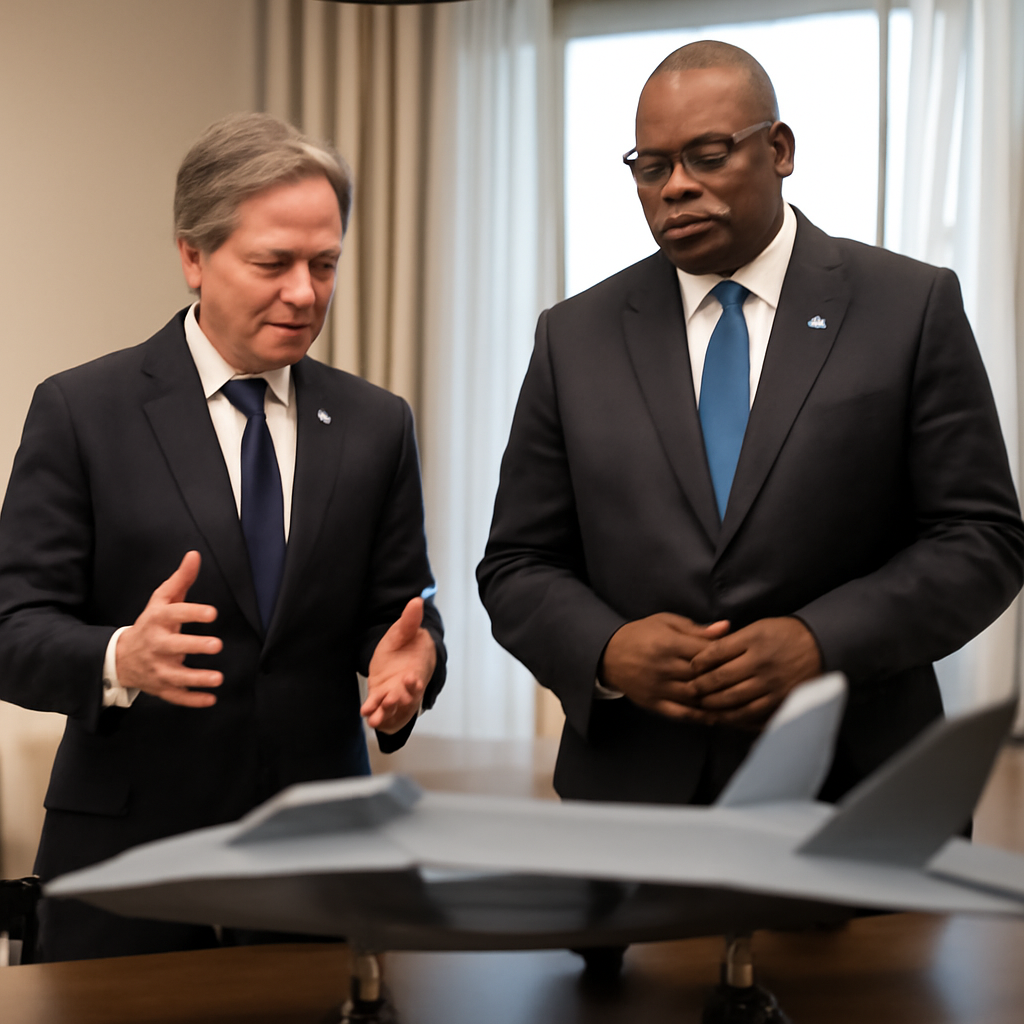
"We are interested in learning more about it. I’ll take it back to my team and see what it looks like," Canada’s defense minister David McGuinty told Reuters after discussing the Global Combat Air Programme with his Japanese counterpart in Tokyo.
Meeting in Tokyo and a new public cue from Ottawa
McGuinty raised GCAP during a meeting with Japanese defense minister Shinjiro Koizumi, marking the first time a senior Canadian official has publicly acknowledged interest in the tri‑national program. The exchange follows an earlier encounter between the two ministers in March, when Japanese reporting in The Asahi Shimbun cited unnamed officials saying Canada’s possible observer role in GCAP had come up in talks.
What GCAP is designed to deliver
GCAP — the Global Combat Air Programme — is a multinational effort between Italy, Japan and the United Kingdom that envisions a sixth‑generation fighter jet alongside collaborative combat drones and high‑tech data sharing. The program positions itself as a comprehensive next‑generation combat aviation architecture rather than a single airframe, combining aircraft, unmanned systems and interoperable information infrastructure.

Audit-ready is a season. It shouldn't be.
Evidence in spreadsheets, controls drifting between audits, frameworks multiplying on flat headcount. Nubivance runs continuous compliance on Rapid7 Cyber GRC - SOC 2, HIPAA, ISO 27001, PCI, CMMC.
End the scrambleWhere this fits with Canada’s ongoing fighter calculus
Canada has publicly been considering a split buy for its next fighters, with previous statements indicating purchases of the Lockheed Martin F‑35 and Saab’s Gripen. McGuinty’s comments open the door to additional options as Ottawa weighs alternatives amid tensions with the United States. The significance of GCAP is heightened by the collapse of a rival European project — the Future Combat Air System (FCAS), a French‑German‑Spanish initiative — leaving GCAP as the remaining multinational next‑generation fighter effort in Europe referenced in the report.
What observer status would mean
Joining GCAP as an observer would give Canada access to programme information from the founding members and serve as a pathway to potentially deeper involvement, including joining as a development partner. That route allows a country to evaluate technical and industrial fit before committing to development or production workstreams, according to the reporting on how observer participation has been framed in recent discussions.
How Canadian procurement leaders, GCAP founding members, and defence contractors will respond
- Canadian procurement leaders: Ottawa’s defence minister said he would take the matter “back to my team,” signalling formal internal review. Procurement officials will likely assess how observer access compares with a split buy of existing airframes and whether GCAP participation matches strategic, industrial and budgetary priorities.
- GCAP founding members (Italy, Japan, the United Kingdom): The tri‑national partners stand to define the terms of any observer relationship and to judge whether Canada’s participation would lead toward development partnership, making decisions about information sharing and industrial roles.
- Defence contractors named by Canada’s existing procurement considerations: Companies tied to the F‑35 and Gripen options — Lockheed Martin and Saab — as well as other firms monitoring Canadian diversification moves, will be watching for formal Canadian signals on GCAP because observer status and eventual partnership could reshape competition and collaboration prospects.
Canada’s broader effort to diversify defence procurement has already shown movement in other domains: the report notes Ottawa has recently considered non‑U.S. suppliers for diesel‑electric submarines, with Germany’s TKMS and South Korea’s Hanwha in the running. That pattern frames McGuinty’s GCAP comments as part of an explicit search for alternative industrial and strategic partnerships.
McGuinty’s statement is concrete but preliminary: he told Reuters his interest and pledged to consult his team. The next formal steps are internal — a Canadian review of the programme’s technical and industrial implications — and any approach to GCAP’s founding members to clarify what observer access would entail. Whether Ottawa moves from curiosity to commitment will determine if Canada joins the program as an information observer, a deeper development partner, or continues with a split buy of existing aircraft.