"SkyValor doesn’t just extend the detection envelope, it transforms the entire decision space," said Jason Bales, chief technology officer at CACI, describing a counter‑UAS system the company says expands how long operators have to detect, interpret, and defeat hostile drones.
SkyValor's 75‑kilometer detection claim and the decision-window math
CACI presents SkyValor as a marked leap in detection range. Bales contrasts the system with "most Group 1–3 systems" that he says "spot a drone only one to five kilometers out," which in turn gives operators about a 10‑second reaction window. By extending detection to 75 kilometers, SkyValor converts that span into an "18‑ to 20‑minute tactical advantage," according to Bales — a change CACI frames as the difference between chaotic, split‑second reactions and deliberate, measured escalation.
Multi‑layered sensing: RF, radar, cellular, EO/IR and more
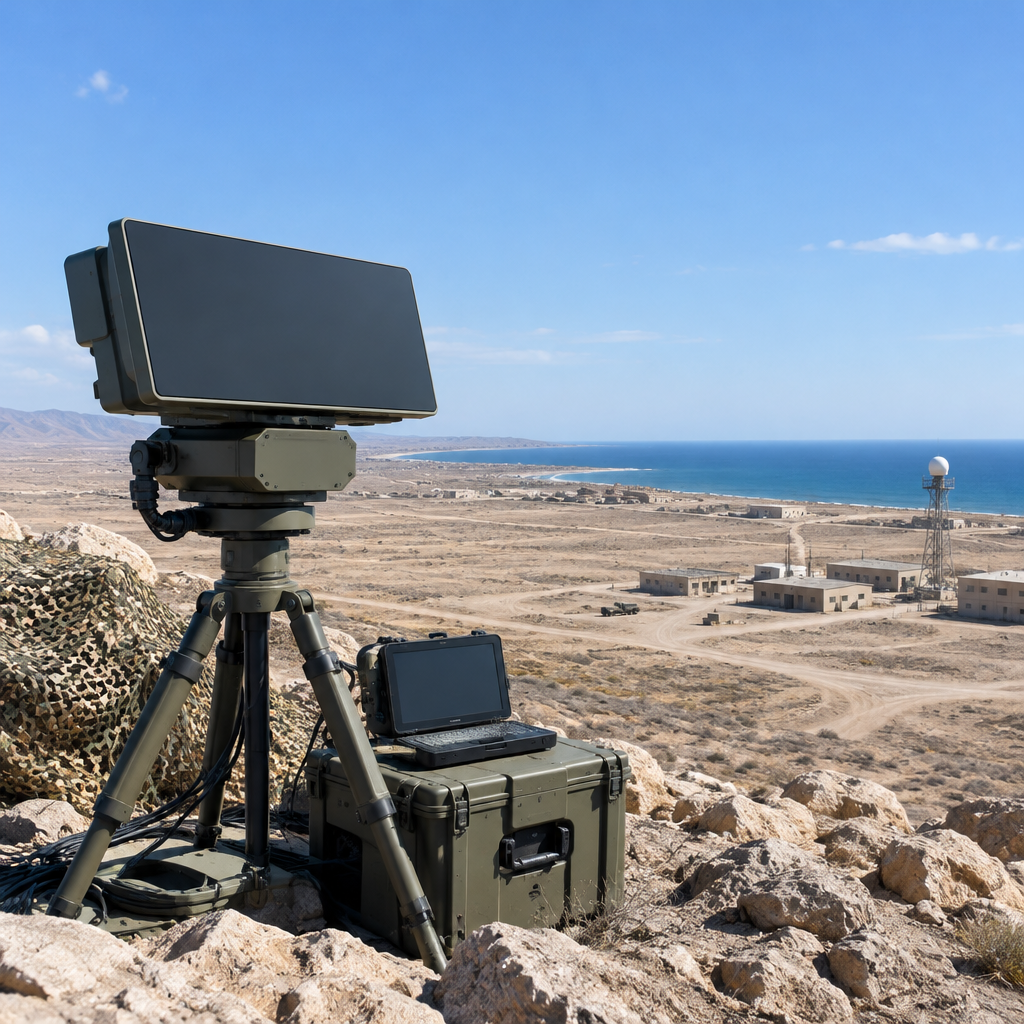
SkyValor is described as a layered architecture that "combines radio frequency (RF) sensing, radar, electronic warfare, cellular detection, and electro‑optical and infrared sensors." CACI says it integrates commercial radar for range and precision atop an RF heritage used for long‑range detection and signal analysis. The company highlights cellular‑network technology to detect and mitigate drones that use cellular links, alongside electro‑optical/infrared (EO/IR) sensors and interfaces to kinetic interceptors.

Audit-ready is a season. It shouldn't be.
Evidence in spreadsheets, controls drifting between audits, frameworks multiplying on flat headcount. Nubivance runs continuous compliance on Rapid7 Cyber GRC - SOC 2, HIPAA, ISO 27001, PCI, CMMC.
End the scrambleElectronic warfare, cyber effects, and non‑kinetic defeat
Beyond sensing, the CTO framed SkyValor's defeat options as deliberately non‑kinetic in many cases. CACI asserts the system can "break into a drone’s communications and create cyber effects — and ... apply those effects to steer or take over the platform." The company also claims the ability to "jam broadly when confronting swarms."
Bales emphasised surgical, software‑driven energy effects as alternatives to expensive physical interceptors: "We use software‑driven energy effects that deliver low or no collateral damage and provide an essentially unlimited magazine." The argument CACI offers is operational: precise, non‑kinetic measures let operators reserve kinetic interceptors for when they are "truly needed."
Software‑defined agility and autonomy: updates in minutes
SkyValor is presented as software‑defined and autonomous by design. CACI describes the platform as able to evolve its non‑kinetic effects, pushing updates across the system to counter new adversary behaviors. Bales recounted a recent event where an adversary altered a drone waveform and SkyValor had an update "pushed ... in half an hour" that reasserted control.
On autonomy, CACI says SkyValor can "collect, detect, track, and relay information without waiting for human intervention" while feeding "curated, AI‑filtered insights back to operators." The company frames this as freeing operators from routine signal sorting so they can "focus on making confident, well‑timed decisions."
Testing with JIATF‑401 at Yuma and along the southern border
CACI reports recent trials with JIATF‑401 at Yuma and "along the southern border" as the system's proving ground. According to Bales, the exercise combined controlled tests with unpredictable, real‑world encounters—short‑range pop‑ups, long‑range crossings, low‑altitude skimmers, and drones using mixed communication links—and SkyValor "kept pace" with those variations. CACI frames those trials as validating adaptability to a "living, evolving threat landscape."
What this means for border defense, critical infrastructure operators, and procurement leaders
- Border defense: CACI positions SkyValor for "tracking drones operating near or across national boundaries," arguing longer detection ranges give "early warning" and a structured decision window well before incursions.
- Critical infrastructure operators: Bales explicitly cites power plants and data centers as mission‑critical sites that "need persistent coverage," suggesting SkyValor's layered sensing and non‑kinetic options are meant to reduce collateral risk to these facilities.
- Procurement leaders and customers: CACI says it moved SkyValor from concept to deployment in 12 months and has "moved into full‑rate production," a claim meant to signal availability and scalability for customers seeking an integrated C‑UAS foundation rather than a single device.
Across the interview, CACI frames SkyValor as the product of "more than two decades" of counter‑UAS experience and "over 300 fielded systems" that informed its design. The company positions the system as field‑proven, software‑defined, and built to let operators "choose the right level of force" by extending the window for deciding how to respond.
Whether users will rely primarily on SkyValor's non‑kinetic cyber and energy effects, integrate it with kinetic interceptors, or adopt it principally for early warning will depend on operator doctrine, rules of engagement, and the specific threat mix at each site—questions the system's reported testing and production status leave in the hands of customers and mission planners.