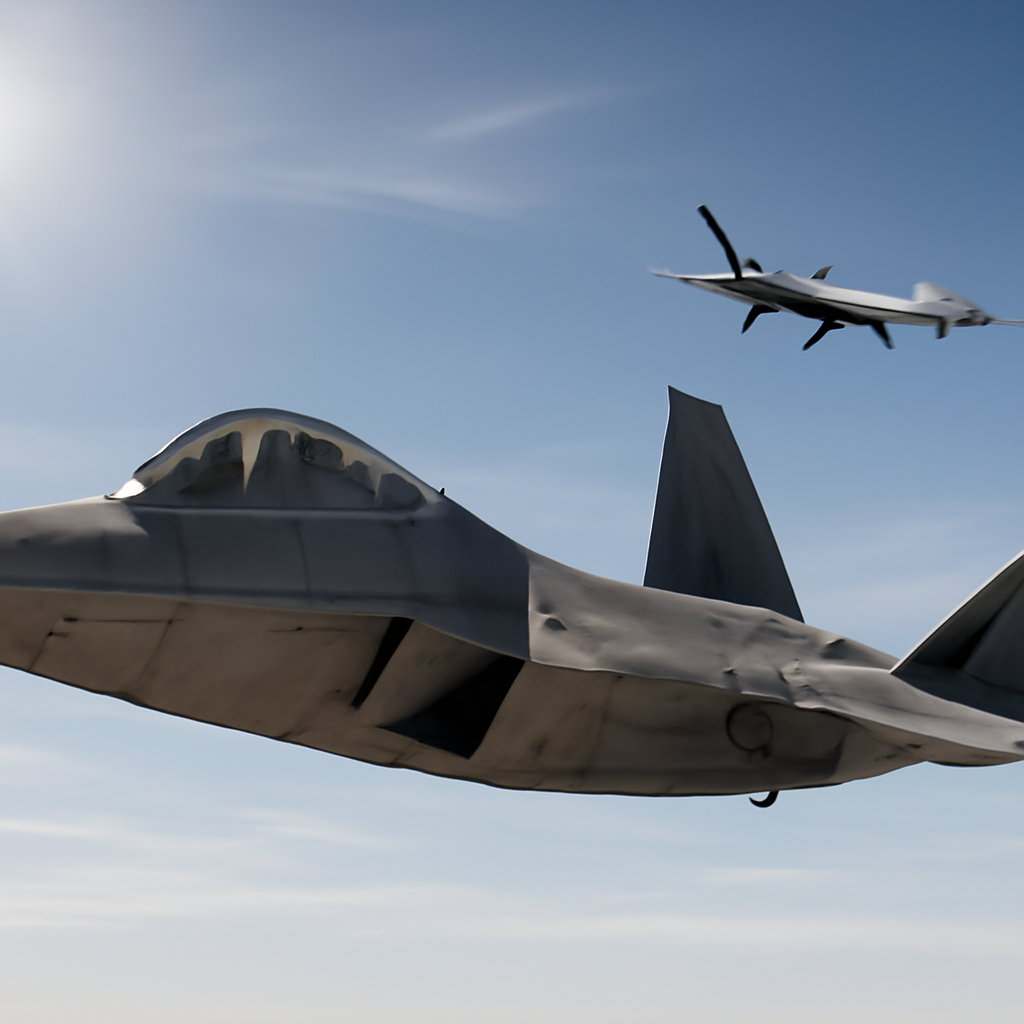
British Typhoons in the Baltic: A Calculated Response to Russian Aerial Incursions
On Thursday, June 5, two Royal Air Force Typhoon jets were scrambled from Malbork’s 22nd Tactical Air Base in Poland, racing to intercept a pair of unidentified Russian aircraft edging dangerously close to NATO airspace over the Baltic Sea. This maneuver, coming as the second in just three days involving British pilots operating within a coalition framework, underscores a renewed military vigilance in a region simmering with strategic tensions.
In a demonstration that evokes both old Cold War tensions and the modern complex interplay of statecraft and advanced aviation, the action calls attention to a critical juncture in European security. It is not merely a tactical interception but a powerful reminder of the ongoing challenges facing transatlantic alliances as they respond to provocations in contested airspace.
British Ministry of Defence (MOD) officials confirmed that the scramble was conducted in coordination with NATO allies and that the intercepted Russian aircraft were operating with characteristics consistent with intelligence-gathering missions. While details remain limited due to the sensitive nature of the operation, this interception adds another chapter to NATO’s efforts to deter what it deems as activities that could undermine regional stability.
The Baltic Sea, a historically strategic maritime corridor, has been the stage for numerous geopolitical power plays over the decades. The recent increase in aerial monitoring and intercept missions by coalition forces is emblematic of NATO’s determination to reassert its vigilance against perceived incursions and surveillance operations by adversarial powers. Indeed, such events remind observers of the delicate balance maintained in this region, where defense postures are constantly recalibrated in response to emerging threats.
Historically, the presence of Russian aircraft near the periphery of NATO airspace is not new. During the Cold War, similar patterns of reconnaissance flights and counter-interceptions played out regularly over Eastern Europe. Today, modern sensors, stealth capabilities, and digital communications have transformed these encounters into high-stakes maneuvers with implications for both strategic signaling and real-time operational security. For the NATO alliance, and particularly for the United Kingdom, these activities demand a measured yet prompt response.
The current event unfolded against a backdrop of heightened military activity in Europe. Recent months have seen an uptick in Russian aerial operations near NATO borders, prompting many Western defense establishments to enhance their readiness and coordination. British fighter pilots stationed at well-equipped barracks in Poland now find themselves not only on the front line of deterrence but also as key actors in a sophisticated network of intelligence and rapid response. The interception, reported by Defence Blog and confirmed by NATO statements, is reflective of this broader commitment.
Why does this matter? The implications of such intercepts extend beyond military strategy. They influence public trust, diplomatic relations, and the assurance to Eastern European nations that NATO remains resolute in deterring potential provocations. As noted by Michael Clarke, a senior analyst with the International Institute for Strategic Studies, “Intercept missions like these serve as both a tactical measure and a potent political signal reaffirming NATO’s collective defense posture.” His perspective, rooted in extensive policy analysis and historical precedent, highlights that the capability to project force quickly in contested domains equips allies with the tools necessary to dissuade escalation.
British fighter pilots, operating sophisticated platforms like the Typhoon, are part of an international ensemble rigorously trained for the unpredictability of modern aerial engagement. Their rapid deployment not only reflects the readiness of the MOD but also harnesses the cumulative intelligence assets provided by NATO. In an era where integrated defense systems share real-time data, the ability to execute interceptions relies on a delicate choreography between air and ground control, electronic warfare units, and diplomatic signaling.
Consider the following key facets of this engagement:
- Tactical Readiness: The Typhoon jets, among the most advanced in NATO’s arsenal, were able to quickly adjust course based on evolving threat assessments.
- Coordination with Allies: The operation was carried out in close consultation with Polish and broader NATO defense protocols, emphasizing interoperability across national boundaries.
- Signal to Adversaries: The act of interception itself is a clear message that NORAD and allied air defense networks are actively monitoring and prepared to counter any suspicious or unlawful air activities.
From a strategic perspective, experts argue that these actions are neither impulsive nor isolated. Rather, they are part of a calculated escalation in response to what is seen as a systematic challenge to the regional order. Professor Ian Green from King’s College London, an authority on European security, observes that “the frequency and proximity of these intercepts indicate a shifting calculus in how Russia seeks to test NATO’s red lines, while the alliance works to deter any undue aggression.” Such balanced assessments draw from years of observing how military posture and strategic signaling interplay within broader political negotiations.
Looking ahead, the Baltic Sea region remains one of the most scrutinized theaters for military activity in Europe. Diplomatic channels remain active as Western leaders and defense officials debate future measures and responses. Increased surveillance, augmented fighter patrols, and expanded NATO exercises are all on the table as part of a continuous effort to ensure that such encounters do not spiral into unintended escalation.
Moreover, this incident may serve as an inflection point for further discussions about the rules of engagement for aerial assets near contested airspace. With technological advancements accelerating and adversaries enhancing their capabilities, the levers of response—from sanctions to military deterrence—are being reconsidered. Policy experts emphasize that maintaining a credible and agile deterrence strategy is essential not only for regional security but for the long-term stability of transatlantic alliances.
As the situation evolves, observers and stakeholders alike will be watching for policy shifts from both NATO headquarters and the Russian government. While official statements remain measured and primarily focused on deterrence, the unfolding developments demand a balanced, fact-based perspective that does not shy away from the complexities inherent in modern defense and security strategies.
In the end, history has shown that incidents like these rarely occur in isolation. They are manifestations of a broader contest of wills and capabilities, where technology, doctrine, and the human factor converge. The incident over the Baltic Sea serves as a reminder of the ever-present need to bridge strategic ideals with operational realities, ensuring that deterrence remains effective in an age of rapid change.
As nations around the world navigate this complex terrain, one must ask: In the quest to balance strategic deterrence with diplomatic dialogue, how will these calculated aerial encounters shape the future of European security and the transatlantic alliance?