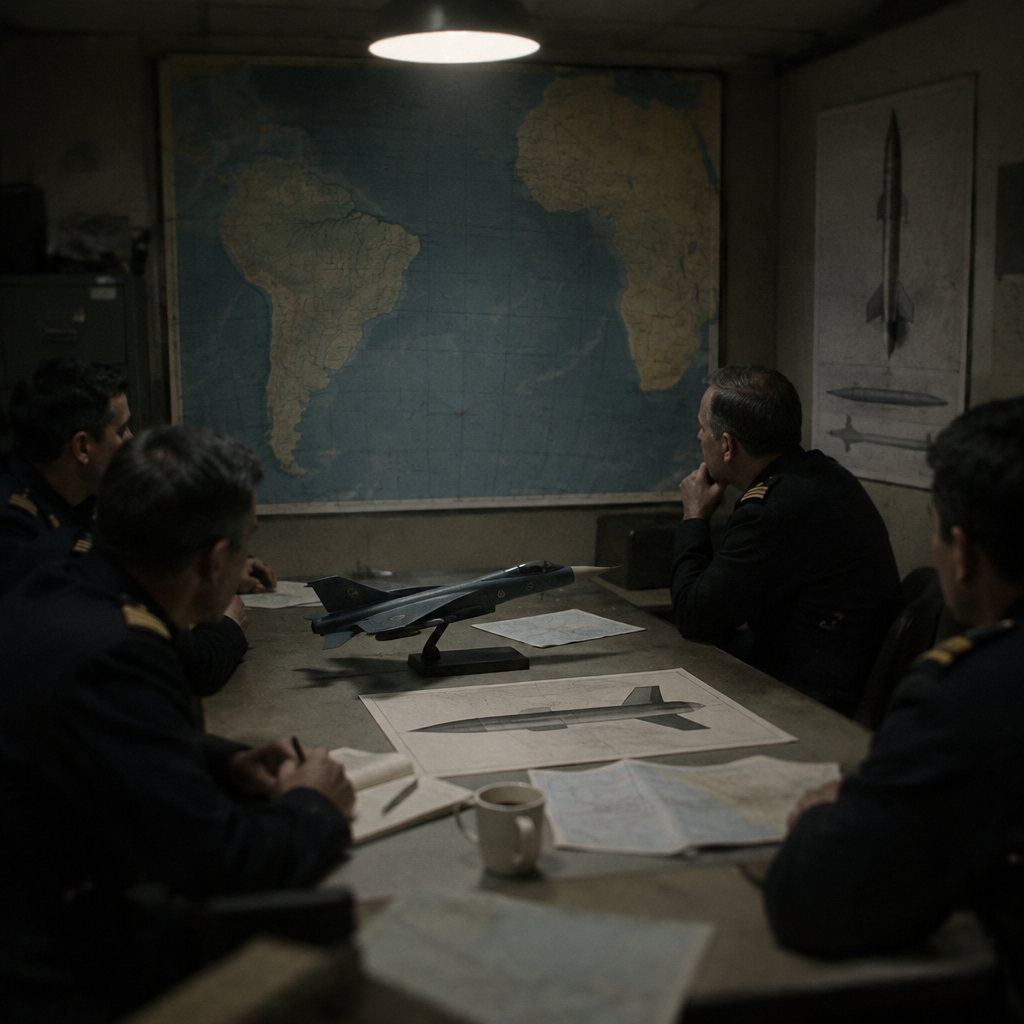
The Royal Air Force’s acquisition of Wedgetail air‑surveillance aircraft was cut down to three aircraft but left Britain on the hook for costly radars for five of them.
Wedgetail, pre‑owned 737s and an avionics supply‑chain problem
That compressed purchase encapsulates a pattern repeated across British procurement: contracts that look cheaper on the ledger but create lingering obligations and fresh vulnerabilities. The purchase of Wedgetail E‑7 systems was reduced to three aircraft while Britain remained committed to radars sized for five. To save money, the Ministry of Defence used pre‑owned 737 Boeing Business Jets for two systems; one of those aircraft, according to the reporting, was previously in Chinese hands and is "mired in cybersecurity issues," with the paper noting there are "many ways to place a bug in an innocent avionics module." The result is a programme that traded acquisition savings for operational and security risk that now sits on the defence balance sheet.
Naval choices: carriers without effective airborne surveillance and postponed strike integration
Decisions to prioritise headline platforms have left gaps in routine capability. The navy prides itself on carriers and attack submarines, yet the carriers "lack effective airborne air‑surveillance" because the service tried to "get it on the cheap" by placing an older radar on a new helicopter. The carriers will also lack a stand‑off missile for their F‑35 Lightnings until the United States performs the necessary integration work, a dependency that delays capability and leaves the strike package incomplete.
Maintenance choices compound the problem. Astute‑class submarines are "spending too much time at dockside for lack of maintenance capacity." Meanwhile, life‑extension work for the Type 23 frigates — the ships that do much of the navy’s day‑to‑day work — was deferred to sustain high‑end programmes; the ships known as the Dukes are, the reporting says, "(to use a British technical term) knackered," and their tired state arrives before promised replacements are ready.

Audit-ready is a season. It shouldn't be.
Evidence in spreadsheets, controls drifting between audits, frameworks multiplying on flat headcount. Nubivance runs continuous compliance on Rapid7 Cyber GRC - SOC 2, HIPAA, ISO 27001, PCI, CMMC.
End the scrambleBudget dynamics: three services, a ring‑fenced Trident and a tight‑fisted Treasury
At the heart of these choices is money, and how it is fought over. The reporting lays out a familiar constraint: three services (and intelligence and cyber) competing for one defence budget pushes services to lock in their majors rapidly, optimism about cost and schedule baked into submissions so projects can pass approval while rivals remain at study stage. Britain layers on further distortions. The nuclear deterrent is expensive and "ring‑fenced" — untouchable — while the Ministry of Defence must get its plans past a Treasury described as "tight‑fisted" and partly shaped by the legacy of Margaret Thatcher’s economic policy. That fiscal gatekeeping can tempt the ministry to accept optimistic industry and service estimates in order to secure funding approvals.
The Treasury, the article asserts, will clamp down on spending where doing so favours the wider economy or avoids tax rises. The predictable outcome is instability of funding, which violates a basic acquisition principle: almost nothing costs more than funding instability.
Industry strengths and the French/Swedish alternative to Britain’s model
It is not all failure. The piece highlights clear British engineering strengths: the Team Complex Weapons venture has produced an "impressive all‑domain air‑defence missile family," and the Type 26 and Type 31 frigate designs are praised as world‑class. The Edgewing fighter venture is described as bold. But the author argues these positives are undermined by "bad habits" in procurement and calls for structural reform.
The recommended corrective is explicit: Britain should move toward the French or Swedish model, where a defence acquisition agency possesses real authority and strikes a working deal with services, industry and the government purse. That deal, in the French and Swedish view argued in the piece, forces realism from the earliest operational requirement and binds the government to fund a closed contract — a trade of some institutional power for greater programme stability and predictability.
What this means for technologists, policymakers, and the Royal Navy
- Technologists and security teams should assume pre‑owned platforms and international supply chains can carry persistent cybersecurity risk; the story emphasises avionics and module‑level vectors and underlines the need to inspect the provenance and integrity of second‑hand systems.
- Policymakers and procurement leaders face a choice between retaining dispersed, optimistic decision‑making and adopting a centralised acquisition agency that can force early realism and commit funding — a shift the article equates with the French and Swedish models.
- The Royal Navy must contend with a capability gap: carriers without effective airborne surveillance, deferred stand‑off missile integration for F‑35Bs, and overstretched maintenance capacity that keeps Astute boats alongside and leaves Type 23/Duke‑class ships "knackered" before replacements arrive.
The analysis on offer is stark: British procurement mixes world‑class engineering with a procurement culture that rewards optimism, favours headline platforms over sustainment, and leans on US suppliers when budget confidence is thin. The remedy proposed is institutional and uncomfortable — "Pain? Some people giving up power? Sure," the reporting concedes — but without it the author warns, "wait for the next wave of bad news from the status quo." That sentence is not a threat so much as a ledger: the costs of Britain’s current approach are already visible in ships that cannot deploy rapidly, aircraft programmes that leave capability short, and platforms with cybersecurity questions that will not be resolved by optimism alone.