Boeing and the $75 million UCA from the U.S. Air Force
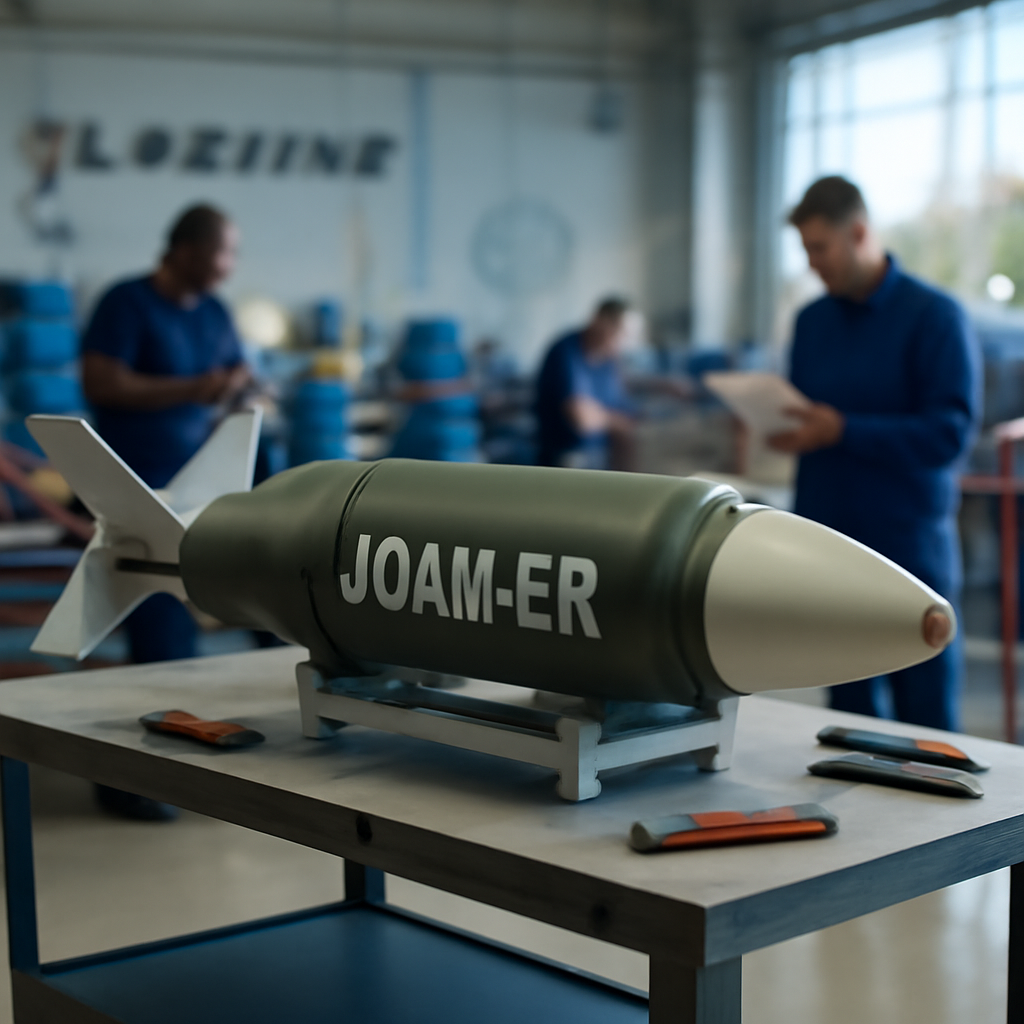
Boeing has received an Undefinitized Contract Action (UCA) from the U.S. Air Force valued at $75 million related to production of the Joint Direct Attack Munition‑Long Range (JDAM‑LR) for the U.S. Navy. The Air Force serves as the central manager for the joint‑service JDAM program. By definition, a UCA means the parties still must finalize contract details — including potential price adjustments — and these vehicles are commonly used to start work quickly in response to urgent requirements.
What the JDAM‑LR (GBU‑75/B) is and how it’s built
The JDAM‑LR is a powered, long‑range variant of the JDAM family, and Boeing’s releases show the complete weapon carrying the designation GBU‑75/B. The system is modular: the core component, the Payload Delivery Unit (PDU), has been designated BSU‑111/B and contains the guidance section, aircraft interface systems, a pop‑out wing kit, and a compact turbojet engine (reported to be the TDI‑J85). The PDU is combined with a standardized low‑drag 500‑pound‑class bomb as the warhead to form a complete weapon.

The cyber insurance questionnaire just landed. Now what?
SOC 2, HIPAA, insurance renewals - someone has to own security strategy. Nubivance provides fractional CISO leadership without the full-time salary.
Get a security leadRange, guidance, and warhead options
Boeing states the powered JDAM‑LR can reach targets more than 345 miles (300 nautical miles) away — a significant increase over standard unpowered JDAM kits, which the Air Force says glide to roughly 15 miles, and JDAM‑ER pop‑out wing configurations that extend to roughly 45 miles depending on release conditions. Guidance for the JDAM‑LR leverages the GPS‑assisted inertial navigation method used across the JDAM family, which is effective against static coordinates.
Boeing has previously depicted alternative guidance concepts and modular warhead pairings: multi‑mode seekers such as radar or imaging infrared could be added to enable strikes on moving targets, and Boeing has shown the powered kit paired with general‑purpose high‑explosive bombs and Quickstrike‑series shallow‑water naval mines. Boeing already produces a 500‑pound JDAM variant with a laser seeker to engage moving targets, indicating the family’s modular approach to mission fit.
What this means for the U.S. Navy, the Air Force, and foreign partners
- U.S. Navy carrier air wings: JDAM‑LR offers a lower‑cost, turbojet‑powered stand‑off option that could extend carrier strike reach and keep launch platforms further from hostile air defenses. The Navy previously demonstrated successful test launches of JDAM‑LRs from F/A‑18E/F Super Hornets in April, signaling operational interest for carrier air wings.
- U.S. Air Force (program manager): As the central manager and the contracting authority issuing the UCA, the Air Force is positioned to scale production and to manage potential cross‑service distribution if other services seek the kit.
- Foreign allies and other services: The article notes that allies and partners with existing JDAM stocks could join acquisition efforts, creating economies of scale and broader production runs — a distinct possibility now that Boeing is set to begin production.
Cost, production scale, and strategic context
Boeing said it has invested nearly $100 million of its own money in the JDAM‑LR program, which traces back to the late 2010s. Exact unit costs for JDAM‑LR are not yet public. For context, historical JDAM kits have cost between $20,000 and $30,000, while turbojet engine comparators in past reporting — the larger Williams F107 used in other cruise missiles — have been cited near $190,000. A typical 500‑pound low‑drag bomb would add several thousand dollars to a complete weapon. By contrast, other long‑range weapons mentioned in the reporting — such as LRASM and SLAM‑ER — have been described with unit costs generally in the $3 million range, with SLAM‑ER’s maximum range reported around 170 miles.
The reporting frames JDAM‑LR as a lower‑cost, lower‑risk pathway for bolstering standoff stocks — a strategic priority amid concerns about anti‑access/area‑denial bubbles and shrinking munitions inventories. The Navy’s earlier decisions to cancel a turbojet JSOW variant and to limit land‑attack functionality on certain missiles are cited to show how JDAM‑LR fits a reopening of options for affordable, scalable long‑range strike.
Conclusion
With a $75 million UCA now in hand and Boeing’s own investment already committed, JDAM‑LR production has moved from development to early production for the Navy. The UCA structure leaves price and final quantities open, even as the program gains formal designations — GBU‑75/B for the complete weapon and BSU‑111/B for the PDU. Whether production broadens quickly to other services or allied customers will depend on finalized contracts and demand — but the modular, lower‑cost promise of the JDAM family is now entering a new, production‑stage phase.