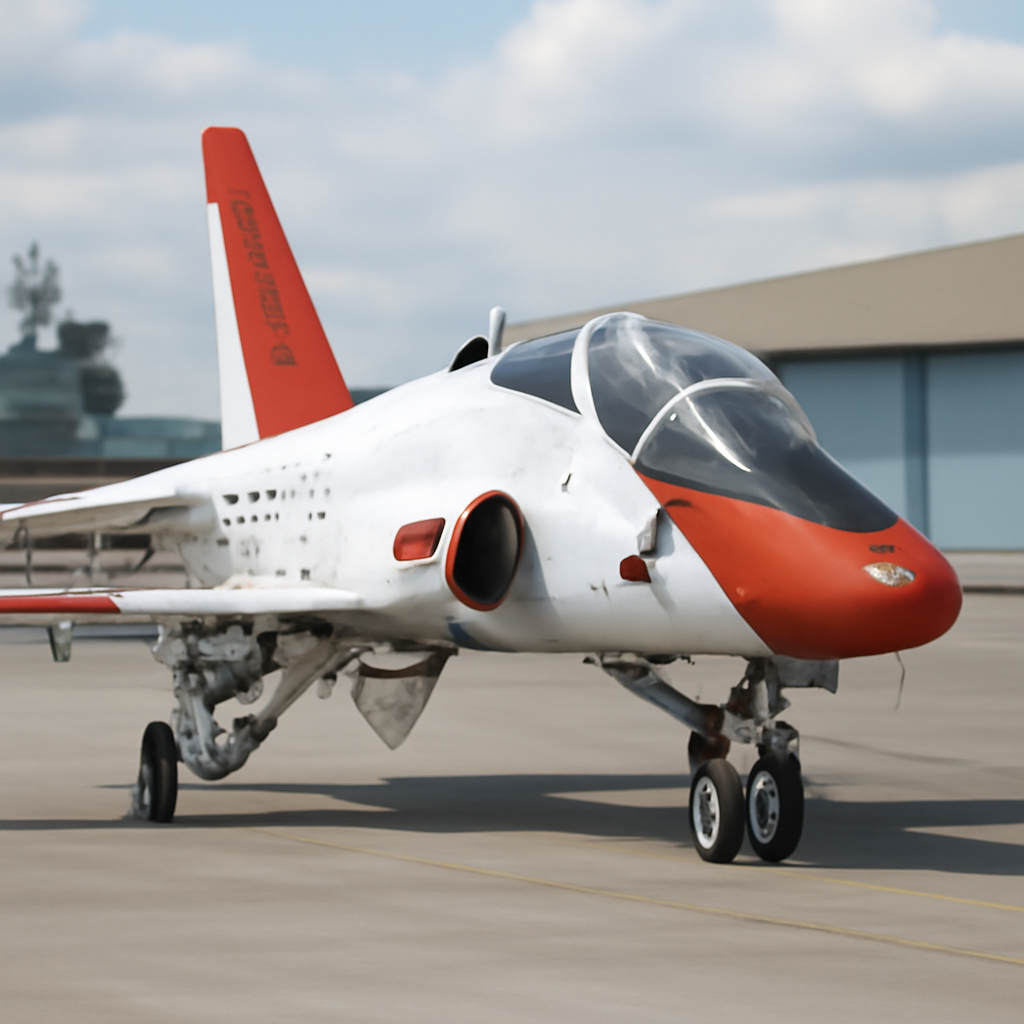
"After careful evaluation, we have determined the T-7A does not meet the U.S. Navy’s Undergraduate Jet Training System requirements," a Boeing spokesperson told TWZ.
Boeing’s rationale for withdrawing from UJTS
Boeing has informed the Navy it will not bid on the current Undergraduate Jet Training System (UJTS) request for proposals. The company said the decision followed an internal assessment that the T-7A Red Hawk — the Air Force trainer Boeing had planned to adapt for the Navy competition — does not meet the Navy’s UJTS requirements. Boeing tied its decision specifically to the General Electric F404 turbofan, saying Navy engine-qualification demands would require additional long-cycle development work and could jeopardize the Navy’s initial operational capability timeline for the new trainers.
In Boeing’s statement to TWZ the company also emphasized the F404’s long service record, calling it “a proven design with millions of flight hours on multiple platforms, including the T-7A,” and said it remains “committed to delivering the T-7A as a modern, growth-oriented training solution for 4th, 5th and 6th generation pilots as requirements evolve.”
Who remains in the competition
With Boeing’s exit, the competition appears to be down to two known teams. Sierra Nevada Corporation, now partnered with Northrop Grumman and General Atomics, is one contender; the other is a Leonardo-led team partnered with Textron (Beechcraft). Lockheed Martin, which had teamed with Korea Aerospace Industries, withdrew from the competition in April.
SNC’s Freedom Jet is the only clean-sheet entrant in the running; Leonardo and Textron are offering the Beechcraft M-346N. The SNC design is powered by two Williams FJ44-4M turbofans, while the M-346N uses a pair of Honeywell F124 turbofans. The TF-50N Lockheed/KAI proposal and the T-7A are single-engine designs powered by the F404, a detail observers have flagged as potentially significant given the Navy’s revised requirements.

This site is the portfolio.
OSINTSights runs on Cloudflare Workers, D1, R2, and Vectorize, with an AI pipeline on Hetzner ARM. Nubivance designed, built, and operates it. We do the same for clients.
See what we buildEngine and design requirements shaping bids
Boeing framed the F404’s qualification window as the central technical obstacle. That is notable because the F404 is already used on several land-based trainers referenced in the record cited by the company — including other T-7 competitors and the TF-50N that Lockheed Martin and KAI had contemplated for UJTS — which makes the specific mismatch between the Navy’s RFP and the F404 unclear in the public record.
The source material also notes a possible pattern: the two twin-engine proposals remaining (M-346N and SNC Freedom Jet) contrast with the single-engine designs that had been in contention. SNC has deliberately tailored its Freedom Jet to retain capability for carrier qualification tasks that the Navy has now removed from the formal UJTS requirement set — a choice the company says offers the Navy extra flexibility should carrier-related training needs return.
Navy requirements, schedule changes, and program cost
The Navy issued a formal UJTS request for proposals in March and currently plans to acquire 216 new jet trainers to replace just under 200 T-45 Goshawks in the inventory today. The service has scaled back UJTS training requirements so the new curriculum for prospective tactical jet pilots will no longer require carrier qualifications or simulated touch-and-go carrier landings at shore facilities.
The program timeline has slipped: the Navy originally planned to select a winner this year with the first example entering service in 2028; the current goal is to award a contract in mid-2027. The Navy also raised the total program price cap from approximately $1.8 billion to $2.7 billion. “The Government updated the price cap to reflect a change in the program cost estimate due to new information received,” Naval Air Systems Command (NAVAIR) explained, according to Breaking Defense.
What this means for the Navy, Boeing, and the Air Force
- For the Navy: the field is narrowed to two teams that offer twin-engine or clean-sheet options; the service must now judge those entries against a revised training model that excludes carrier qualifications but is priced against a higher program ceiling.
- For Boeing: withdrawing frees program and engineering bandwidth to other priorities, while removing the possibility of fleet-level synergies between a Navy T-7 derivative and the Air Force’s Red Hawk fleet.
- For the Air Force: any sustainment or support synergies tied to shared platforms are now “off the table,” since the Navy will not be adopting the T-7A variant Boeing had proposed.
The contest is now a head-to-head between the SNC-led team and Leonardo/Textron, played out against an RFP that has been materially reshaped — fewer carrier-training tasks, a higher price cap, and an extended procurement timeline. Aviation Week and Breaking Defense were among the first outlets to report Boeing’s withdrawal.
With the award pushed to mid-2027 and specific technical questions about engine qualification left unresolved in public statements, the next milestones to watch are formal proposal revisions from the two remaining teams and any Navy clarifications about the engine and qualification criteria that drove Boeing’s decision.