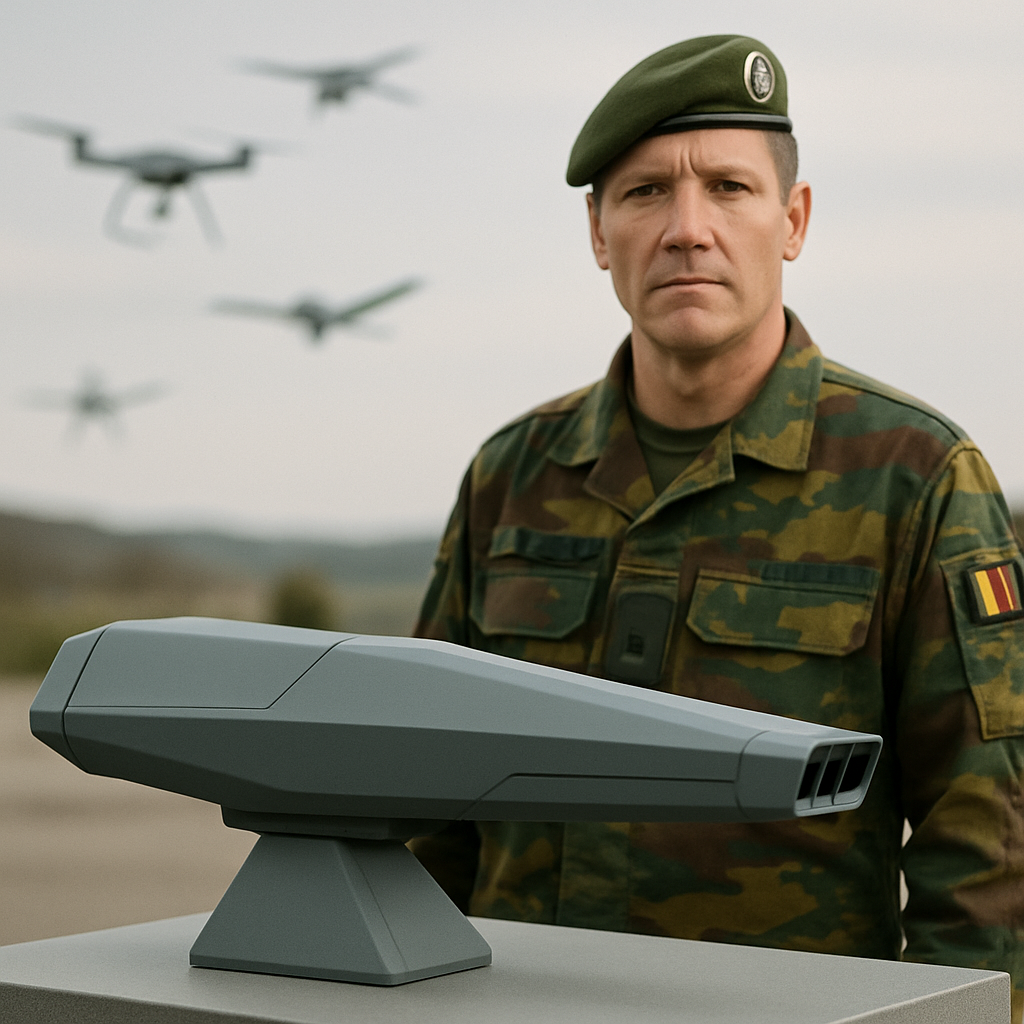
“We need [more] counter-drone and drone systems, we bought small capabilities for €50 million, but we have a big €1 billion contract for more coming up, [as part] of an innovative project,” Defense Minister Theo Francken said during a transatlantic security discussion this week.
Scope and structure of the €1.1 billion, 10-year tender
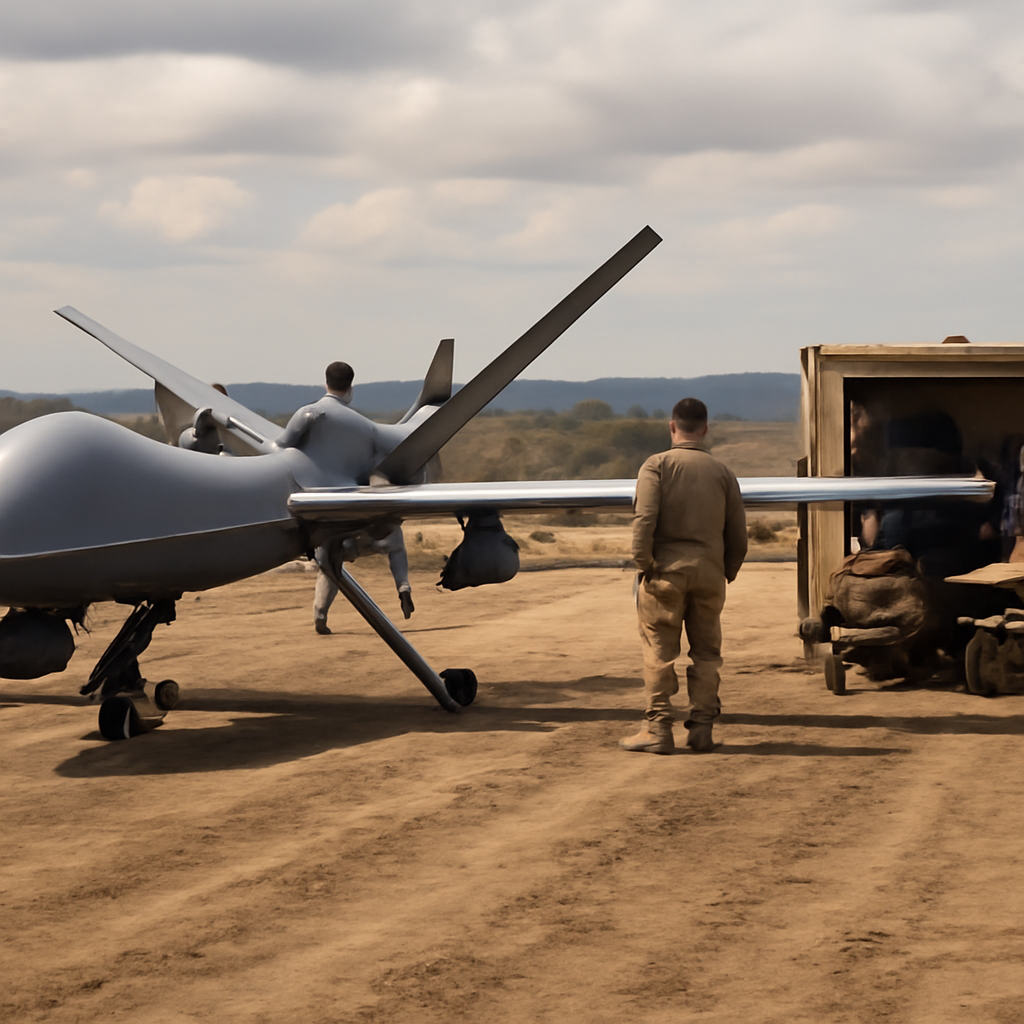
Brussels released a formal tender on April 21 for a €1.1 billion (about $1.3 billion) counter-drone program that would run for 10 years with an option for two additional years. The tender was formally approved earlier in April, according to the Belgian Ministry of Defence, and is described as a long-term, large-scale effort to field durable systems rather than short-lived stopgaps.
Which firms have expressed interest — and who the minister met in the US
A Ministry of Defence spokesperson said Defense Minister Theo Francken met with BAE Systems and Shield AI while in the United States this week. The spokesperson added that American firms Anduril, CACI and Sentry View Systems, as well as Sweden’s Saab and Germany’s Hensoldt, have expressed interest in pitching designs for the tender. The ministry declined to share an exact timeframe for when production contracts will be signed, but said Brussels plans on advancing “on the matter urgently.”

This site is the portfolio.
OSINTSights runs on Cloudflare Workers, D1, R2, and Vectorize, with an AI pipeline on Hetzner ARM. Nubivance designed, built, and operates it. We do the same for clients.
See what we buildTechnical priorities: active and passive measures, linked command-and-control
The tender will combine both active and passive measures, the ministry said, including detection sensors and a command-and-control system to link all effectors. An online translation of a March announcement from Francken’s office frames the main “intention” as forging partnerships across EU and NATO member states and Ukraine, while involving Belgian firms “aiming to retain, at least in part, the intellectual property rights (IP) to future joint developments.”
The same announcement specifies a required range of deployable solutions: fixed installations for critical military and maritime infrastructure; semi‑fixed modular systems that can be moved for extended periods; platform‑based solutions for vehicles or ships; and lightweight, manportable systems for short‑range tactical deployment.
How the tender sits alongside December purchases and the NASAMS buy
Francken pointed to an earlier, smaller package when describing the wider effort. In December, Belgium announced a €50 million initiative that involved Saab‑made surveillance radars and Australian drone guns, acquisitions the ministry said followed illegal drone activity recorded over the Klein Brogel base — a site that has been reported to house US tactical nuclear weapons. Separately, Belgium last year committed to buying 10 National Advanced Surface-to-Air Missile Systems (NASAMS) from Norway’s Kongsberg via a joint procurement with the Netherlands; the first of those systems is expected to arrive in the second half of 2027.
By comparison, a $1.3 billion spend spread over 10 years would mark a substantial expansion: Belgium’s entire defense budget amounted to $14.5 billion in 2025, making this counter‑drone package a significant line-item even when paid over a decade.
What this means for technologists, policymakers, and the public
- Technologists and security teams: The announcement’s explicit aim to let Belgian firms “retain, at least in part, the intellectual property rights” signals that procurement will emphasize co‑development and IP negotiations, not simple off‑the‑shelf buys. Teams bidding or integrating systems will need to account for modular architectures (fixed, semi‑fixed, platform‑based and manportable) and linked command‑and‑control across effectors.
- Policymakers and procurement leaders: The tender’s language about partnerships with EU and NATO member states and Ukraine makes multinational industrial cooperation a central policy objective. Procurement timelines remain unspecified — the ministry declined to give an exact schedule — even as officials say they intend to act “urgently.”
- The public and force operators: The €50 million December purchases demonstrate a willingness to field interim capabilities quickly; the larger €1.1 billion tender aims to provide longer‑lasting systems. Given the scale relative to the 2025 budget, taxpayers and operators alike will be watching how contracts, deployment priorities and lifecycle costs are managed over the coming decade.
The Belgian program frames counter‑drone capability as a sustained, interoperable effort rather than a series of one‑off buys: a formal tender now open to major international vendors, ministerial outreach in the United States, and an explicit push for partnership and IP sharing with allies. What remains concrete is the ambition and the roster of interested firms; what remains open is the timetable for production contracts — a question the ministry has declined to answer even as it says it will move “urgently.”