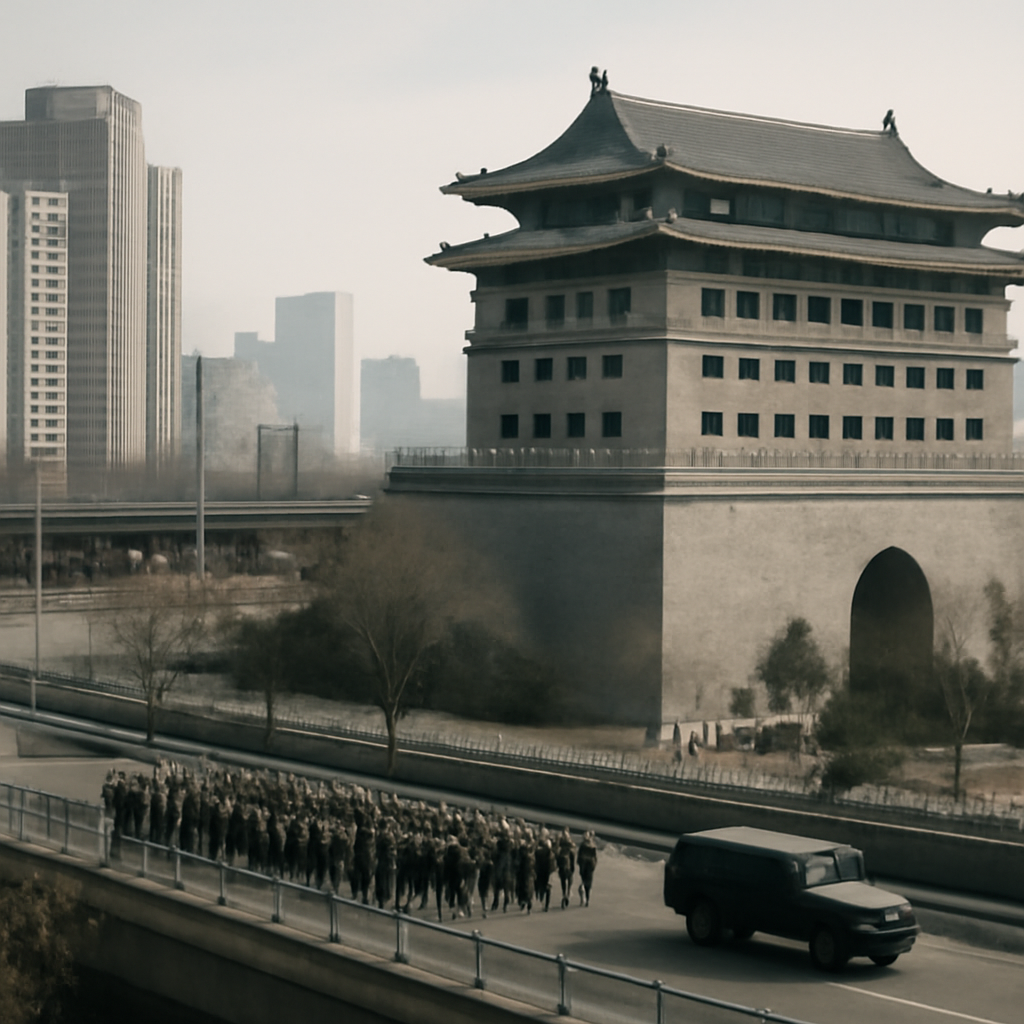
The 6th Regiment of the Beijing Garrison carries the designation “Unit Number: 5112” and lists its headquarters at 丰台区花乡高立庄, a concise set of facts that anchor a broader picture: this is a unit built and tasked for internal security more than for high‑intensity battlefield operations.
The Beijing Garrison’s mission and political role
The garrison’s mission has not changed in recent years: protect Beijing, safeguard CCP and state institutions, respond to natural disasters, and maintain internal stability. Its elite status is political rather than a reflection of frontline warfighting capability — the unit is organized and equipped for light infantry and riot‑control duties that match those missions rather than for modern armored combat.
Organization: tradition rather than reform
Structurally the Beijing Garrison preserves older PLA formations. Unlike most PLA line units that reorganized into corps/brigade/battalion formations after the 2015 reforms, the garrison retains a division/regiment construct. It continues to include Two Guard Divisions (1st and 3rd), nine independent regiments, and the Beijing Garrison Honor Guard Battalion — the latter noted for an international appearance during a state visit on Sunday, July 13, 2008.

Audit-ready is a season. It shouldn't be.
Evidence in spreadsheets, controls drifting between audits, frameworks multiplying on flat headcount. Nubivance runs continuous compliance on Rapid7 Cyber GRC - SOC 2, HIPAA, ISO 27001, PCI, CMMC.
End the scrambleEquipment and appearance: dated armor and different camo
Public coverage of the garrison’s combat equipment is sparse and often ceremonial. One recent segment showed the garrison still operating PTP‑86 100 mm (PTL‑02) assault guns painted in a short‑lived MOUT digital camouflage. That contrasts with most PLA line units that have moved on to the newer Type 19 / Type 21 “Xingkong” (星空) camouflage. The record, as presented, suggests the garrison is not prioritized for cutting‑edge heavy weapons.
6th Regiment (Special Military Police Regiment): structure, duties, and assets
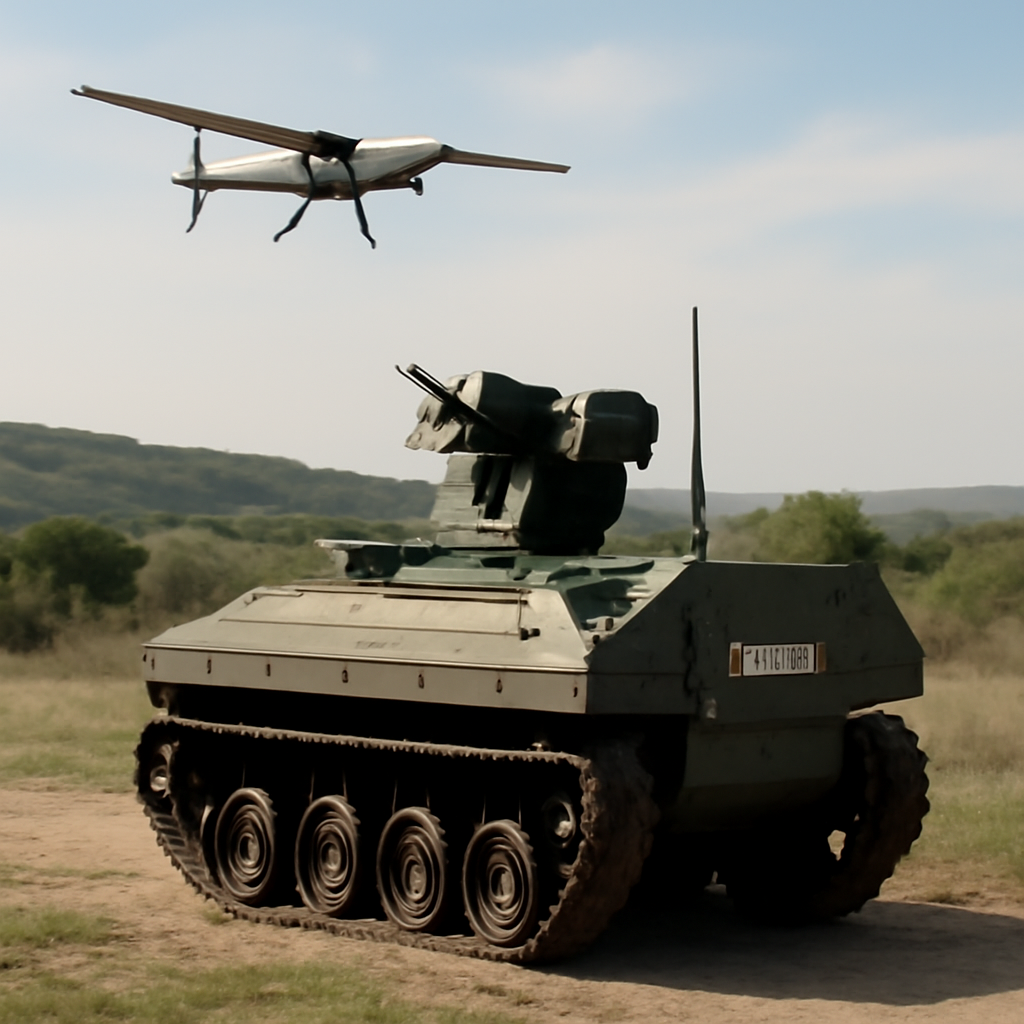
The source lists specific details for the 6th Regiment, part of the 1st Garrison Division: commander Zhang Hongjun and political commissar Chen Weiming; an orbat of 13 companies in four battalions; and support elements including one transportation company, one reconnaissance company, and one anti‑terror unit. The regiment is described as manpower‑heavy and lacking significant heavy equipment, aside from a company of ZSL93/WZ523 armored personnel carriers armed only with a 12.7mm heavy machine gun. The ZSL93 type is noted as appearing historically in national parade contexts and otherwise being found in garrison units such as those in Hong Kong and Macao.
The 6th’s duties extend into municipal support roles. Citing the Beijing municipality government’s website, the regiment has assisted in protecting the city’s water supply — framed in the source as an important task for “a city of more then 6 million located right next to a desert.” In the runup to seasonal events (the source notes “as the summer game draws near”), the 6th is being trained to back up civilian security agencies, including the People’s Armed Police (PAP) Snow Wolf “SWAT” Detachment of the PAP 1st Special Force Brigade, during a terrorist attack.
How the Beijing municipality government, the PAP Snow Wolf detachment, and the Beijing Garrison interact
- Beijing municipality government: Uses the 6th Regiment as a capability for protecting critical infrastructure such as the water supply and relies on the regiment for municipal contingency support.
- PAP Snow Wolf “SWAT” Detachment (PAP 1st Special Force Brigade): The 6th Regiment trains to serve as a backup to this civilian security element in the event of terrorism‑related contingencies.
- Beijing Garrison leadership: Maintains a force posture emphasizing political protection and internal stability, retaining older organizational forms and select legacy equipment better suited to garrison and security duties than to heavy mechanized warfare.
Across the facts provided, a clear throughline emerges: the Beijing Garrison remains a politically prioritized formation whose organization, equipment, and training align with capital security and internal support rather than with the modernization trends seen elsewhere in the PLA. The record supplied here documents where the garrison stands in 2026 — traditional structure, limited heavy weapons, and explicit municipal and internal‑security tasks — and leaves open a practical question rooted in those particulars: how and when, if at all, the garrison’s force posture will shift from its historical and political functions toward parity with the PLA’s modernized line units.