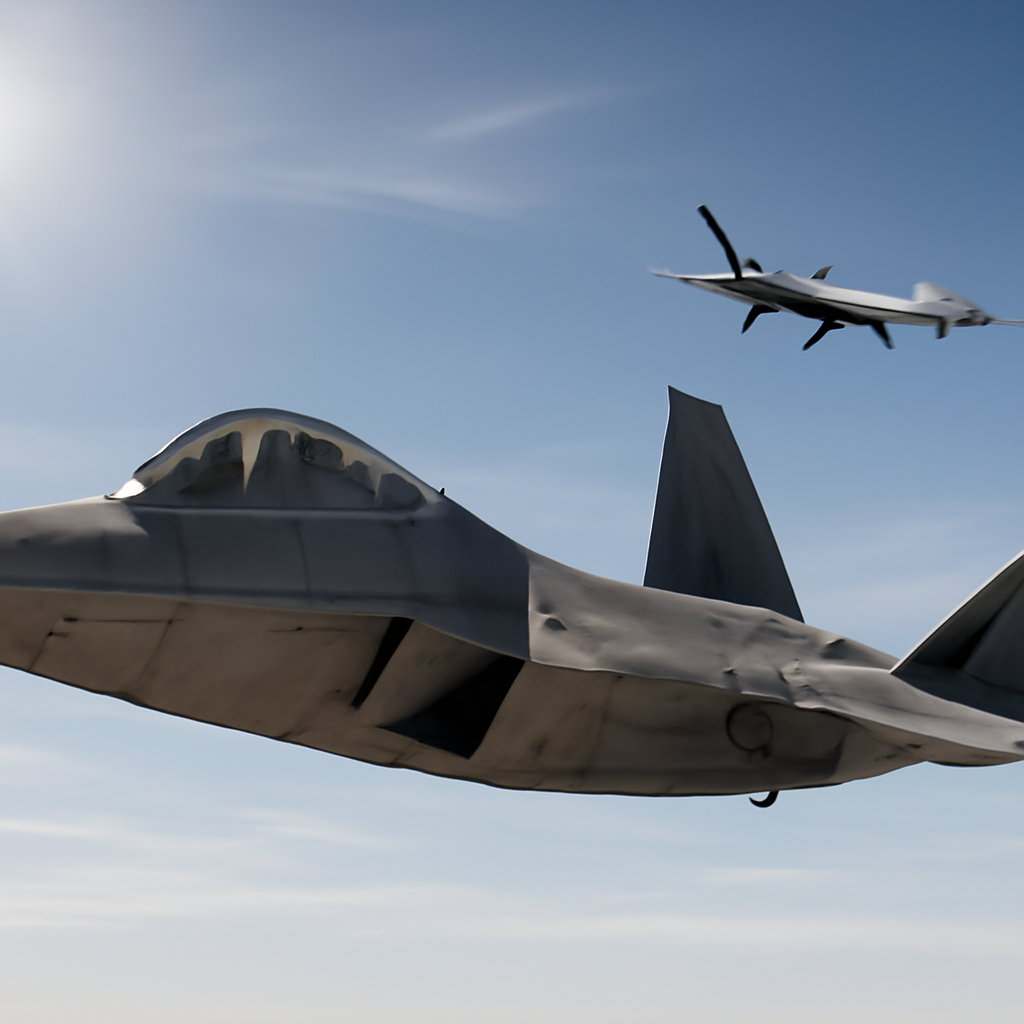
Unveiling the Skies: The Significance of China’s J-35 Stealth Fighter Footage
In an unexpected turn of events, Chinese state television has given the world a rare, behind-the-scenes look at the production of its next-generation J-35 stealth fighter. This glimpse, caught during a segment ostensibly dedicated to the J-15T fighter’s assembly, displays multiple J-35 airframes in various stages of construction—equipped with tail hooks and awaiting their final touches. As technology races forward, questions arise about what this revelation means not only for China’s military capabilities but also for global security dynamics.
To understand the importance of this footage, one must consider the broader context of military aviation and international relations. The J-35 is part of China’s ambition to establish itself as a premier aerospace power capable of projecting military strength far beyond its borders. The development of fifth-generation fighters like the J-35 places China squarely among an elite group of nations that includes the United States and Russia, who have long held dominance in advanced military aviation technology.
The visible production line was a marked departure from the usual secrecy surrounding military aircraft manufacturing in China. Previous glimpses into such operations were sparse and often obscured by stringent media control. During the broadcast, several airframes could be seen nestled within assembly fixtures, indicating that production is not merely in developmental stages but well on its way to operational readiness.
This revelation matters profoundly for several reasons. First and foremost, it reflects China’s escalating investment in defense technology amid rising geopolitical tensions in the Asia-Pacific region. The J-35 is intended to complement China’s existing fleet by enhancing stealth capabilities—vital for penetrating increasingly sophisticated air defenses encountered across potential conflict zones. Additionally, the show of progress sends a signal to regional adversaries about China’s commitment to strengthening its military posture.
Expert analysis suggests that while some may dismiss this footage as an innocuous showcase of industrial prowess, it should be taken seriously as a marker of shifting power dynamics. According to Dr. Richard Fisher, a senior fellow at the International Assessment and Strategy Center, “The visibility into the J-35 production line demonstrates not just technological ambition but also political intent.” He further posits that “China’s advancements may compel neighboring nations to rethink their defense strategies and alliances.”
Looking ahead, there are several important factors to monitor regarding China’s J-35 program and its implications for global security. First, watch for potential export opportunities; if China seeks partners for its advanced fighter jets, it could reshape defense procurement in countries previously reliant on Western suppliers. Secondly, observe how this development might impact U.S.-China relations—specifically whether it will catalyze further military collaboration among U.S. allies or prompt escalated arms races.
In conclusion, this rare insight into China’s J-35 production is more than mere footage; it serves as a lens through which we can view evolving military ambitions and geopolitical realities. As nations across the globe grapple with these shifts, one must ponder: how will technological advancements redefine not only military might but also diplomatic relations in an increasingly multipolar world? The stakes have never been higher.