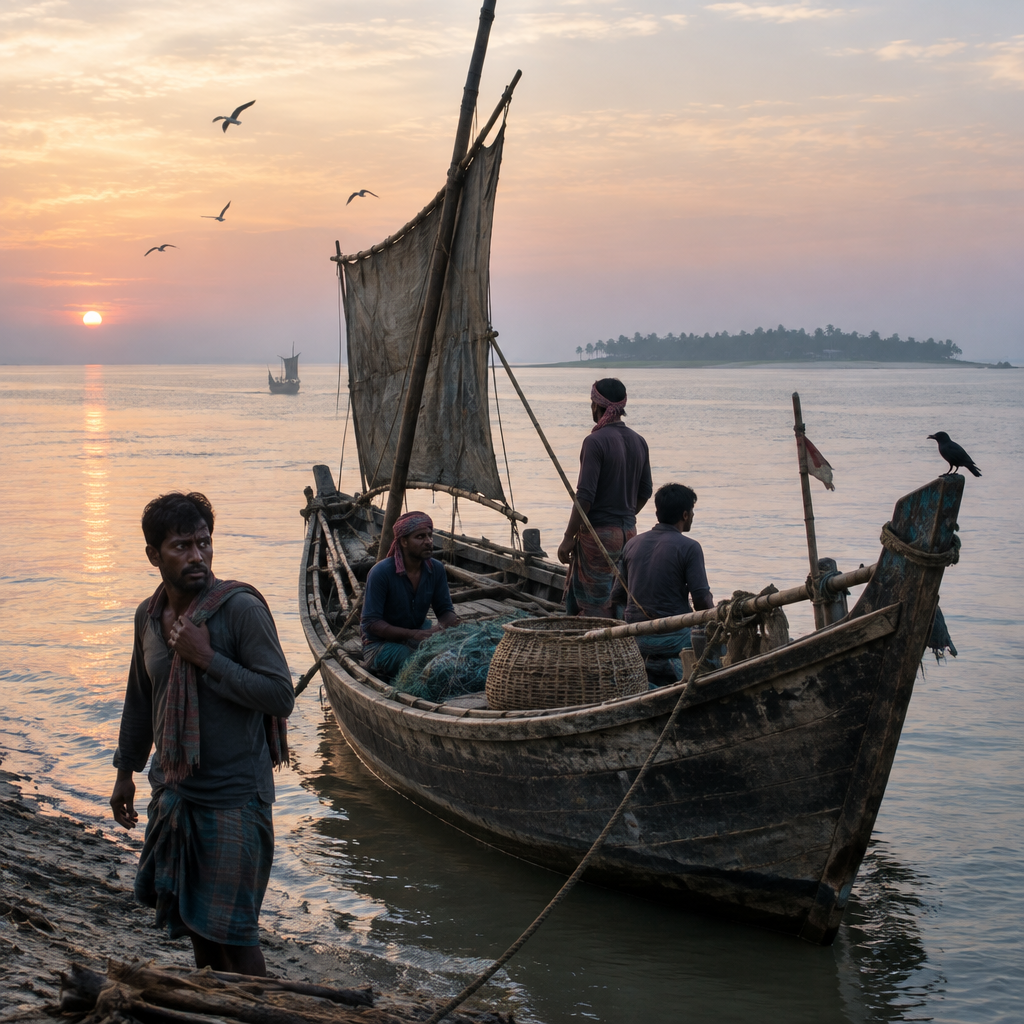
"Fishermen are always living in fear of the Arakan Army," Abdul Gani, a boat landing committee leader in Shah Porir Dwip, told The Daily Observer.
The immediate problem on the Naf: scale and incidents
Between January 2025 and August 2026 the Arakan Army detained 434 fishermen, the Border Guard Bangladesh (BGB) reports: 222 Bangladeshi citizens and 212 Rohingya refugees living in Bangladesh, and 86 remained in its custody. Specific episodes cited by authorities and local sources include an August 8 detention of three fishermen near Shah Porir Dwip, and the BGB receiving 24 fishermen at the Naf River zero line on August 19 who had been taken at various times starting in early 2025. In April 2025 the Arakan Army operated inside Bangladeshi waters and seized 23 fishermen off Saint Martin’s Island, an action that kept 3,000 fishermen ashore for five days.
Bangladesh’s naval build-up and why it missed the river
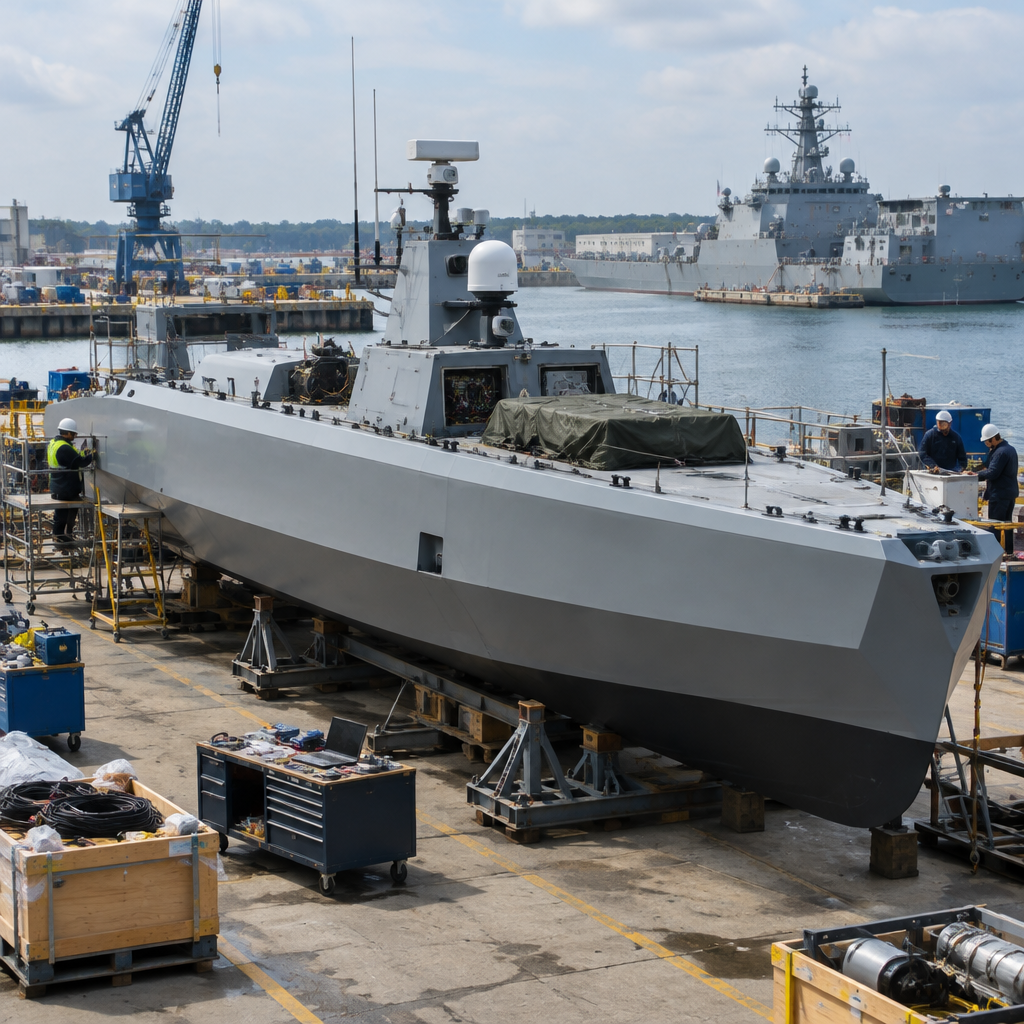
Dhaka’s maritime strategy followed a clear logic after two international successes: a win against Myanmar in 2012 and arbitration in 2014 against India that settled maritime boundaries. That legal security fed Forces Goal 2030, under which more than 30 new warships joined the fleet since 2009, two refurbished Chinese submarines were added, and a submarine base at Pekua was reportedly built for $1.21 billion. The navy’s modernization focused on deterring state navies — a visible, politically resonant set of platforms — but those assets are poorly matched to interdiction and persistent surveillance in a shallow estuary like the Naf.

The cyber insurance questionnaire just landed. Now what?
SOC 2, HIPAA, insurance renewals - someone has to own security strategy. Nubivance provides fractional CISO leadership without the full-time salary.
Get a security leadWhy warships and submarines do not solve Naf River seizures
The Arakan Army’s use of fast boats in shallow, unmarked waters reduces the navy’s utility: submarines offer little protection against surface skiffs, and deploying frigates against small boats in a shallow estuary is an inefficient use of naval resources. The source argues the right tools are regular patrols, reliable surveillance, and rapid-response capacity. But responsibility is fragmented: by the Coast Guard Act of 2016 the Coast Guard legally holds responsibility for monitoring coastal waters and protecting Bangladesh’s maritime boundary, yet the Coast Guard is part of the Home Ministry while its officers and enlisted personnel are seconded from the navy, which sits inside the defense establishment. The BGB has frequently stepped into roles the Coast Guard should fill, taking the lead in securing releases of detained fishermen.
Capability gaps, recent procurements, and political incentives
Dhaka has begun to boost the Coast Guard: announced plans to expand manpower, procure patrol vessels and high-speed boats, and induct three surveillance drones. But a serving naval officer writing in the Navy Journal in 2024 warned that capability development among coastal security agencies has been piecemeal, "often resulting in gap or duplication," and that ministries hold data "yet to be integrated for sharing." Organizational misalignment matters more than a handful of new platforms unless information reaches decision-makers quickly and there is an agreed chain of command for crisis response.
Political visibility shaped investment choices. In 2017, then-Prime Minister Sheikh Hasina commissioned the two submarines, and she inaugurated the Pekua base at an official ceremony in 2023 — projects that are conspicuous and politically gratifying. By contrast, a coastal radar network in Teknaf or modest surveillance and information-sharing infrastructure draws less public attention. As Forces Goal 2030 nears its end, the two submarines have received life-extension upgrades to 2030, making replacement or further extension decisions imminent. International diplomacy could complicate procurement: Washington has announced plans to supply U.S. and allied systems as options to Chinese gear, and Dhaka and Beijing agreed in June to expand strategic ties, which includes a diplomatic and defense 2+2 dialogue. Prime Minister Tarique Rahman told journalists in June that a "modern, secure, accurate and efficient exchange of ocean-related information" is "closely linked to safeguarding national interests."
What this means for the Coast Guard, the Navy, and fishermen
- Coast Guard: Legally responsible for coastal monitoring under the Coast Guard Act of 2016; expansion plans and new drones improve tools but the service needs clear authority, sustained budgets, and integrated information flows to convert hardware into effective presence in the estuary.
- Navy and BGB: The navy retains the role of containing state-level naval threats, but the BGB has become the de facto responder in many Naf incidents; both will need protocols to exchange radar footage and intelligence into a common operational picture and a mechanism to coordinate rapid response.
- Fishermen: Low-cost mitigations such as conspicuous boundary markings and inexpensive geolocators may deter accidental crossings but will have limited effect on deliberate detentions; for many in Teknaf, daily safety depends on predictable rules for arrests and releases that Dhaka currently lacks with a non-state actor across the river.
The policy prescriptions in the record are specific: reorganize resource allocation among maritime authorities, mandate the navy and BGB to share surveillance and intelligence, fund sustainable patrolling and rapid response, and consider a Maritime Information Coordination Centre — an idea floated in the Navy Journal though disputed over institutional leadership. The International Crisis Group has recommended that Dhaka step up engagement with the Arakan Army to secure more predictable treatment of detainees without recognizing the group.
Bangladesh still needs a navy to deter another state’s seafaring power. But in the estuary where the Arakan Army now controls the far bank, success will be measured differently: in Teknaf, "success will be defined by the day that fishermen make it back to port safely without fear."