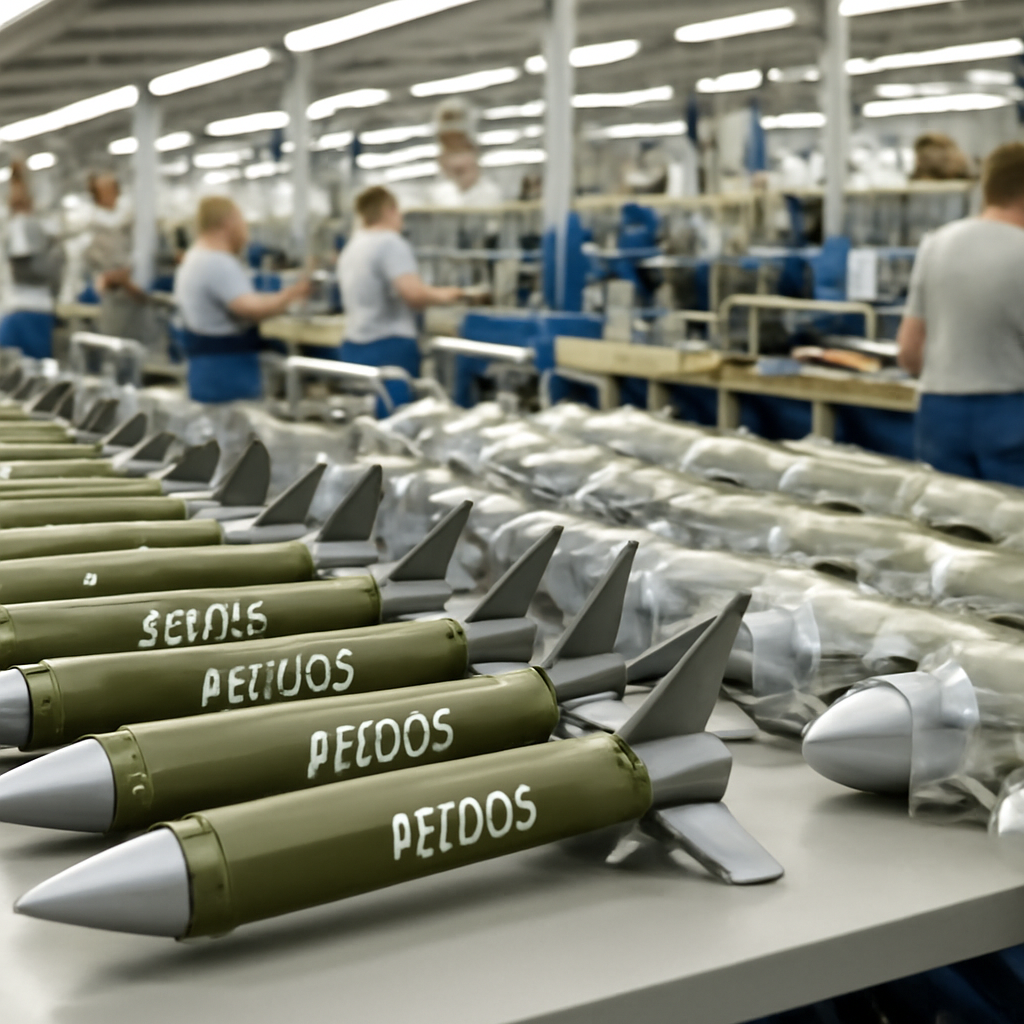
In early 2026, BAE Systems delivered the 100,000th APKWS guidance kit — a concrete milestone that the company cites as evidence of sustained demand and a mature industrial base.
Production, capacity, and the $1.7 billion Navy contract
BAE Systems reports current production capacity of at least 25,000 APKWS guidance kits per year and says it is continuing to expand that output. The company frames the 100,000th kit delivery as a sign of a high‑volume manufacturing base and a robust supply chain. A recent $1.7 billion, multi‑year IDIQ contract from the U.S. Navy is cited in the source material as further solidifying that capacity, with BAE saying it can deliver "tens of thousands" of cost‑effective kits to meet rising demand for counter‑UAS interceptors.
Fighter integrations: F-15E Strike Eagle and the RAF Typhoon
The APKWS laser‑guidance kit moved quickly from evaluation to operational use on multiple fighters, according to the source. In 2025 the U.S. Air Force ran an expedited integration and developmental/operational flight test program to put APKWS on the F‑15E Strike Eagle, including live fires over land and water with a stated aim of adding a cost‑effective counter‑UAS option "alongside the F‑16." In the United Kingdom, BAE completed a Eurofighter Typhoon test in 2026 that struck a ground target and then proceeded to air‑to‑air trials; rapid collaboration among industry partners, the Royal Air Force, and the Ministry of Defence moved the capability from testing to operational deployment in less than two months, and the source states APKWS is now in operational use on Typhoon.

This site is the portfolio.
OSINTSights runs on Cloudflare Workers, D1, R2, and Vectorize, with an AI pipeline on Hetzner ARM. Nubivance designed, built, and operates it. We do the same for clients.
See what we buildTactical unmanned platforms and the MQ‑9A Reaper
APKWS has been pushed down to tactical unmanned platforms in recent trials. The source reports the first air‑to‑air engagement of an APKWS‑guided rocket from a multirotor TRV‑150, with "zero misses" across air‑to‑air and air‑to‑ground shots. A follow‑on event demonstrated a three‑shot rocket launcher on the TRV‑150 as part of an industry effort to bring precision strike capability to the battalion level. Separately, demonstrations on the MQ‑9A Reaper included multiple shot profiles and aerial targets, which the source says were "executed flawlessly" by MQ‑9A crews using laser‑guided rockets and a specialized launcher.
Surface‑to‑air role, ground launchers, and proximity fuzes
The APKWS kit is not limited to airborne launch. The source describes surface‑to‑air counter‑UAS employment from mobile and fixed ground launchers that leverage widely available 70‑mm launchers and laser designation. Field demonstrations and operational use of ground systems firing APKWS have shown "rapid integration and effective engagements," and the addition of proximity‑fuzed rockets is presented as improving kill probability against small aerial targets. That mix of existing launcher compatibility and laser guidance is framed as a way to scale precise intercepts for base and site defense.
What this means for U.S. armed forces, the Royal Air Force, frontline units, and procurement leaders
- U.S. armed forces: APKWS is described as available to all U.S. armed forces and able to scale rapidly from production lines to operational units, offering a lower‑cost complement to traditional air‑to‑air missiles for counter‑UAS and multi‑mission roles.
- The Royal Air Force and Ministry of Defence: Rapid testing and deployment on Typhoon are noted as delivering a cost‑effective counter‑UAS option that supports persistent air defense while managing cost and resources more effectively.
- Frontline units and tactical unmanned operators: Trials with the TRV‑150 and MQ‑9A indicate a pathway for battalion‑level precision strike and for unmanned systems to undertake both air‑to‑air and air‑to‑ground tasks with high hit rates.
- Procurement leaders: The production milestone, stated annual capacity, and the Navy IDIQ contract are presented as signals that APKWS can be procured at scale through foreign military sales and U.S. procurement channels.
Across the record presented in the source, APKWS is framed as a mature, multi‑role guidance kit that converts ubiquitous 70‑mm rockets into precision effects. The combination of platform qualifications, production scale, and rapid integration events — from fighters to unmanned aircraft to ground launchers — is used to support the argument that forces can field cost‑effective counter‑UAS and precision‑strike options quickly and widely. The remaining, practical questions implicit in that record are operational: how units balance APKWS against other interceptors in layered defenses, how production growth matches global demand, and how tactics evolve as more platforms carry laser‑guided rockets. For now, the source leaves one clear, concrete point: APKWS is being produced at scale and has moved into operational use on multiple platforms within months of testing.