"The environment is changing, as Dan said, sometimes even by the minute." — Rebecca Cruz, BAE Systems
Shadow EW product family
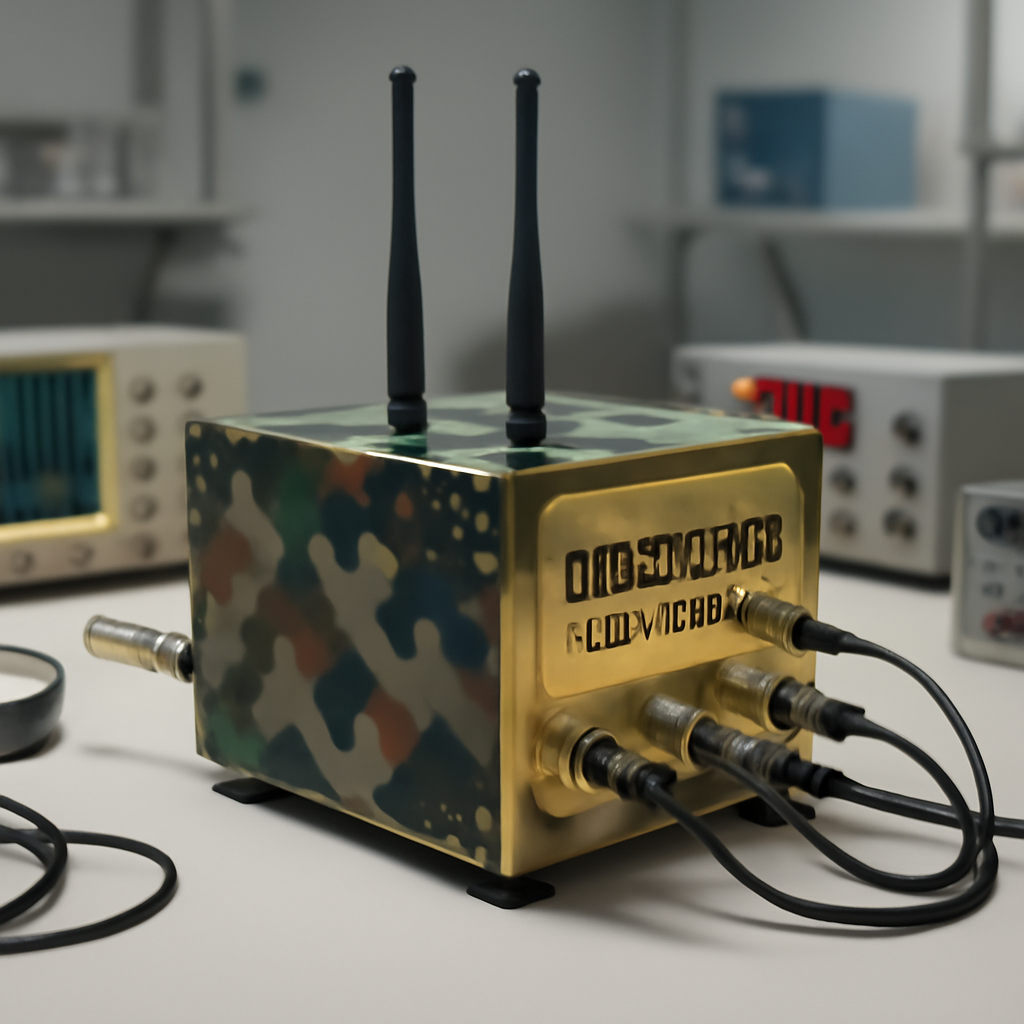
BAE Systems has introduced a small-form-factor software defined radio (SDR) family it calls Shadow EW, aimed at delivering offensive electronic warfare (EW) capability to small airborne platforms, drones and mass munitions. The company says Shadow EW brings greater offensive capability to both modern and legacy aerial systems, with a design emphasis on affordability and manufacturability so the systems can be scaled into large quantities for the aerial layer that is "presently dominating ground conflicts around the world."
SDR, hardware agnosticism, and modularity
BAE frames software as the primary enabler for rapid adaptation. Dan Mooney, director of business development, described software as the mechanism that lets Shadow EW meet "the mission of the day," shortening what used to take months or years to timelines of days or hours. The Shadow family is explicitly software-defined and intended to be hardware-agnostic: Mooney said the systems are "not bespoke to any certain apertures and antennas" and adhere to open standards so the SDR can be inserted rapidly as new platforms come online.
Rebecca Cruz, director of Shadow EW products, emphasized modularity: customers can buy different boxes, "including the SDR, to place on a platform instead of just one large exquisite system." That modular approach underpins the product's stated goal of rapid payload insertion across multiple mission sets rather than bespoke builds for individual platforms.

The cyber insurance questionnaire just landed. Now what?
SOC 2, HIPAA, insurance renewals - someone has to own security strategy. Nubivance provides fractional CISO leadership without the full-time salary.
Get a security leadOperational capabilities and SWaP tradeoffs
BAE positions Shadow EW as delivering the same core EW functions as larger systems but with much lower SWaP (size, weight and power). Mooney listed situational awareness, targeting, survivability, deception and collaborative behavior as the key capabilities the product supports. The company says those capabilities can be applied across unmanned systems from low-cost, attritable mass systems up to higher-speed or more "exquisite" unmanned platforms.
On logistics and fielding, Mooney framed Shadow as consolidating hardware: "The capabilities, or jobs, that used to take two, three or four boxes now is hosted within a singular system at a reasonable price point for the platform" — a configuration he argued will reduce logistical complexity, lower SWaP and decrease per-unit cost. Cruz summarized the design aim bluntly: the product delivers "a big punch in a small box" for the low-cost needs "that our warfighters have been looking for."
Commercial development, refresh cycles, and fielding speed
BAE ties its approach to a commercial stance and internal investment designed to accelerate fielding. Cruz said the company has been "continuing to internally invest to get apps built, to get hardware built, so that we have things readily available to field quicker to the warfighter." Both Cruz and Mooney stressed continuous refresh cycles for software and firmware so the product can "stay ahead of emerging threats" and be updated without wholesale hardware changes.
When asked how quickly Shadow EW can adapt to new threats, Mooney declined to give granular details but told Breaking Defense the timelines are driven by "the warfighter" and "it’s not months or years." He said BAE works "as a partner with them to be able to meet the mission of the day," stressing fieldability and responsiveness as design priorities.
What this means for the warfighter and procurement leaders
- Warfighters: Shadow EW is presented as a way to extend range and entry into contested areas for small and medium unmanned systems while offering the ability to update behavior and capabilities through software and firmware rather than hardware swaps. The product is designed to provide situational awareness, targeting, survivability and deception in a lower-SWaP package.
- Procurement leaders: BAE emphasizes high-volume manufacturability and lower per-unit cost. Mooney urged readers to "Don't think tens or hundreds of systems, think multiple thousands," framing Shadow as a platform intended to be purchased at scale rather than as limited, high-cost bespoke systems.
Shadow EW, according to BAE, is a deliberate trade: keep the proven EW functions deployed in the field while moving to software-driven, modular hardware that can be produced in volume and refreshed rapidly. That strategy is pitched as a response to threats and mission timelines that evolve in hours and days rather than months and years — a requirement BAE says its Shadow family is built to meet.