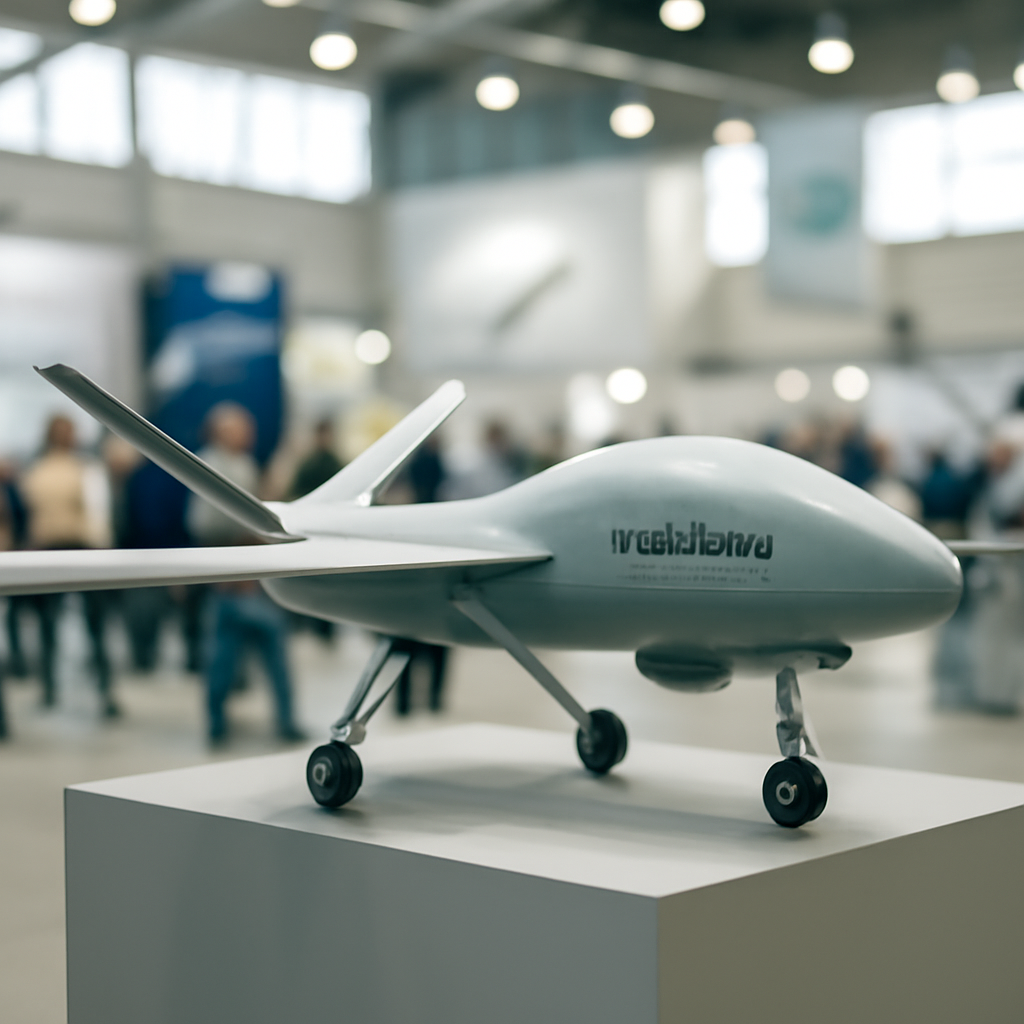
"a testament to the extraordinary talent and innovation across our sovereign defense industry," Defense Secretary Wes Streeting said as BAE Systems unveiled the Brontanax prototype at the Farnborough International Airshow on July 22, 2026.
BAE Systems and the Brontanax prototype at Farnborough
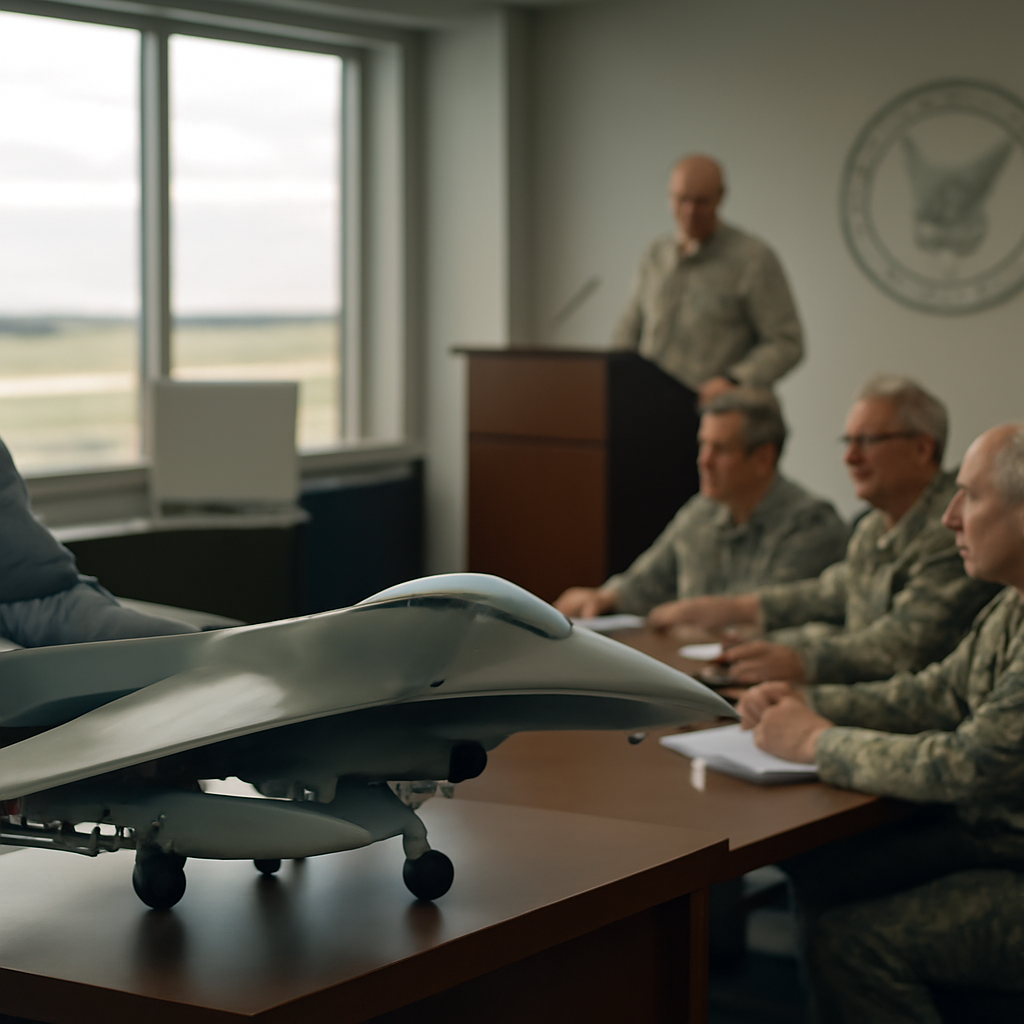
BAE Systems presented the Brontanax today in England, describing it as the U.K.’s first British-designed Collaborative Combat Aircraft (CCA). The company stressed the example on display is an operational prototype — built secretly at BAE’s Warton, Lancashire facility — rather than a mere technology demonstrator. The aircraft is being prepared for ground-based testing at Warton prior to flight testing within U.K. airspace, and there are reports it could take part in a NATO exercise as early as 2027.
Size, shape and low‑observable design cues
BAE says the Brontanax is roughly the size of its Hawk advanced jet trainer — around 41 feet long with a wingspan of approximately 33 feet. Concept and prototype imagery show large-area trapezoidal wings, cropped outward‑canted vertical stabilizers, a prominent chine line, and a faceted fuselage. The drone carries a shovel-like nose, low‑observable apertures, and a wedge-shaped ventral air intake with a shrouded lip feeding a serpentine inlet.
BAE characterizes the design as low observable (LO) rather than very low observable (VLO). The deep fuselage suggests generous internal space for fuel and stores; robust landing gear — a twin‑wheel nose unit and substantial main units — appears intended to support heavier loads and operations from austere fields or carrier launch and recovery. The prototype includes a nose blister and data probes for flight testing and a low‑observable aperture behind the blister that could house an infrared search‑and‑track sensor in an operational fit.

The cyber insurance questionnaire just landed. Now what?
SOC 2, HIPAA, insurance renewals - someone has to own security strategy. Nubivance provides fractional CISO leadership without the full-time salary.
Get a security leadEngines, payloads and mission roles
The prototype is initially fitted with a Williams turbofan engine, though BAE said thought is being given to using Rolls‑Royce’s Orpheus powerplant family in future variants. BAE describes the Brontanax as intended to perform electronic warfare, precision strike, and air‑to‑air missions. Company officials confirmed the drone’s internal weapons bay is compatible with "all weapons currently in service with the Royal Air Force."
BAE has outlined an experimental scenario in which CCAs armed with very long‑range Meteor air‑to‑air missiles extend the reach and combat mass of Typhoon fighters in the air‑defense role. The emphasis on electronic warfare reflects a broader U.K. push in that domain: Storm Shroud is due to enter service this year and the Royal Air Force last week announced Storm Chrome as another new EW drone intended for longer‑range support of deep‑strike missions.
Testing, carrier prospects, and integration with crewed platforms
BAE said the Brontanax will undergo ground testing at Warton before flight trials in U.K. airspace; Chief of the Air Staff, Air Marshal Sir Harv Smyth, said the prototype is expected to fly next year. Simon Barnes, group managing director of BAE Systems’ Air sector, said the Brontanax can be controlled by a Typhoon pilot or by a mission commander on the ground and that an open architecture and modular design are intended to future‑proof the platform.
Carrier operation is hinted at but not fully detailed: a short clip in a BAE video references carrier operation, and the Royal Navy’s Project Vanquish plans to demonstrate a fixed‑wing, short‑takeoff and landing autonomous collaborative platform (ACP) from a Queen Elizabeth class carrier before the end of 2027. BAE may adapt Brontanax variants to meet that naval requirement or a follow‑on need.
What this means for the Royal Air Force, the Royal Navy, and BAE Systems/FalconWorks
- Royal Air Force: The Brontanax is presented as a tangible element of the RAF’s ambition to become "Europe’s first sixth‑generation air force," an ecosystem where uncrewed systems "integrate seamlessly with our crewed platforms," increasing "survivability" and "lethality," according to Air Marshal Sir Harv Smyth.
- Royal Navy (Project Vanquish): The prototype’s robust landing gear and internal volume suggest a path to carrier‑capable variants; Project Vanquish intends a carrier demonstration of an ACP before the end of 2027, a timeline that could align with Brontanax adaptation.
- BAE Systems and FalconWorks: The aircraft was designed and built by BAE’s FalconWorks rapid prototyping team using company R&D funding. BAE emphasizes sovereign supply chains and SME opportunities; the U.K. government’s Defense Investment Plan confirmed a $406‑million investment in the Storm Fighter CCA program.
Competition, cost signals, and program outlook
BAE positions Brontanax as a lower‑cost, potentially attritable platform that can be produced at scale. The Telegraph reported a target price around one quarter of a Typhoon; using a general Typhoon figure of $115 million as an illustrative comparator yields an estimated Brontanax cost near $28.5 million each, a calculation BAE and the government did not formalize in the unveiling. BAE faces competition from U.S. offerings — including Boeing’s MQ‑28 Ghost Bat (in which BAE is involved), partnerships with Lockheed Martin’s Skunk Works, and potential pitches from Northrop Grumman, Kratos, and General Atomics (which has proposed a carrier‑capable Gambit variant).
BAE’s Brontanax appearance is the clearest sign yet of a concentrated U.K. effort to field a sovereign collaborative combat aircraft capability. Whether the prototype will enter Royal Air Force service remains undecided; BAE is already embedded in the Storm Fighter effort and the $406‑million program investment positions Brontanax as a well‑placed domestic contender. The platform will now proceed through ground testing at Warton, with flight trials expected next year and possible participation in NATO exercises thereafter.
Source: TWZ — Brontanax Fighter Drone Is The UK’s Big Leap Into Collaborative Combat Aircraft