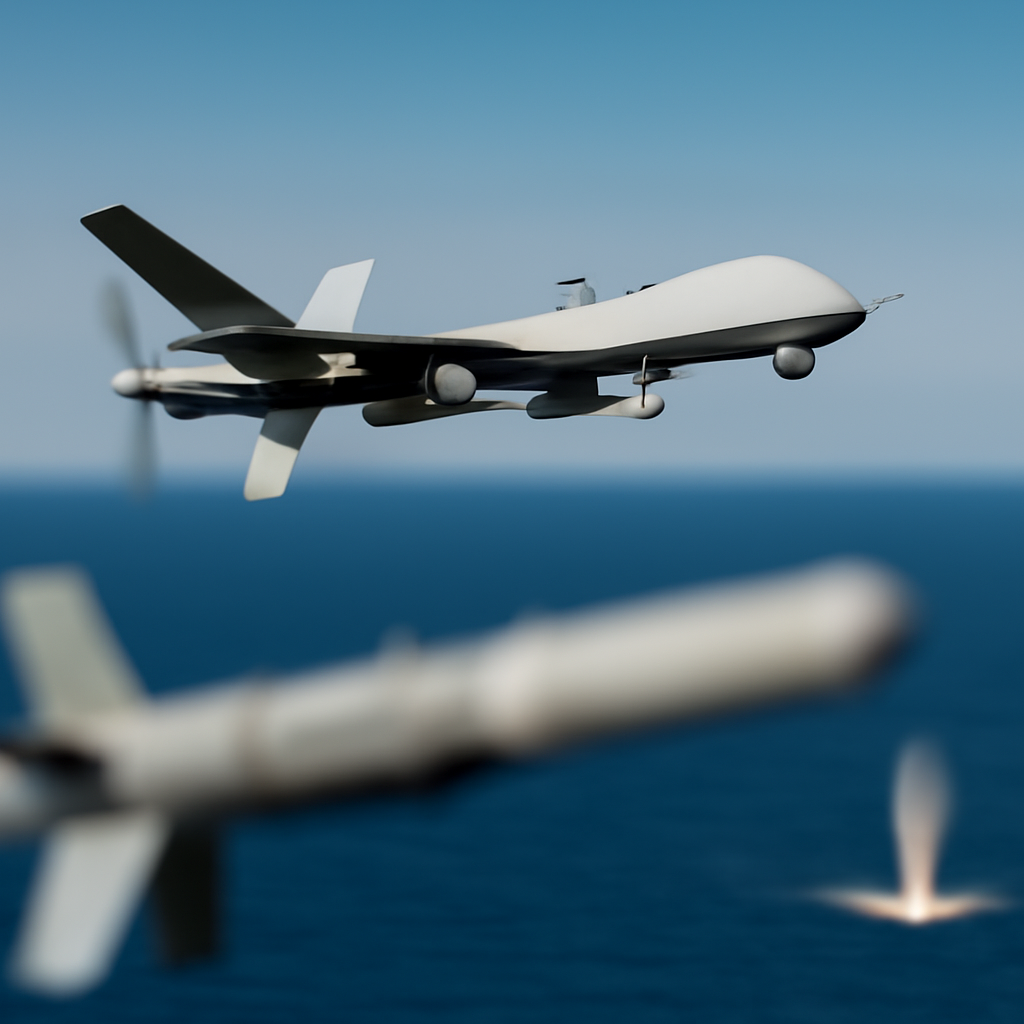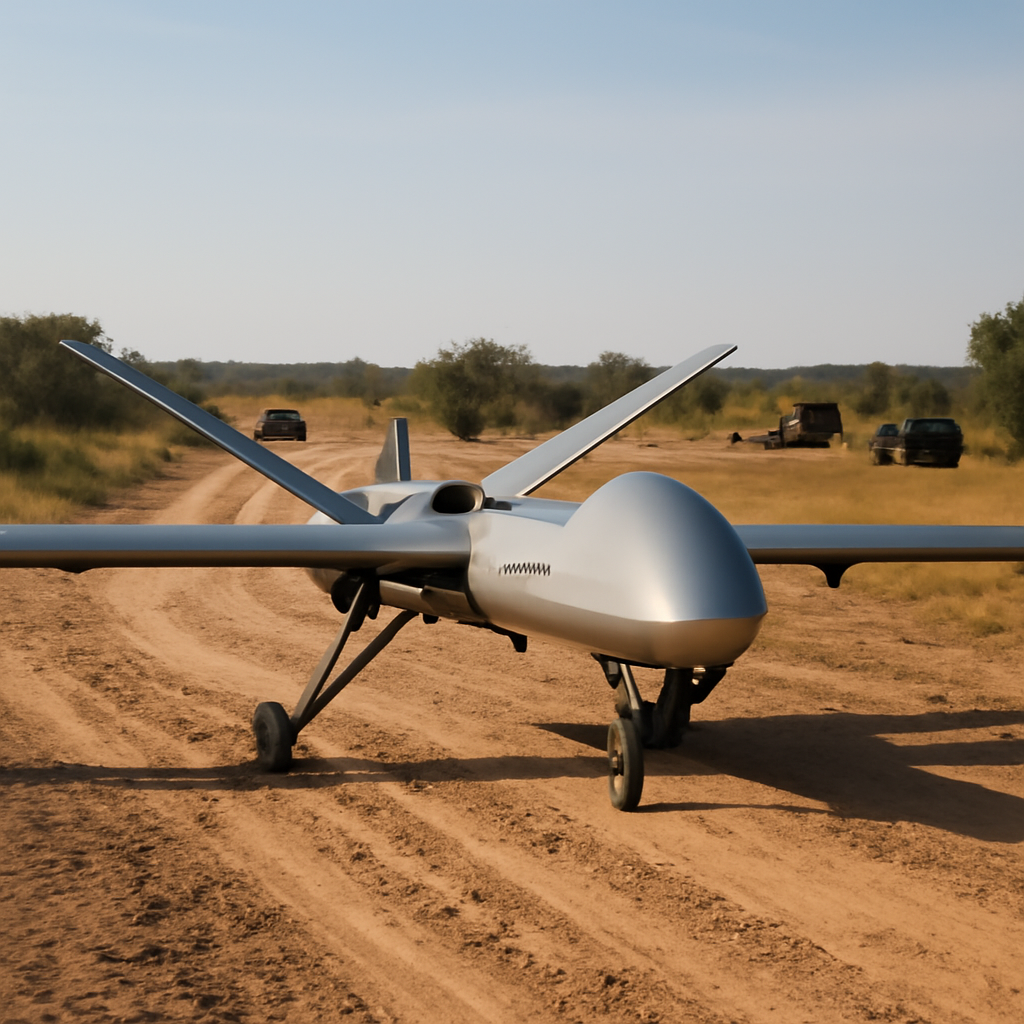
"Just because a machine is doing something without a human’s fingers on a joystick doesn’t mean that’s autonomy," Palladyne AI President and CEO Ben Wolff told Breaking Defense, drawing a firm line between automation and autonomy as battlefield drones proliferate.
Ben Wolff on autonomy versus automation
Wolff framed the core distinction as who is "having to think about what’s being done." He described automation as "table stakes" — pre-programmed flight, collision avoidance, or waypoint coordination — and said autonomy requires "true artificial intelligence on the drone itself" that can "respond in real time to what it sees happening on the battlefield without human intervention or direction for every movement." He gave a concrete illustration: a drone that is merely locked on and follows a convoy is automation; a drone that reprioritizes to follow an individual who exits a vehicle is exercising autonomy in navigation and mission adaptation.
Even in Wolff’s account, human judgment remains decisive on lethal uses. He described an autonomy workflow where the drone could identify a target and then "signal to the operator: I’ve identified a target... Do you want me to pursue a kinetic solution or just observe?" — autonomous sensing and navigation followed by a human go/no-go for kinetic effects.
How SwarmOS decentralizes AI at the edge
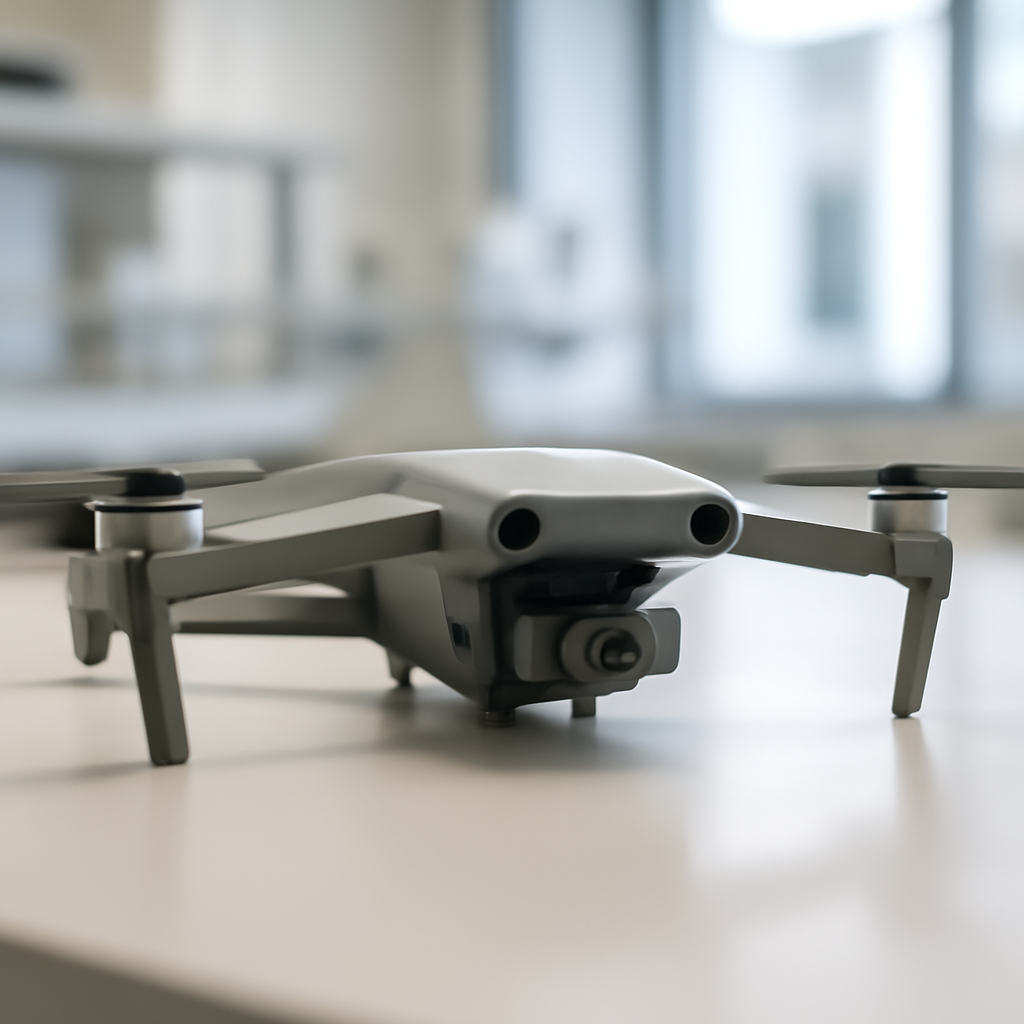
Palladyne AI’s SwarmOS runs "entirely on each drone at the edge — no cloud connection required," Wolff said, designed for "GPS-denied and communications-contested environments." The architecture distributes intelligence across every drone in the swarm, using low compute profiles so algorithms can operate on small, low-cost platforms rather than centralized servers.
Wolff described the design as biologically inspired. Drawing on two natural lessons — human cognition that filters billions of data points down to a small set of salient signals, and the collective intelligence of ants and bees — SwarmOS uses mesh radios and limited-bandwidth, hive-like communication so drones can ask peers for targeted data and collaborate without a central controller.

Audit-ready is a season. It shouldn't be.
Evidence in spreadsheets, controls drifting between audits, frameworks multiplying on flat headcount. Nubivance runs continuous compliance on Rapid7 Cyber GRC - SOC 2, HIPAA, ISO 27001, PCI, CMMC.
End the scrambleDemonstrations: a joint exercise with multi-OEM swarms
Wolff reported a recent "real-world exercise" that was "a joint exercise, a very large one" in which multiple OEM drones each ran SwarmOS. The demonstrator put "a single soldier managing all of them, and all of them collaborating as a swarm." He said the system "worked not only as advertised, it exceeded expectations." No additional public details about the exercise were provided in the interview.
Palladyne AI’s pivot, manufacturing, and cost claims
Wolff outlined a corporate evolution: the company spent "about 30 years in the R&D space building hardware platforms for the military" and "used to be called Sarcos Robotics" and "for a while we were called Raytheon Sarcos." Two-and-a-half years ago the firm "made a deliberate decision to focus primarily on AI." He added that their lead on AI "used to be the head of AI for BAE for 15 years."
Beyond software, Palladyne said it has moved into precision components manufacturing to address "supply chain resilience and domestic sovereign manufacturing," producing high-value parts for the F-35, F-22, F-18, the Abrams, and "some missile programs." On effects, Wolff described a "low-cost long-range precision effects platform targeted at approximately one-tenth the cost of today’s cruise missiles," and said the team "went from concept to first flight in less than six months."
What this means for the Pentagon, soldiers, and defense manufacturers
- The Pentagon: Wolff framed the central questions for the Pentagon as practical and procedural: "Who makes what decisions and when? What decisions can and should be offloaded to a machine so that operators can focus on what really matters?" He positioned SwarmOS as giving "the Pentagon the flexibility to implement the answers to those questions in real time" with a "hardware agnostic and cost-effective scalable solution that is available today."
- Soldiers and operators: The company’s demonstrations aimed to shrink operator burden — one soldier "managing multiple drones" — by offloading navigation and mission-prioritization tasks to autonomous agents while keeping humans "in the loop" for kinetic go/no-go decisions.
- Defense manufacturers and primes: Palladyne is attempting to straddle two worlds: using primes’ "engineering rigor and design-for-manufacturing" while adopting a "startup-oriented approach" that takes financial risk and produces both software and domestically sourced precision components for major platforms.
Wolff’s account places decentralized edge AI and biologically inspired communication at the center of a practical roadmap for swarming drones: autonomy for navigation and mission adaptation, retained human control for lethal effects, and industrial moves to shorten procurement and supply-chain pain points. The framing leaves the Pentagon’s core questions — who decides, and when — as both a policy and operational hinge; SwarmOS, he says, is designed to let users set the answers in the field.