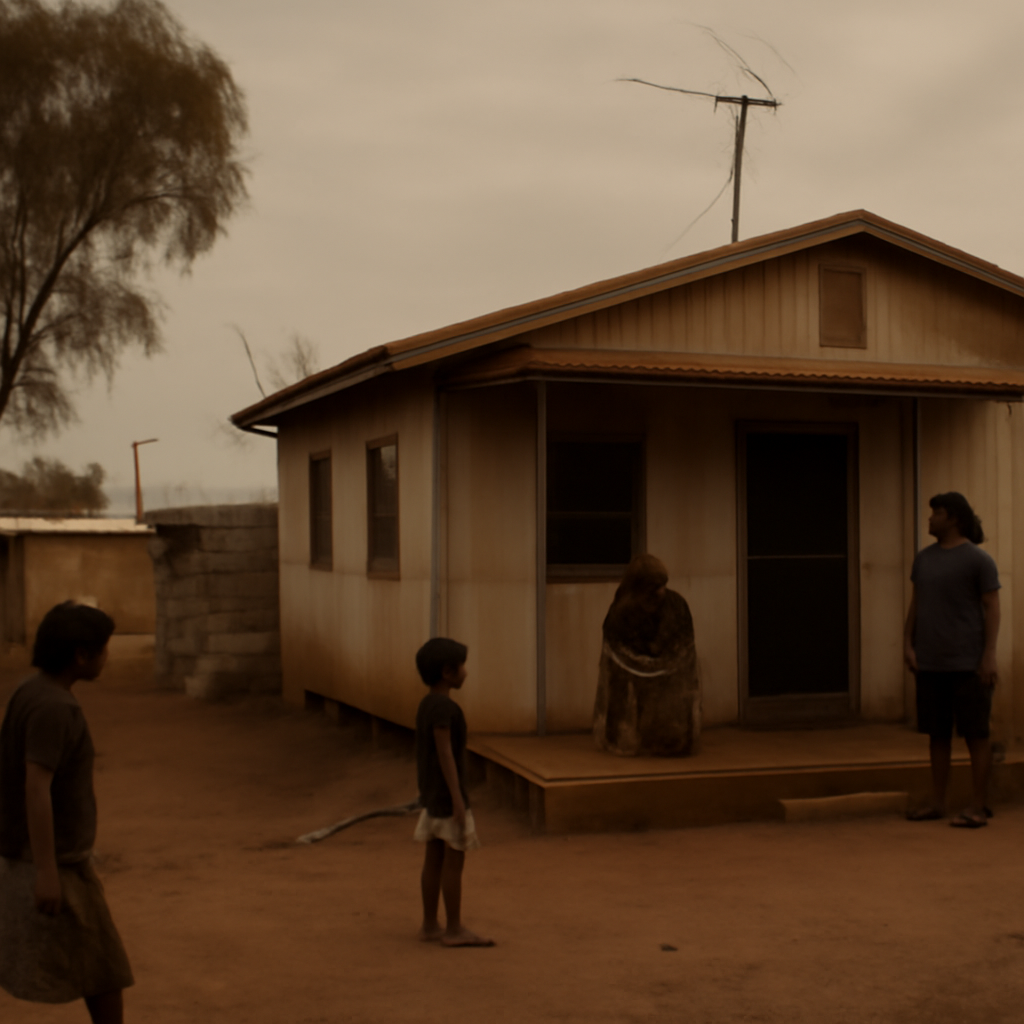
Pilbara’s ports handled an estimated $150 billion in exports in 2025–26.
Pilbara wealth and Port Hedland’s grief
The contrast could not be starker: one of Australia’s richest resource regions exported roughly $150 billion in 2025–26 while, in Port Hedland, reporting by The Australian documents children living in squalor, hungry and neglected. The article describes “three children murdered by their mother after repeated warnings about their safety,” along with a grandmother pleading for intervention. Those deaths and the wider reports of neglect sit uneasily beside the region’s enormous export earnings.
What happened in Port Hedland and who is owed answers
The source material names the Hawke children — Jamelia, Arnda and Kelvin — who were murdered in 2022 and it names their grandmother, Dorothy Papertalk, as a family member seeking answers. The piece argues the Hawke children “deserve a full accounting of the failures preceding their deaths” and that governments “must ensure warnings trigger effective intervention and those responsible are held accountable.”

Audit-ready is a season. It shouldn't be.
Evidence in spreadsheets, controls drifting between audits, frameworks multiplying on flat headcount. Nubivance runs continuous compliance on Rapid7 Cyber GRC - SOC 2, HIPAA, ISO 27001, PCI, CMMC.
End the scrambleInfrastructure for extraction, gaps in community systems
The north has world‑class export infrastructure: ports, railways and export corridors that connect resources to international markets. But the systems the author lists as necessary to sustain thriving communities — housing, healthcare, education, policing and child protection — “haven’t consistently delivered comparable results.” For generations, the author says, Australia has treated the north primarily as somewhere to extract resources rather than somewhere to build enduring local prosperity.
Northern assets, national resilience
The piece frames northern Australia as a connected network of nationally significant economic and strategic assets, specifically citing “the Pilbara’s mineral corridors to Darwin’s defence infrastructure and Queensland’s industrial centres.” The author warns that national security depends not only on protecting borders and physical infrastructure but also on “healthy, educated and resilient communities, a capable local workforce and the social cohesion needed to sustain Australia’s presence and operations across the north.” Neglecting those social foundations, the argument runs, undermines the national capabilities that billions have been invested to strengthen.
Policy prescription: transparency, long‑term agreements and accountability
The author calls for concrete policy changes: governments should “publish transparent regional accounts showing resource revenues, public investment, infrastructure gaps and community outcomes,” and use those accounts to inform long‑term agreements with local and Indigenous communities. The article notes governments already collect substantial revenues through taxation and royalties, and that mining companies “invest heavily in employment, infrastructure and community programs,” but asks why those expenditures are failing to deliver lasting improvements in local lives.
What this means for governments, mining companies, and local and Indigenous communities
- Governments: must make regional fiscal and outcome data public, ensure warnings about child safety trigger effective intervention, and provide a “full accounting” for cases such as the 2022 murders of Jamelia, Arnda and Kelvin.
- Mining companies: already invest in employment and community programs; the author implies they should be part of long‑term, transparent arrangements that tie investment to measurable community outcomes.
- Local and Indigenous communities: the piece frames them as central to national resilience and calls for agreements that recognise local needs rather than treating the north solely as an extraction zone.
The moral and strategic contradiction at the heart of the piece is explicit: Australia can protect billion‑dollar export infrastructure yet struggle to protect vulnerable children in the same places. If national strength includes the institutions that protect citizens, the author concludes, then the true measure of northern development is not how much wealth leaves the region but whether children growing up there are safe and have a future worthy of Australia’s prosperity.