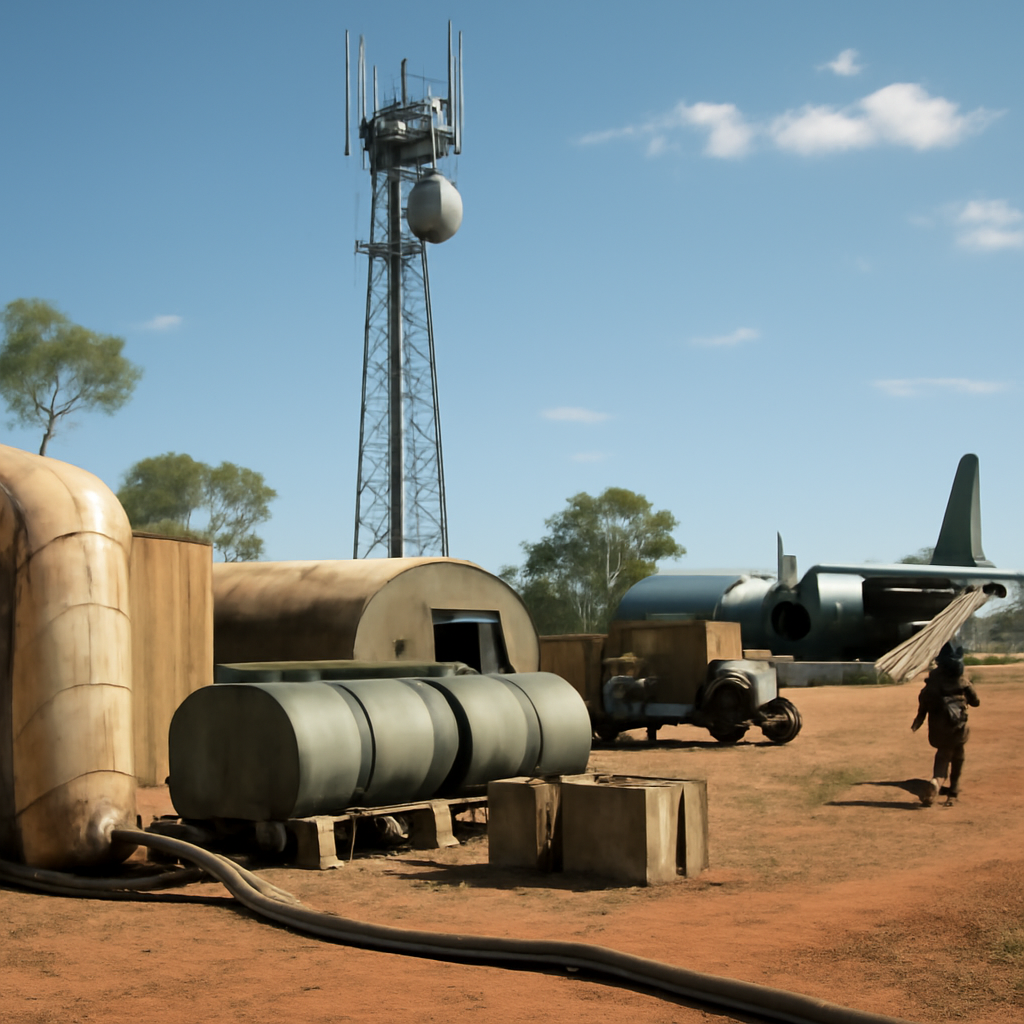
Northern ambition has outpaced practical assessment
Over the past decade, governments have poured investment into northern force posture, military infrastructure, alliance integration and logistics networks. The report Primed for Pressure: A Preparedness, Resilience and Redundancy Scorecard argues that measurement has tracked output — projects completed, dollars spent and infrastructure delivered — rather than operational endurance under stress. In short: activity is visible; readiness as an interconnected property is not.
Failure looks like cascading pressure, not isolated breakdowns
The report frames northern defence as an interconnected operational ecosystem. It warns that northern defence does not fail one project at a time but through cascading pressure across systems: fuel disruption constrains logistics; logistics degradation slows sustainment; workforce shortages delay recovery; digital disruption weakens coordination and decision-making. What begins as a localised disruption can quickly become system‑wide. The report uses stark metaphors to make the point: a runway without fuel is a carpark; a port without a maintenance workforce is a jetty.

This site is the portfolio.
OSINTSights runs on Cloudflare Workers, D1, R2, and Vectorize, with an AI pipeline on Hetzner ARM. Nubivance designed, built, and operates it. We do the same for clients.
See what we buildRedundancy is the decisive variable
One finding stands out: redundancy — alternative pathways, backup capacity and surge mechanisms — determines how well systems absorb disruption and recover. Where redundancy is strong, the report says, systems can absorb shocks and recover more quickly. Where redundancy is absent, localised disruption rapidly becomes systemic failure. Scenario testing in the report finds a consistent pattern: high‑intensity conflict, cyber disruption, contested supply chains and climate shocks expose different vulnerabilities but produce similar outcomes because dependencies are poorly understood and redundancy is weakest.
The scorecard: nine domains and a stress‑testing approach
The report applies a preparedness, resilience and redundancy scorecard across nine interconnected domains: force posture, logistics, fuel security, infrastructure, civil‑military integration, industrial capacity, digital systems, allied integration and workforce. Unlike traditional accounting for capacity, the framework assesses performance under stress — asking whether systems are ready before disruption, whether they can absorb shocks when disruption begins, and whether sufficient alternative capacity exists to prevent local failures from becoming systemic ones.
What this means for Defence, energy providers, and infrastructure operators
- Defence: The report implies Defence can no longer treat northern assets as stand‑alone capabilities; operational effectiveness depends on cross‑system dependencies and on lines of supply and workforce resilience that sit largely outside Defence’s direct control.
- Energy providers: Fuel and energy security are flagged as high‑priority domains. Expanding storage or generation does not automatically translate into endurance if distribution, logistics throughput and energy resilience are not addressed in parallel.
- Infrastructure operators: Ports, runways and maintenance facilities matter only insofar as the supporting workforce, logistics and industrial capacity allow them to function under pressure. Increasing physical capacity without testing system performance risks creating brittle, high‑cost single points of failure.
A structured pilot and a whole‑of‑system responsibility
To move from diagnosis to action, the report recommends a structured pilot of the scorecard across a small set of high‑priority domains: fuel and energy security, logistics and sustainment, and workforce resilience. The pilot’s objective is pragmatic — test whether the framework improves investment and preparedness decisions before any broader institutional adoption. The broader conclusion is institutional: many of the systems that determine operational endurance sit outside Defence’s direct control, requiring federal portfolios, state and territory governments, infrastructure operators, logistics providers, energy systems and industry to act in concert.
There is a crisp policy implication underneath that institutional complexity: the central investment question is not simply what increases capacity, but what improves system performance under pressure. The report reframes choices away from counting runways and fuel tanks toward ensuring those assets remain useful when contested conditions cascade across fuel, logistics, infrastructure, digital networks and the workforce.
Northern defence, the report concludes, will not succeed or fail because of a single runway, fuel facility or military base. It will succeed or fail because an interconnected system either continues functioning under pressure or begins to fail faster than decision‑makers can respond. The recommended pilot offers a concrete next step to turn that insight into practical measures of preparedness, resilience and redundancy.
Read the original report: https://www.aspistrategist.org.au/measuring-preparedness-resilience-and-redundancy-in-a-time-of-strategic-pressure/