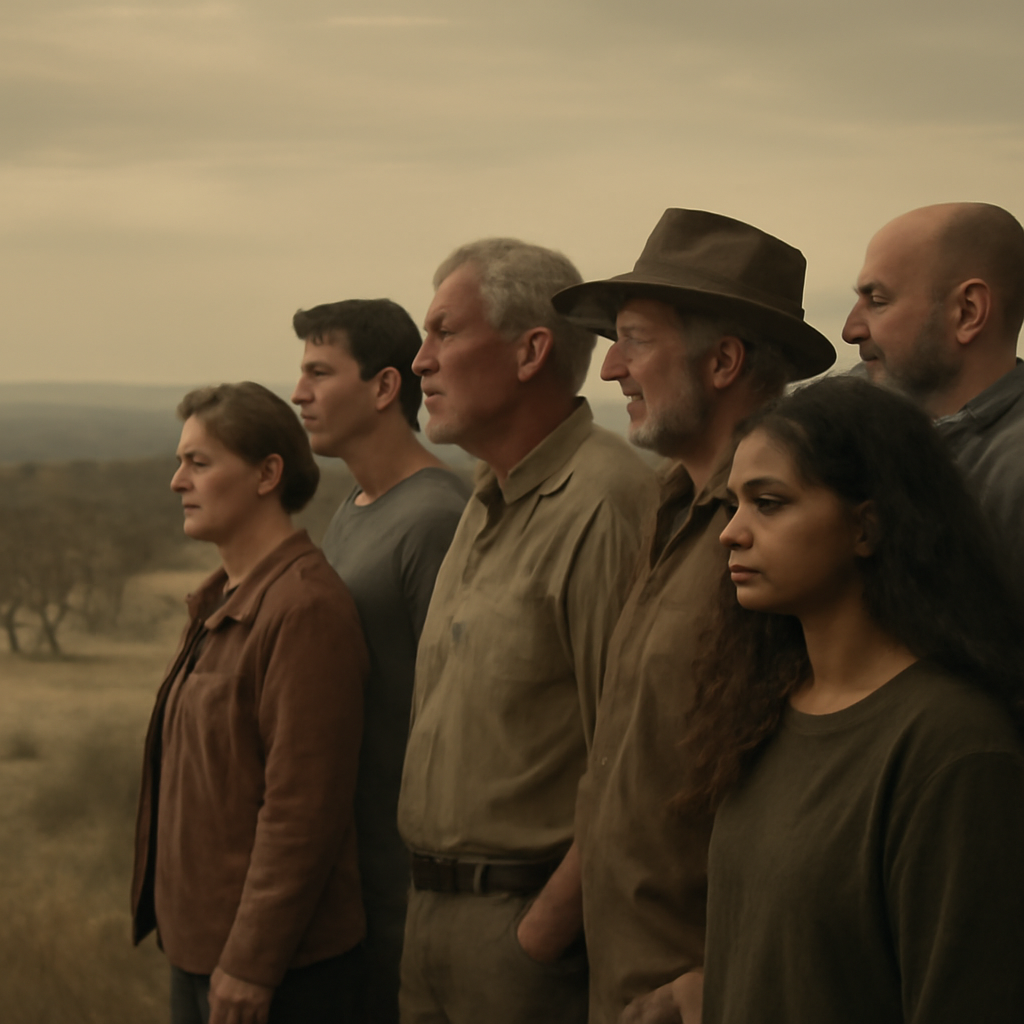
Only half the adult population say they would be willing to fight to defend Australia if physically able.
The civil preparedness and resilience inquiry adopted in July
The national civil preparedness and resilience inquiry, adopted in July, was tasked to examine “whole-of-nation support for national defence, continuity of government, and the availability of essential goods and services during times of crisis or conflict.” Yet the inquiry, the source argues, is likely to concentrate on kinetic and logistical dimensions of war — supply chains, infrastructure and continuity of government — rather than the beliefs and will that sustain a nation in protracted conflict.
Cognitive resilience: the missing dimension
“Cognitive resilience” is offered as a term for the psychological elements that determine whether soldiers use weapons and whether the public sustains a wartime posture. The source contends that thought, belief, will and emotion are central to those outcomes and that they are integrated with the kinetic side of defence. By focusing narrowly on keeping lights and food flowing, the inquiry risks treating the physical and psychological as separate when, the source warns, they are mutually reinforcing.

Audit-ready is a season. It shouldn't be.
Evidence in spreadsheets, controls drifting between audits, frameworks multiplying on flat headcount. Nubivance runs continuous compliance on Rapid7 Cyber GRC - SOC 2, HIPAA, ISO 27001, PCI, CMMC.
End the scrambleChina’s comparative advantage and information operations
The piece warns that Australia faces stark numerical and economic disadvantages. China is described as having an economy roughly 10 times larger than Australia’s, a military budget 13 times greater and a population 50 times larger. The argument follows that Australia cannot match Beijing in numbers or resources and therefore must “fight smarter,” including by preparing to confront an adversary that “has already industrialised cognitive warfare at scale.”
The source says China’s military doctrine explicitly includes information dominance and that state‑sponsored actors have sophisticated capabilities in disinformation and influence operations. Those facts are raised to show why a defence posture that ignores cognitive threats would be incomplete.
Allies and partners emphasise cognitive and information threats
The 2026 National Defence Strategy is cited as recognising multi‑domain threats and noting that “authoritarian regimes are becoming more willing and able to disrupt critical infrastructure, conduct cyber intrusions and engage in misinformation and disinformation campaigns.” Britain’s 2026 inquiry into disinformation is quoted as concluding that “disinformation is the new warfare and liberal democracies are sitting ducks,” and it recommended creation of a National Counter Disinformation Centre framed as national security rather than media policy.
Similarly, NATO’s resilience framework since 2016 and a recent NATO paper — plus a declaration by the NATO Chief Scientist that investing in conducting and defending against cognitive warfare has never been more important — are presented as international signals that cognitive attacks are already occurring and that proactive measures to build cognitive resilience are the best defence.
What this means for Australians, the civil preparedness inquiry, and technologists
- Australians: The source reports that people are scared, expect conflict, distrust China, and do not believe the nation is prepared. They want a national conversation, clarity about what government agencies are doing to protect them, and guidance on the role communities can play in resilience.
- The civil preparedness inquiry and policymakers: The inquiry’s stated remit touches continuity of government and essential services, but the source urges that it explicitly connect to the cognitive threats identified in the 2026 National Defence Strategy — otherwise it risks cementing a logistics‑only framework and perpetuating a historical blind spot noted by Defence Minister and Deputy Prime Minister Richard Marles that civil preparedness has not received much attention since World War II.
- Technologists and security teams: The convergence of social media, AI and disinformation is described as creating both opportunity and challenge for defence. The source points to allied models — Britain’s proposed national centre, NATO papers and the approaches of Estonia, Sweden, Ukraine, Taiwan and South Korea — as examples of integrating information‑age threats into national resilience planning.
The central choice the inquiry faces is framed plainly: Australia can harden supply chains and critical infrastructure, but if Australians do not share a conviction about why and for what they would fight, material resilience alone will not sustain a protracted conflict. The inquiry, adopted in July and vested with wide terms of reference, represents a timely opportunity to expand the debate from logistics to the cognitive dimension — to ask not only how to keep the lights on, but how to build and defend the will to fight.