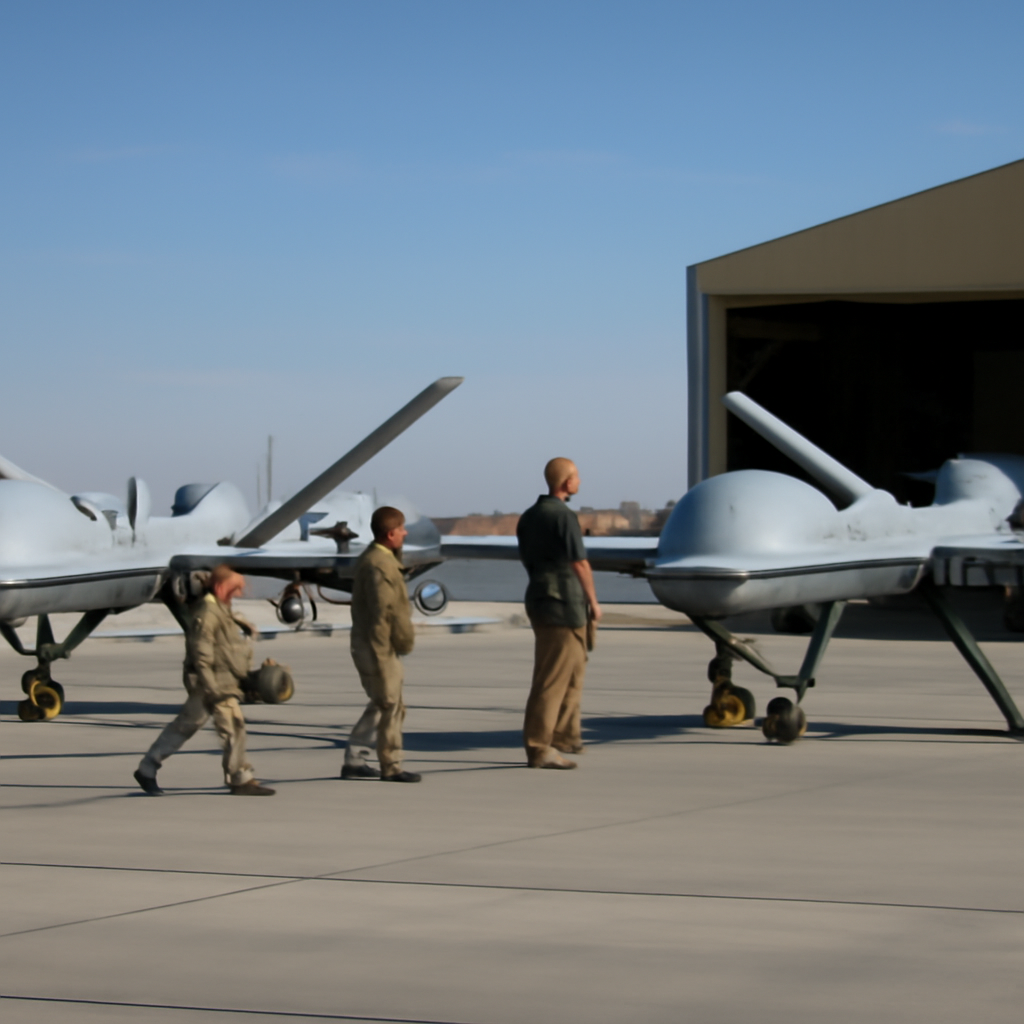
Italy has ordered two new MQ-9A Reapers.
Italy orders two MQ-9A Reapers, while the U.S. looks elsewhere
The purchase of two MQ-9A Reapers by Rome comes as the United States explores newer unmanned options. The juxtaposition — a fresh buy of MQ-9A airframes by an allied government at the same time the U.S. looks for successors or alternatives — is the central, concrete fact in the reporting.
Rome’s prior Reaper purchases and the record of losses
According to the reporting, Rome “previously ordered a handful of Reapers.” Those earlier MQ-9A airframes have not had an unbroken operational run: one Reaper was lost in Libya in 2019, and “another one was destroyed in March during an Iranian drone strike in Kuwait.” The two losses are the only operational incidents named in the source material.

This site is the portfolio.
OSINTSights runs on Cloudflare Workers, D1, R2, and Vectorize, with an AI pipeline on Hetzner ARM. Nubivance designed, built, and operates it. We do the same for clients.
See what we buildOperational and procurement friction implied by the record
The documented losses — the 2019 incident in Libya and the March destruction in Kuwait — underline two tangible procurement realities. First, acquiring airframes is one step; keeping them operational across expeditionary deployments is another. Second, the damage and loss of systems in contested environments highlights the practical challenges that accompany forward deployments of remotely piloted aircraft. The reporting provides the facts of the purchases and the losses; those facts imply that sustainment, basing, and threat environments remain salient considerations for users of the MQ-9A.
How U.S. decisions about “newer options” intersect with Italy’s choice
The reporting also states that the U.S. is “seeking newer options.” That fact creates a simple but important dynamic: Italy is procuring additional MQ-9A airframes while the U.S. — a primary developer and operator of the platform — is looking toward alternatives. The simultaneous presence of both facts raises operational and logistical questions for Rome, including long-term parts supply, access to updates and support, and interoperability with U.S. forces as the U.S. transitions to other systems. The source does not provide further details about which alternatives the United States is pursuing or how that pursuit will affect Italy’s order; it records only the two discrete facts.
What this means for Italian defense planners, U.S. procurement authorities, and regional commanders
- Italian defense planners: The addition of two MQ-9As supplements an existing fleet that has experienced at least two operational losses; planners will need to weigh immediate operational utility against sustainment and risk management in contested theaters.
- U.S. procurement authorities: With the United States “seeking newer options,” U.S. procurement choices may influence long-term supply chains and upgrade pathways for allied operators still buying MQ-9A airframes.
- Regional commanders operating in theaters like Libya and Kuwait: The recorded losses in those theaters emphasize continued exposure to hostile actions and the potential vulnerability of remotely piloted systems in contested airspaces.
The facts are straightforward: Rome has ordered two MQ-9A Reapers; it has previously bought a “handful” of Reapers; and two of those earlier aircraft were lost — one in Libya in 2019 and one destroyed in March during an Iranian drone strike in Kuwait — even as the United States pursues newer unmanned options. How those two new airframes will figure into Italy’s operations, sustainment plans, and alignment with U.S. procurement choices is left implicit by the record but will be the practical questions that follow.