"The world is a more dangerous place than it was two years ago." That blunt assessment opens a cluster of expert readings of Australia’s 2026 National Defence Strategy (NDS) and its companion spending plan, the Integrated Investment Program (IIP), and sets the tone for a document that prioritises self-reliance while leaning on allied partnerships.
What the 2026 NDS and IIP commit to
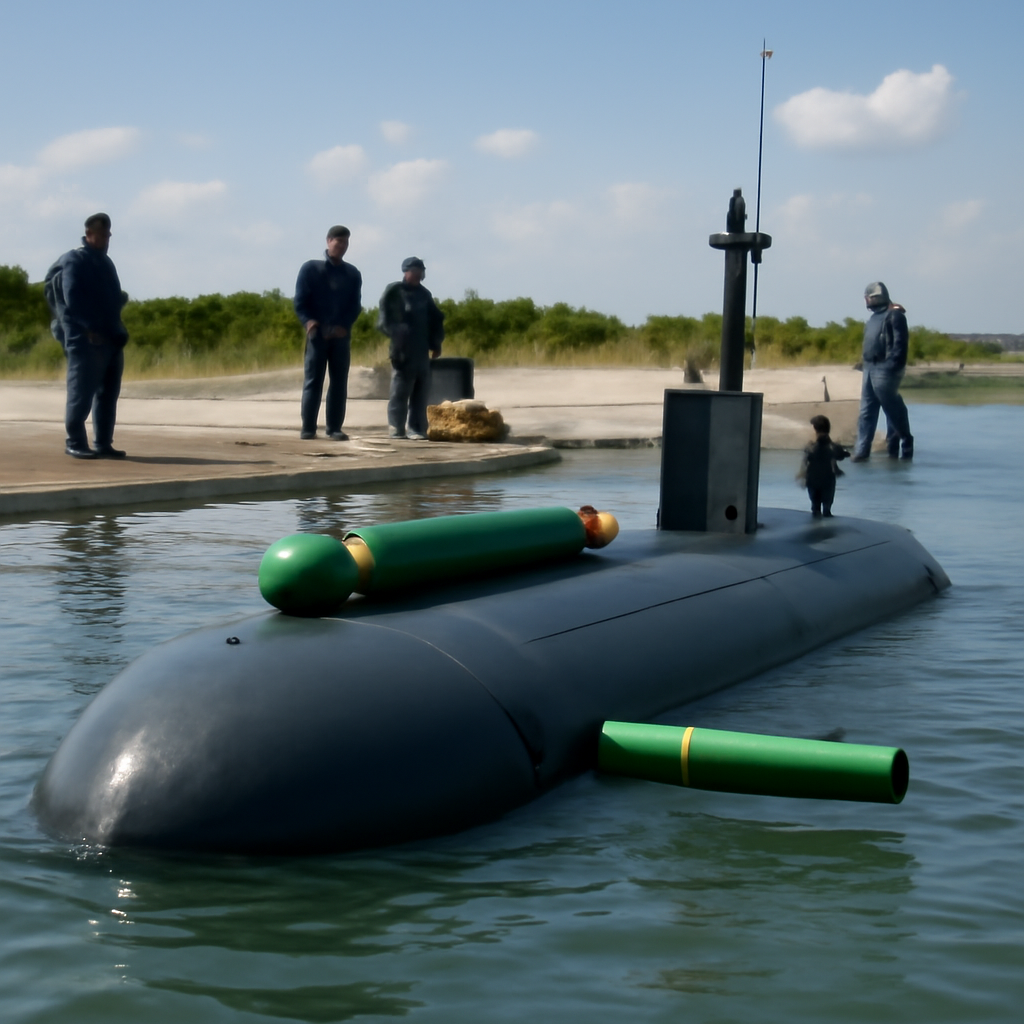
The IIP attached to the 2026 NDS sets out A$425 billion in Defence spending over the next ten years and prioritises undersea warfare and maritime capabilities, long‑range strike, air and missile defence, autonomous and uncrewed systems, and counter‑uncrewed air systems. The NDS emphasizes greater self‑reliance to improve Australia’s ability to deter adversaries and support regional partners, and it builds on a prior “strategy of denial” introduced in 2024.
Australia’s alliance with the United States as a strategic anchor
The NDS itself states that “Australia’s Alliance with the United States remains fundamental to our national security and the [Australian Defence Force’s] capacity to generate, sustain and project credible military capability.” Commentators Mike Hughes and Justin Bassi argue the alliance will be key to developing the self‑reliance the strategy seeks: self‑reliance, they say, is not severing ties with the United States but improving Australia’s own capabilities while strengthening the partnership.

This site is the portfolio.
OSINTSights runs on Cloudflare Workers, D1, R2, and Vectorize, with an AI pipeline on Hetzner ARM. Nubivance designed, built, and operates it. We do the same for clients.
See what we buildSelf‑reliance as a practical, not absolute, goal
Richard Gray cautions that self‑reliance is not the same as self‑sufficiency — and that full self‑sufficiency “would be unachievable even if it were attempted.” Instead, Australia should aim for a balance: shoulder greater responsibility for its own defence, accept that some US‑provided capabilities are hard to replace, and thereby become a more useful security partner across the region. The 2026 NDS and IIP are presented as an effort to find that “sweet spot.”
Aligning strategy: balance of power and rules‑based order
In a notable shift from the 2024 document, Courtney Stewart notes the 2026 NDS elevates the concept of balance of power and accepts that “rules alone cannot shape China’s behaviour as regional power dynamics shift.” The implication in the commentary is that tilting that balance will require capability development, deeper partnerships with regional powers and support for the US Indo‑Pacific presence as a long‑term competitive effort rather than a short campaign.
Funding, accounting and the GWEO question
Malcolm Davis underscores that the IIP’s funding choices — especially for uncrewed systems, strike weapons and air and missile defence — will determine whether the strategy translates into capability. The program’s pace is urgent: Davis warns that capability development “must occur quickly — well before the decade is out,” and that delivering it may cost more than currently planned.
Madi Jones highlights the Guided Weapons and Explosive Ordnance (GWEO) program as an area of increased IIP funding, particularly for “testing and maintenance facilities and priority component manufacturing,” but she stresses that the NDS offers little in the way of practical detail. An updated GWEO plan is expected later this year and should clarify how much the program will deliver, how many weapons, and at what pace.
Linus Cohen draws attention to how defence spending is being counted, noting three different metrics: the Defence portfolio’s appropriation from government; that appropriation plus Defence’s own‑source revenue; and a Defence interpretation of the NATO measure of defence spending. Cohen warns that each produces a different total and that “the precise way in which Defence has interpreted NATO’s measure is unclear.” The government’s new spending target of 3 percent by 2033–34 uses that NATO measure — itself a politically charged benchmark given NATO’s separate 3.5 percent target for 2035.
What this means for the United States, regional partners, and the Australian Defence Force
- The United States: Canberra signals it intends to sustain and deepen the alliance as a central pillar of regional deterrence, making Australian investments complementary rather than substitutive.
- Regional partners (Japan, South Korea, India and the European Union): The NDS calls for deeper ties with these democracies, suggesting Canberra will pursue cooperative capability development and interoperability alongside its bilateral anchor with the US.
- The Australian Defence Force and procurement authorities: Rapid development timelines and large new investments — especially in uncrewed systems, strike and air/missile defence — mean procurement and industry must accelerate delivery or accept higher costs to meet the strategy’s objectives.
The 2026 NDS and its A$425 billion IIP are unambiguous about direction: more self‑reliance, a continuing reliance on the US alliance, and a sharp emphasis on maritime, undersea and long‑range strike capabilities. But the commentaries collected in The Strategist stress timing, accounting and concreteness — an updated GWEO plan later this year, clearer accounting of spending through the NATO measure, and rapid capability delivery — as the immediate tests of whether strategy becomes capability or rhetoric.
https://www.aspistrategist.org.au/national-defence-strategy-2026-views-in-the-strategist/