About A$17.4 billion of the Australian government’s promised A$53 billion increase in headline defence spending over the next 10 years remains uncertain, even after the National Defence Strategy was reaffirmed by Treasurer Jim Chalmers in his 12 May budget speech.
How much of the A$53 billion is visibly allocated?
The budget sets out A$35.6 billion of additional funding that has been identified for Defence; that sum is two‑thirds of the headline A$53 billion uplift. Of the A$35.6 billion, only A$6.8 billion appears in the forward estimates — the four‑year planning window the government publishes alongside the annual budget. That means only a fifth of the identified uplift is covered in the near term.
Where the remaining A$17.4 billion is meant to come from
Budget Paper No. 2 indicates the remaining roughly A$17.4 billion will come from alternative financing mechanisms and the Contingency Reserve. Alternative financing could include using private capital or contracting for services rather than paying up front. The Contingency Reserve is described as the government’s allowance for decisions it expects to be made; since its creation in 1987 the Reserve has typically been used to fund unexpected expenditure.
Crucially, money in the Contingency Reserve and from alternative financing is not guaranteed, and Defence is unable to make firm commitments against those amounts.

This site is the portfolio.
OSINTSights runs on Cloudflare Workers, D1, R2, and Vectorize, with an AI pipeline on Hetzner ARM. Nubivance designed, built, and operates it. We do the same for clients.
See what we buildFront‑loading for the nuclear submarine program
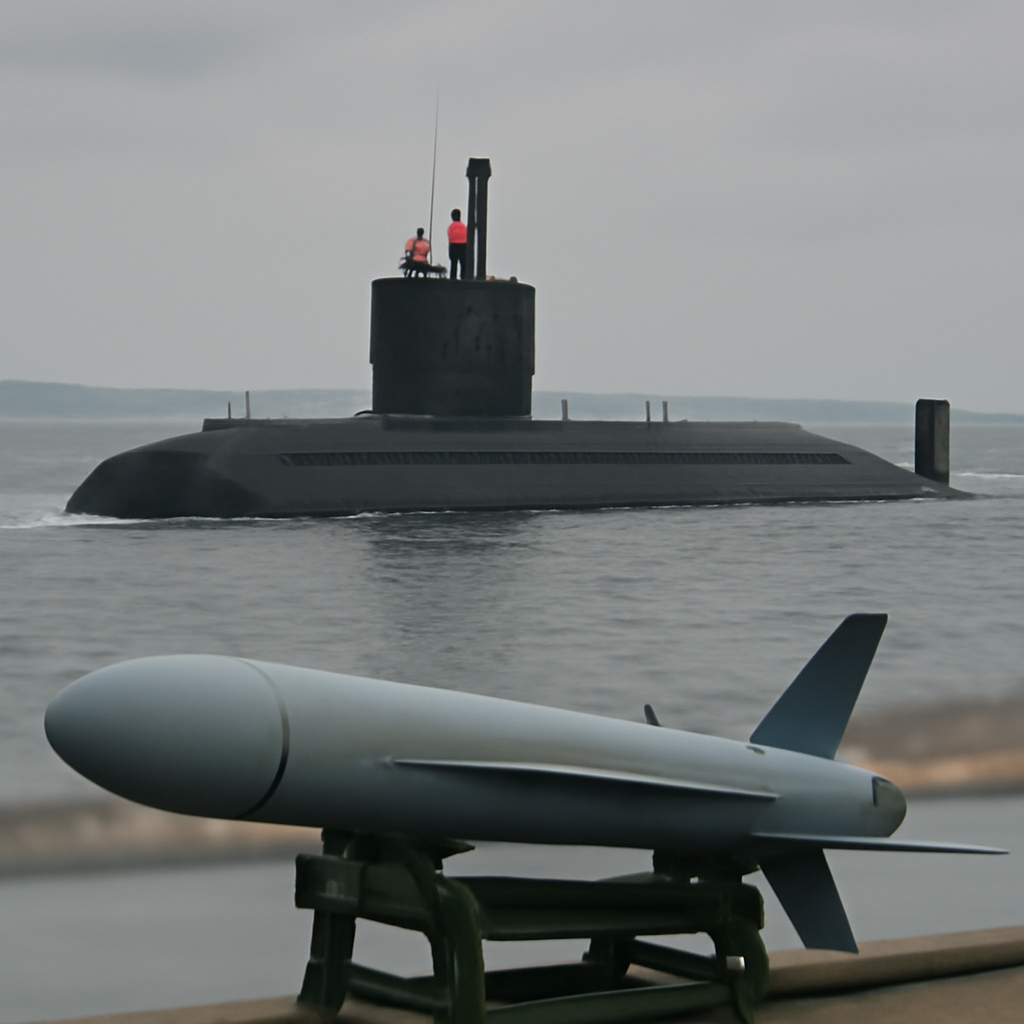
The one clearly front‑loaded element in the budget is the nuclear submarine program, which is drawing funds faster than previously planned. The budget brings A$1.8 billion into 2025–26 from the forward estimates, almost all for the submarines, and notes that A$1.1 billion of that has been moved from 2027–28. This follows an earlier bring‑forward announced in December.
In practical terms, the budget team says Project DEF 1 (the submarines) was previously expected to have drawn down A$5.86 billion of its approved budget by the end of 2025–26; the new budget indicates it will have spent A$1.5 billion more than that earlier estimate. That mobile cost profile increases pressure on the rest of Defence’s acquisition portfolio.
Timing: forward estimates, savings and exchange‑rate adjustments
The forward estimates cover roughly 40 percent of the next decade but account for only 20 percent of the new defence funding that has been made visible in this budget. Apart from 2026–27, the money in the forward estimates is described as only semi‑reliably on its way, with the major increases deferred to the later years of the ten‑year horizon set out in the National Defence Strategy and the Integrated Investment Program.
Three movements are singled out as reconciling the forward estimates with the NDS profile. First, Treasury will continue to make routine exchange‑rate adjustments so Defence neither wins nor loses as import costs change — an accounting step said not to affect prospective capability. Second, Defence is expected to find A$2.8 billion of savings over the forward estimates by cutting spending on consultants, contractors and other non‑salary items; this is stacked on top of A$1.5 billion of savings imposed in the last budget update. Third is the bring‑forward of A$1.8 billion into 2025–26 for the submarines, discussed above.
What this means for Defence, contractors, and taxpayers
- Defence: Without the A$17.4 billion guaranteed, Defence cannot make firm commitments against that portion of the program and will face management challenges as submarine spending accelerates and other projects compete for scarce cash.
- Contractors and financiers: The budget explicitly contemplates alternative financing and contracting for services, which will push procurement and financing models toward private capital and service contracts where possible.
- Taxpayers and Parliament: A substantive portion of the decade’s uplift rests on the Contingency Reserve and other non‑guaranteed mechanisms; historically the Contingency Reserve has funded unexpected expenditure, meaning the final fiscal shape will depend on future decisions.
The headline A$53 billion uplift has now been pencilled in, but only A$35.6 billion is visible and only A$6.8 billion sits inside the forward estimates. Between front‑loaded submarine spending, imposed savings, and the reliance on contingency and alternative financing, the budget sets a course but leaves key funding choices to come. Delivery, particularly over the financial year to come, will be the test of whether the numbers turn into capabilities.