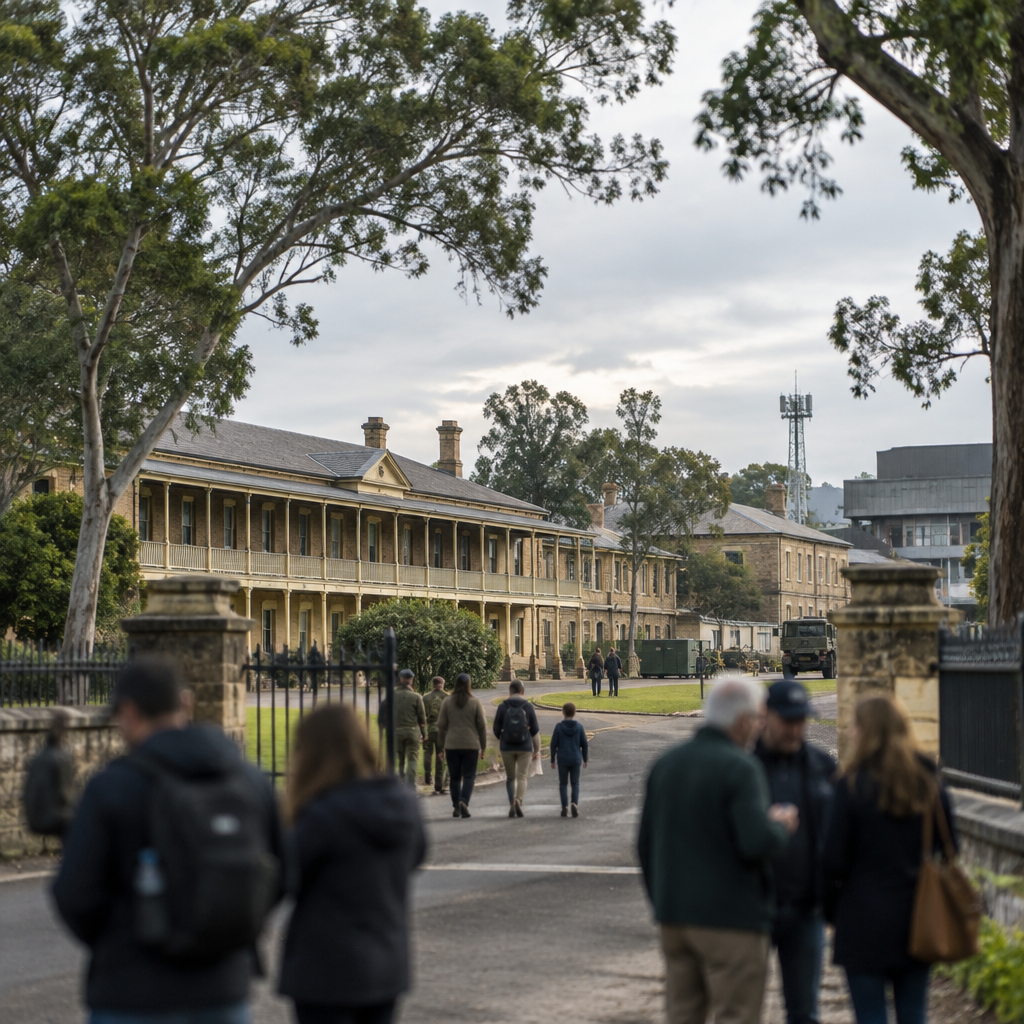
"The Australian government should pause disposal for historic Victoria Barracks in Sydney and take time to resolve outstanding questions before the process has gone too far for reversal."
What is at stake for Victoria Barracks, Sydney and public confidence
The central claim of the source is straightforward: disposal of Victoria Barracks Sydney should be paused so outstanding questions can be resolved while there is still room to change course. The argument stresses that the site’s significance extends beyond Defence’s immediate operational footprint to heritage, community value and a longstanding military presence dating back to the 1840s. The public response—capped by a weekend rally attended by political opponents, veterans, serving military personnel and community members—signals that decisions about the site touch civic as well as military interests.
The Senate’s Foreign Affairs, Defence and Trade References Committee and timing
The Senate’s Foreign Affairs, Defence and Trade References Committee released an interim report on 16 September recommending an immediate halt to the divestment program. That committee’s final report is not due until early 2027. The source warns that Defence is preparing to vacate Victoria Barracks Sydney this year, and that transferring the site to the Department of Finance for disposal before the inquiry concludes could make reversal more difficult and costly and reduce opportunities for parliamentary input.

This site is the portfolio.
OSINTSights runs on Cloudflare Workers, D1, R2, and Vectorize, with an AI pipeline on Hetzner ARM. Nubivance designed, built, and operates it. We do the same for clients.
See what we buildDefence Estate Audit: 67 sites and the intended reform path
Following a Defence Estate Audit released in February, the government identified 67 sites for full or partial divestment as part of an effort to modernise an ageing and costly portfolio. The audit’s list includes other historic properties also called Victoria Barracks in Melbourne and Brisbane. The source stresses the audit should be a starting point for further scrutiny rather than an automatic endpoint: each proposed disposal requires detailed assessment of strategic and financial consequences.
Unresolved financial, operational and heritage questions
The article highlights several concrete gaps in the case for disposal. During Senate committee hearings on government spending estimates in June, Defence said it did not collect data on any one site’s maintenance cost. That admission, the source argues, weakens the financial rationale: without site-specific maintenance figures, the government cannot readily demonstrate the savings from disposal. Assessments must also consider relocation, replacement accommodation, fit-out and ongoing occupancy costs, expected sale proceeds and avoided maintenance expenditure.
Operational considerations are equally central. Defence’s estate supports force generation, training, workforce distribution, mobilisation and operational readiness; a property’s value encompasses the functions it supports, its location and relationships with other Defence activities, not merely utilisation rates or building condition. Heritage obligations, planning constraints and potential remediation costs also affect feasibility and financial return and, the article argues, should shape decisions rather than be retrofitted after a disposal pathway is chosen.
What this means for Defence, the Department of Finance, and affected communities
- Defence: will need to produce robust, site‑specific data on maintenance and lifecycle costs, and demonstrate that relocating functions will preserve capabilities without creating avoidable costs or constraints elsewhere.
- The Department of Finance: stands to receive the site for disposal only if Defence vacates; the source warns that an early transfer could limit parliamentary and community influence and raise the political and financial cost of reversing a decision.
- Affected communities, veterans and serving personnel: are actively mobilised and demand meaningful consultation before decisions are effectively settled; their concerns encompass heritage, public value and the continuing military presence in central Sydney.
The central practical test the source sets is simple and consequential: if the government is confident selling Victoria Barracks Sydney is in the national interest, it should be prepared to demonstrate that case now and show it has listened to those affected while there is still an opportunity to reconsider. Absent clear, site‑level financial data, thorough operational analysis and meaningful community consultation, the article concludes, proceeding before the Senate inquiry completes its work risks closing off options that might otherwise remain open.