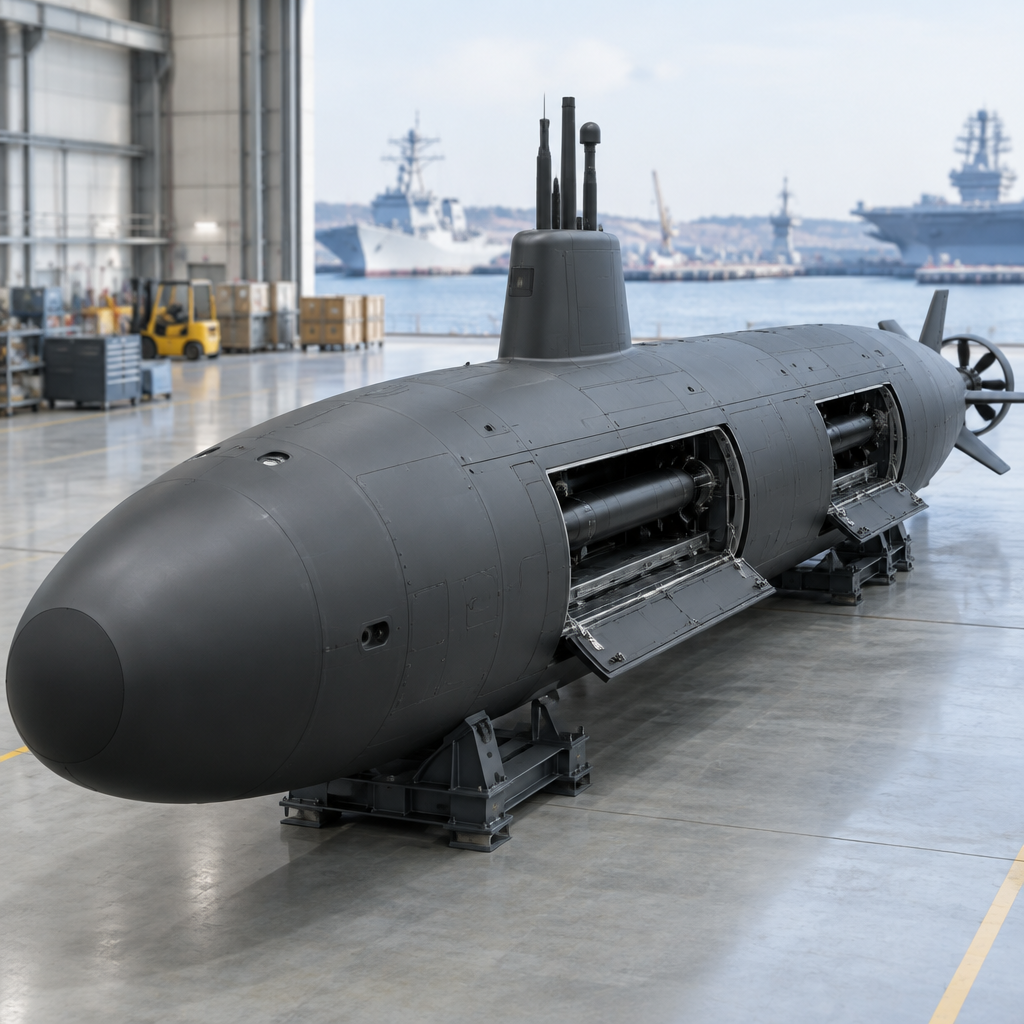
"Ghost Shark’s large payload bays also support the deployment of heavyweight and lightweight torpedoes," Anduril Australia CEO David Goodrich said, a line that underlines both capability and ambiguity in Canberra’s recent disclosure.
Three payloads revealed by Defence Industry Minister Pat Conroy
On 19 October, Defence Industry Minister Pat Conroy publicly named three capabilities for the Ghost Shark uncrewed submarine: laying sea mines, launching Altius aerial drones for reconnaissance and strike, and carrying underwater equipment and supplies. The announcement accompanied a description of the Ghost Shark as an extra-large autonomous underwater vehicle developed by Anduril Australia together with the Defence Science and Technology Group and the Royal Australian Navy.
The design is offered in two lengths: an 11‑metre version that can be deployed in a shipping container and a 17‑metre version with greater payload volume. Conroy also said the disclosed payloads were being revealed both to the Australian public and to potential adversaries.
Deterrence through disclosure — ambiguity as policy
The public disclosure was deliberate. Conroy framed the revelation as a means to create uncertainty about where, when and how Ghost Sharks could be used, complicating an adversary’s calculus. The craft’s container transportability and ability to be deployed from wharves or relatively small ships were singled out as features that amplify that uncertainty. The source frames the strategy as a balance: a fully secret capability preserves surprise, but cannot shape calculations before a crisis; too much detail could invite countermeasures. The stated aim is to demonstrate credible options while keeping employment ambiguous.

Audit-ready is a season. It shouldn't be.
Evidence in spreadsheets, controls drifting between audits, frameworks multiplying on flat headcount. Nubivance runs continuous compliance on Rapid7 Cyber GRC - SOC 2, HIPAA, ISO 27001, PCI, CMMC.
End the scrambleMaritime denial, long reach and contested waters
Among the operational effects highlighted was the capacity to deploy up to 12 mines, creating area‑denial options that could threaten access to chokepoints and harbours without exposing crewed vessels to risk. Even the possibility of nearby Ghost Shark operations could force adversaries to allocate resources to surveillance, route checking and mine countermeasures.
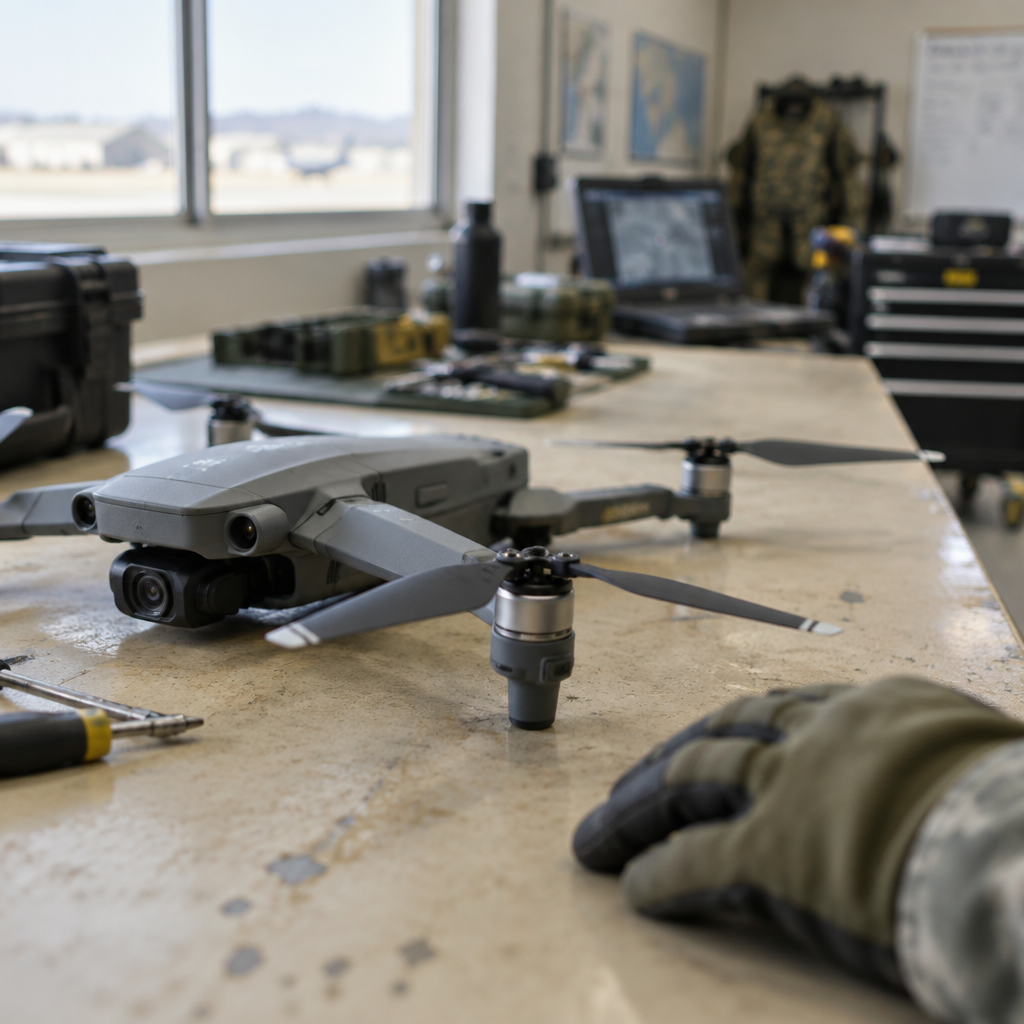
Another disclosed effect is the ability to launch Altius drones — loitering munitions that can fly and observe before a decision to strike — which the source says threaten targets on land, including those more than 100 km from the coast. Minister Conroy also pointed to the craft’s potential to enable strikes against targets "thousands of nautical miles from Australia." If that reach is a radius from port, the source observes, it would imply an out‑and‑back range of at least 4,000 nautical miles (7,400 km). Anduril’s earlier reference to the design’s "multi‑thousand mile" range is consistent with that characterisation.
AUKUS Pillar Two, exports and modularity
The disclosure has a second, outward‑facing purpose: signalling Australia’s growing contribution to AUKUS Pillar Two. Conroy confirmed the newly disclosed payloads would be available as options for Pillar Two, and the combination of modular payload bays and common enabling systems could allow Australian technologies to be integrated into allied uncrewed submarines of different designs. The announcement also explicitly positioned the capability as opening possibilities for exports and commercial and industrial partnerships with other allies.
What this means for adversaries, AUKUS partners, and clandestine operations
- Adversaries: The revelation increases the set of threats they must contemplate — mines, long‑range loitering munitions and underwater caches — while leaving employment details ambiguous so the cost of opposing Australian operations is harder to calculate.
- AUKUS partners: The payloads are offered as Pillar Two options, which may encourage partners to consider common payloads and integration with other uncrewed submarine designs rather than adopting the Ghost Shark itself.
- Clandestine and allied resupply: Defence confirmed Ghost Shark can store supplies beneath the surface for later recovery; while the volume would not sustain a large force ashore, the source suggests this could support discreet resupply or support of small, dispersed forces — uses described as speculative in the announcement.
Two qualifications remain central in the disclosure. First, Anduril’s comment about torpedo deployment signals capability potential but the operational status of that function was described as unconfirmed. Second, Canberra’s publicising of payloads aims to shape deterrence while deliberately withholding employment details.
The net effect, as presented by the source, is an Australian message aimed simultaneously at adversaries and partners: Canberra can deploy modular, container‑transportable uncrewed submarines fitted for mines, long‑range loitering munitions and underwater payloads, and it intends those options to factor into regional calculations while still keeping vital questions — exactly how and when those options would be used — unanswered.