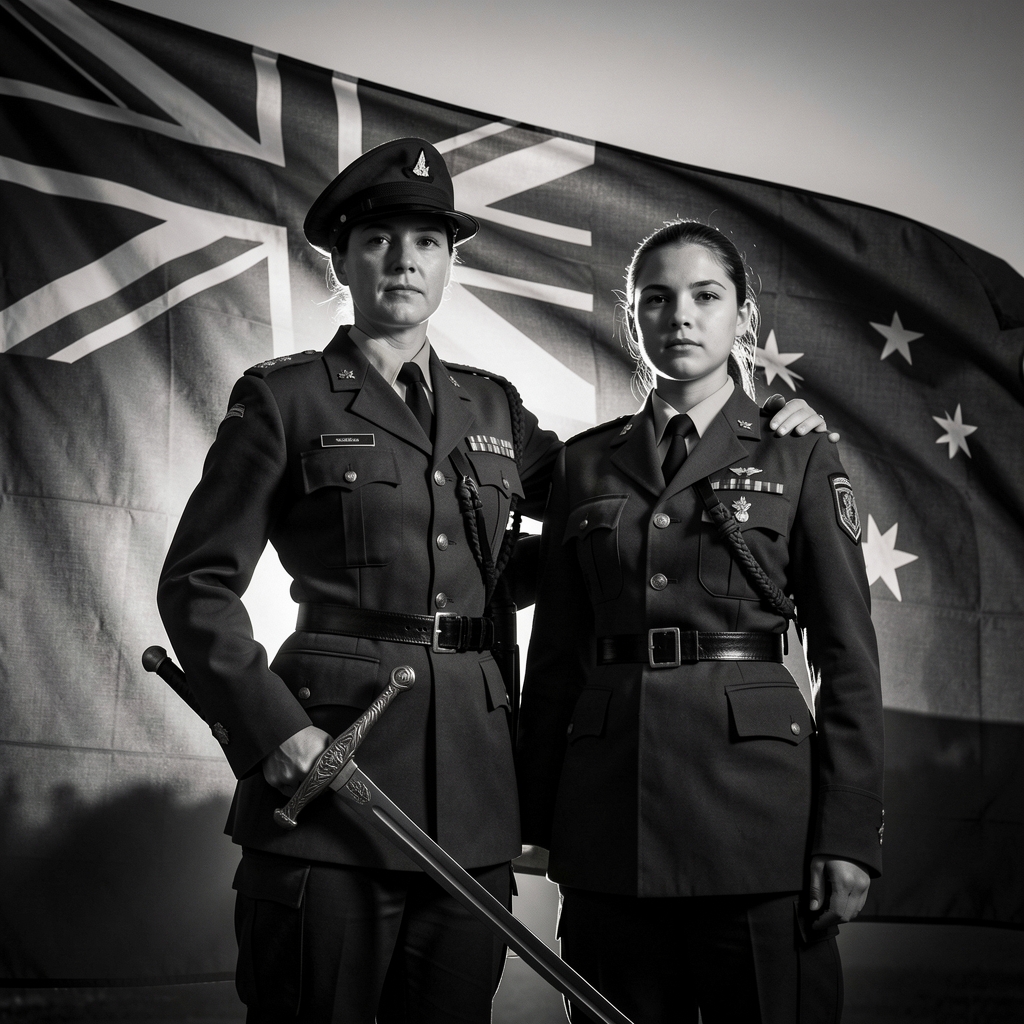
What does it signal when a military that once kept its highest uniformed ranks almost exclusively male names its first woman to lead its army?
What we know
Australia has announced a change in its senior military leadership, naming a new set of leaders that include the nation's first female army chief. Lieutenant General Susan Coyle will take up her new appointment in July. Beyond those facts, the public report identifies a broader leadership renewal but does not list additional appointees or dates.
A symbolic shift with practical consequences
The elevation of Lieutenant General Susan Coyle as the first woman to lead the Australian army is plainly symbolic: it marks a visible break with past patterns of top-level representation. Symbols matter inside militaries as much as they do outside them — for recruitment, retention, and institutional culture. That said, the fact of a first appointment alone does not prescribe outcomes; whether this change alters policies, practices, or force posture will depend on decisions yet to be announced and implemented.

Audit-ready is a season. It shouldn't be.
Evidence in spreadsheets, controls drifting between audits, frameworks multiplying on flat headcount. Nubivance runs continuous compliance on Rapid7 Cyber GRC - SOC 2, HIPAA, ISO 27001, PCI, CMMC.
End the scrambleStakeholder perspectives to watch
- Policymakers: For civilians who oversee defense, the appointment will be assessed for what it means operationally and for civil–military relations. The change could be used to signal commitment to diversity in leadership while policymakers evaluate how it aligns with broader defense priorities.
- Service members and potential recruits: Within the ranks and among prospective recruits, the first female army chief may influence perceptions of opportunity and inclusion. The appointment may be read as evidence that senior command slots are attainable across broader segments of the force.
- Allies and partners: International observers and military partners often note leadership changes as indicators of continuity or shift. Naming a first female army chief can be interpreted as part of a broader narrative about modernization and institutional evolution.
- Adversaries: For potential adversaries, leadership changes are signals to be interpreted alongside capability, doctrine, and posture. A change in personnel alone typically prompts monitoring rather than immediate strategic recalculation.
- Technologists and defense industry: Those focused on modernization and capability development will look to subsequent statements and appointments to infer priorities — whether emphasis will shift toward new domains, force structure, or sustainment remains to be seen.
Why this matters — and what to watch next
Lieutenant General Susan Coyle’s appointment in July is a milestone that invites questions more than it supplies answers. It is a clear factual development: the army will, for the first time, be led by a woman. The practical consequences — for doctrine, procurement, personnel policy, and international posture — will unfold in the months and years after she assumes the role.
Observers should track the public statements, policy directives, and personnel moves that follow the transition to understand whether this leadership change will translate into substantive institutional shifts, or remain primarily a historic first. Will the appointment change internal culture and external perceptions, or will it be a symbolic milestone within a steady continuum? Only time — and the actions that follow the July handover — will tell.