Arquus and John Cockerill Group unveil Fenris at Eurosatory
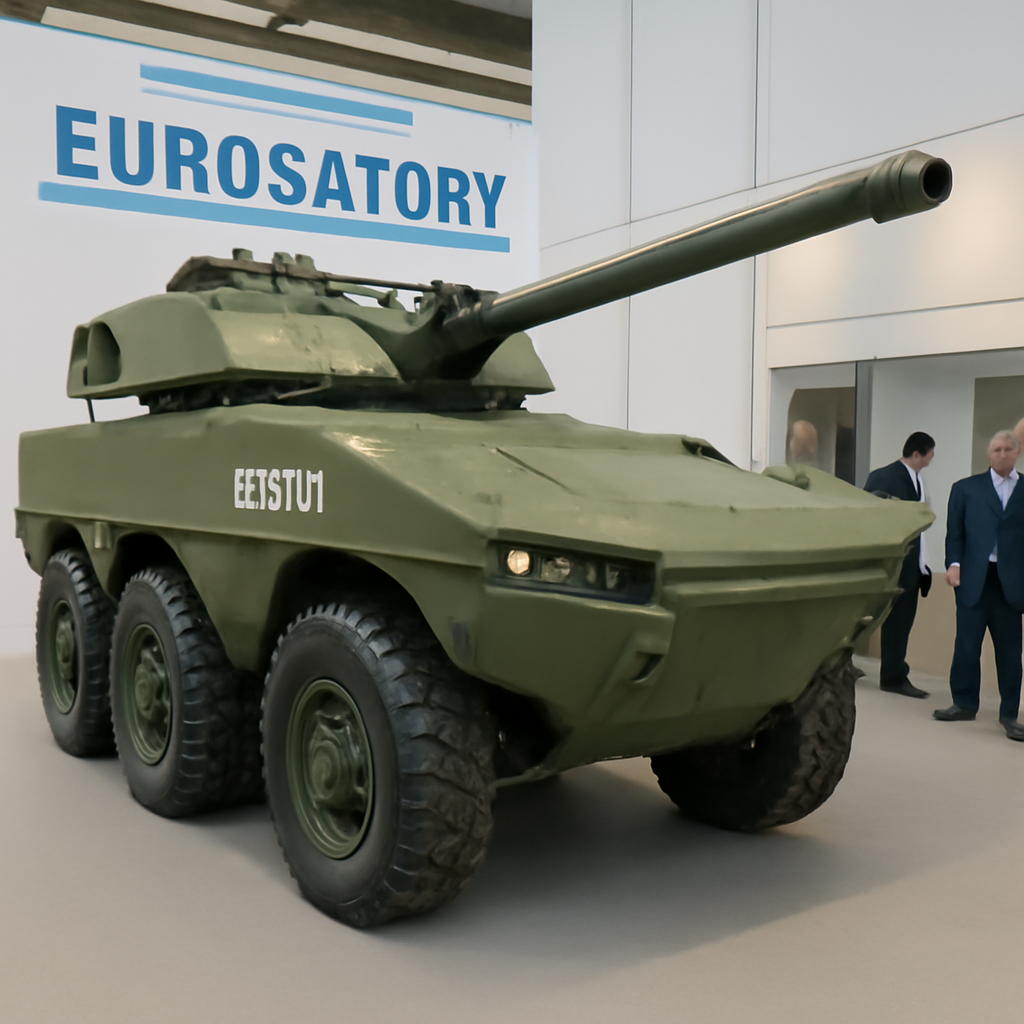
Arquus and its parent company, Belgium’s John Cockerill Group, revealed the new 6×6 armored vehicle Fenris at the Eurosatory defense exposition in Paris. Company officials removed a sheet from the vehicle during the unveiling and described the program as a rapid response to battlefield lessons: the 26-tonne (28.6-ton) Fenris was developed in just over a year to meet a renewed need for direct fire support, which the companies said the war in Ukraine has highlighted.
Thierry Renaudin, director general of John Cockerill Defense, told media that “there was no Arquus vehicle which the 105mm turret could equip, so in July 2025 we started development of a specific vehicle to carry this gun.”
Cockerill 3105 turret and the 105mm capability
The Fenris is built to carry the Cockerill 3105 turret, fitted with a 105mm gun that company officials said is currently in use with the Ukrainian army. Frank Jansens described performance characteristics of the gun, saying it can fire at a 40-degree angle, increasing its range from 2 km (1.24 miles) to about 11 km (7 miles). He added that “this vehicle allows the gun to be fired on the move and our first hit probability reaches 95 percent at a distance of more or less 2,000 meters (6,500 ft).” The gun, Jansens specified, “is compatible with all NATO munitions.”

Audit-ready is a season. It shouldn't be.
Evidence in spreadsheets, controls drifting between audits, frameworks multiplying on flat headcount. Nubivance runs continuous compliance on Rapid7 Cyber GRC - SOC 2, HIPAA, ISO 27001, PCI, CMMC.
End the scrambleProtection against drones, STANAG 4, and active suspension
Arquus and John Cockerill emphasized survivability features tailored to contemporary threats. The Cockerill 3105 turret has natively integrated protection against drones, the companies said, and the Fenris is protected to meet NATO standard STANAG 4. Joan Gibert, director of strategy products and services for Arquus, highlighted the vehicle’s active suspension, which allows the crew to vary vehicle height and change its pitch — the French term used in the briefing was “assiette.” She said this has two operational advantages: improved mobility to traverse difficult terrain and the ability to reduce the vehicle’s silhouette to better blend into observation and firing positions.
Emmanuel Levacher, director general of Arquus, stressed the emphasis on mobility in the vehicle’s design: “we paid particular attention to the quality of the mobility of the vehicle because it is not only one of its best mission assets but is also its first life-insurance when confronted by the threats of the modern battlefield.” Arquus developed a specific 6×6 chassis and fitted the Fenris with a “powerful yet very silent 500 Hp engine,” the company said.
Transportability, testing status, and delivery timelines
The companies made airliftability a core selling point. Frank Jansens asserted that the Fenris is unique among 105mm-equipped vehicles in being airliftable on the A400M. The vehicle still has “a few tests to undergo,” the companies acknowledged at the unveiling, but they gave specific delivery scenarios should a customer place an order.
According to the event remarks, if a client ordered a vehicle during the show and it was declared an urgent operational requirement, “it could be delivered within 12 months.” Otherwise, Jean-Luc Maurange, CEO of John Cockerill Group, specified, the normal waiting time would be about 16 months.
What this means for the French army, the Ukrainian army, and airlift planners
- French army: Arquus framed Fenris as a natural replacement for the AMX10 RC, an armored reconnaissance vehicle manufactured more than 40 years ago by Nexter before it became KNDS; the AMX10 RC was armed with a 105mm gun, while its replacement in the French army, the Jaguar, carries a 40mm gun. Fenris offers a 105mm option where the Jaguar does not.
- Ukrainian army: Company officials noted the 105mm gun on Fenris is already in use with the Ukrainian army, implying commonality of ammunition and known logistics for that calibre.
- Airlift planners and transport authorities: The claim that Fenris is the only 105mm-armed vehicle airliftable on the A400M frames a specific logistical consideration — compatibility with the A400M and the vehicle’s 26-tonne mass were presented as designed constraints and selling points.
The Fenris program was presented as a rapid-development response to observed battlefield needs: a 6×6 chassis, a 105mm Cockerill 3105 turret with drone protection, active suspension to manage silhouette and terrain, and airliftability for strategic mobility. With a few tests remaining and delivery timelines tied to ordering conditions — 12 months for urgent needs, 16 months otherwise — the next concrete milestones are likely customer orders and completion of remaining trials. Whether those orders materialize at the pace the companies outlined will determine if Fenris moves from debut at Eurosatory to front-line service within the timelines announced.