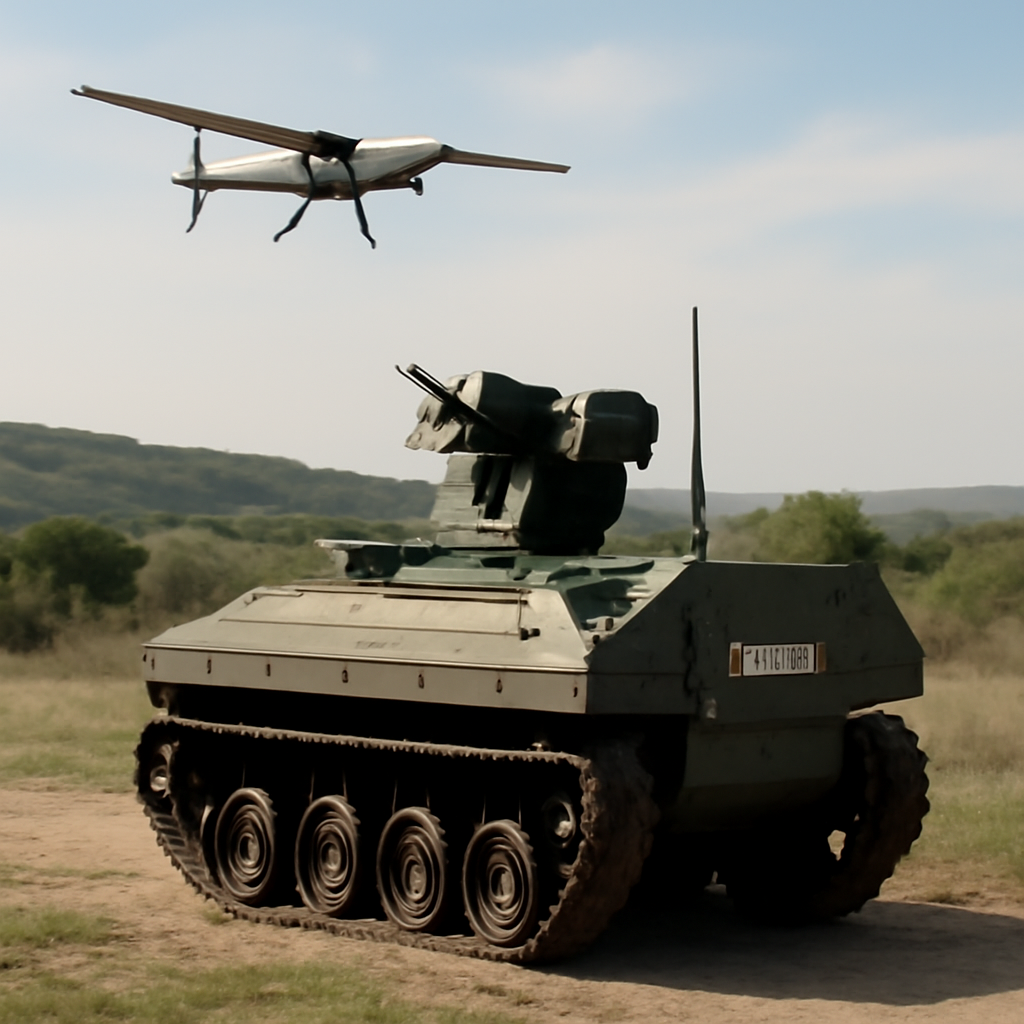
“There are some very good things in the Army Transformation Initiative, and there are some things that we needed to get another look at,” Defense Secretary Pete Hegseth said on May 13, setting off a chain of questions from lawmakers and military leaders about how, and how quickly, the Army will remake itself.
Pete Hegseth and the “another look” at the Army Transformation Initiative
A year after the defense secretary ordered the Army to undertake broad change — including jettisoning unwanted vehicles and aircraft and refocusing on unmanned systems — Mr. Hegseth has said he is rethinking parts of the Army Transformation Initiative (ATI). He has declined to provide specifics, telling lawmakers only that "we’ll get back to you," remarks the Pentagon pointed to after he was asked about the Army’s proposed cuts to helicopter procurement.
The plan was first unveiled by Hegseth in a memo issued last April. Officials at the Pentagon referred journalists to Hegseth’s May 13 comments in response to a question from Rep. Rosa DeLauro, whose district includes the Sikorsky factory that builds the UH-60 Black Hawk.
House Armed Services Committee: demand for a concrete roadmap
Chairman Rep. Mike Rogers, R-Ala., pressed the Army secretary and the acting chief of staff at a May House Armed Services Committee hearing for a detailed modernization roadmap and timeline that Congress can fund or reject. "We'd like to see a concrete plan on how the Army intends to modernize, where it invests, where the investments will be made, what risks to readiness will be absorbed, and what impact it will have on the industrial base," Rogers told Army leaders.
Rep. Jim Garamendi, D-Calif., echoed the plea for clarity, asking for the top three to five parts of ATI and warning of "enormous inconsistency in direction." A spokesperson for the House Armed Services Committee declined to provide more-detailed examples of what lawmakers would like to see on ATI.

Audit-ready is a season. It shouldn't be.
Evidence in spreadsheets, controls drifting between audits, frameworks multiplying on flat headcount. Nubivance runs continuous compliance on Rapid7 Cyber GRC - SOC 2, HIPAA, ISO 27001, PCI, CMMC.
End the scrambleArmy leadership, a living document, and an unfinished staff conversation
The Army always intended ATI to be a "living document," a U.S. official told Defense One, but that same official said Hegseth’s office has not yet reached out to the service to discuss which parts of ATI he wants to revisit. The official, granted anonymity because they were not authorized to speak on the record, summarized the service’s posture: "No plan is designed to survive first contact with the enemy, and as conditions evolve, as things change, we must be willing and able to transform and change quickly with it."
Army Secretary Dan Driscoll told the House Armed Services Committee that he will "take a hard look with the Office of Secretary of War and make sure that we are synced with their strategy and their plans as they look across the joint force." Acting Chief of Staff Gen. Christopher LaNeve — on track to replace the ousted Gen. Randy George — and Driscoll have been briefing armed services and appropriations committees this month as lawmakers press for detail.
Program-level trade-offs: helicopters, munitions, and attritable drones
Lawmakers have zeroed in on the Army’s proposal to buy fewer aircraft and the potential effect on production lines and supply chains. Members warned that reducing buys now can throttle manufacturers and suppliers, with production lines that "can’t necessarily rebound a year or two later" if purchases resume.
According to the anonymous U.S. official, service leaders have been told to "tighten their belts," prompting trade-offs: money that might have gone to helicopter procurement instead is being used to refill munitions stockpiles and to buy "attritable drones, new weapons and cyber capabilities." The official stressed the Army still recognizes the need for legacy helicopters: "Nobody's saying we don't need Chinooks or Black Hawks or Apaches. We need to modernize them, etc. But we have so many, based on the force structure side, that we think it’s what is required to fight a conflict."
Hegseth’s May 13 testimony further complicated the picture: he announced he wants to restore funding for the Air Force’s E-7 Wedgetail, a program not included in the original fiscal year 2027 Pentagon budget request, and said "I think that mindset was indicative of a mindset that we’ve shed, which is the divest-to-invest mindset." Final budget decisions, however, run through the White House’s Office of Budget and Management, leaving the U.S. official unable to explain why specific trade-offs were chosen.
What this means for lawmakers, Army acquisition leaders, and the defense industrial base
- Lawmakers: Members of Congress — including Rep. Rogers and Rep. Garamendi — will press for a concrete plan, seeking the authority to approve or block parts of ATI once shown detailed priorities, timelines, and risk assessments.
- Army acquisition leaders: Program managers will face near-term pressure to balance legacy sustainment, munitions replenishment, and new purchases such as attritable drones and cyber capabilities while awaiting a clarified strategy from the secretary’s office.
- Defense industrial base: Suppliers and production lines tied to helicopters and other legacy platforms will watch purchase profiles closely; lawmakers warned that steep cuts could strain supply chains and stave off a quick restart of production if buys resume later.
The immediate facts are plain: ATI remains in flux a year after it was ordered, senior Army leaders are briefing Congress, and the defense secretary has signaled targeted revisions without spelling them out. The Army has promised continued briefings and has sent experts to Capitol Hill; what remains open is a timetable and the specific trade-offs lawmakers will be asked to endorse. Will the "another look" produce a roadmap with firm milestones and funding lines, or will it widen the gap between the Army’s modernization ambitions and the industrial base Congress is determined to protect? Congress and the Army are preparing to find out.