“In the 101st Combat Aviation Brigade, our pilots operate in unpredictable environments where split-second decisions dictate mission success,” Col. Anthony Marston told Defense One.
Trial overview: an eight-month test of the Oculus-based NeuroTrainer
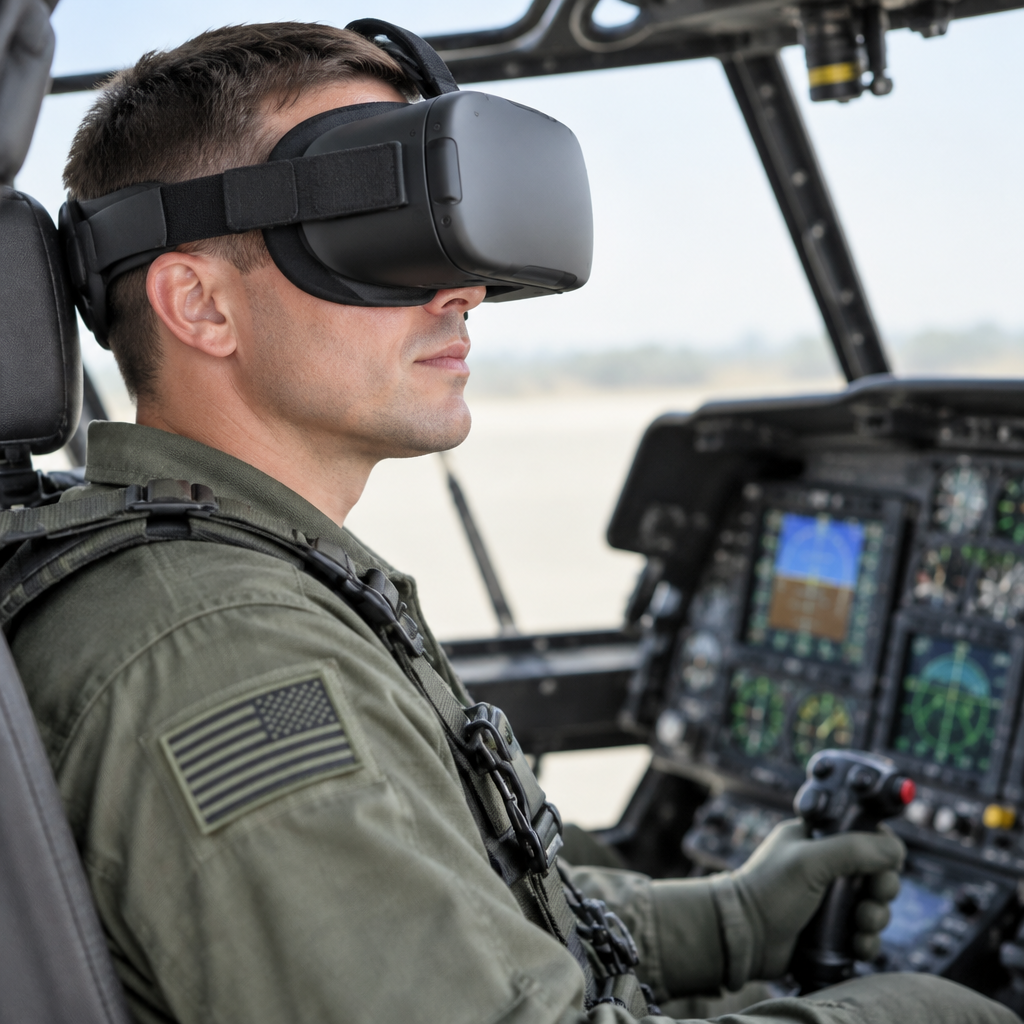
The 101st Combat Aviation Brigade (101st CAB) has begun an eight-month experiment that incorporates an Oculus-based headset called the NeuroTrainer into its flight-training regimen. The unit is testing whether repeated sessions on the headset can measurably improve aviators’ reaction times and processing abilities, the brigade said in a news release cited by Defense One.
Training regimen: frequency, exercises, and in-headset tasks
Pilots in the trial will complete three NeuroTrainer sessions per week, playing two games for at least six minutes each session. One exercise requires users to catch orange balls while dodging incoming projectiles; the other asks pilots to identify a robot teammate outside their immediate field of view and then swat a ball in that teammate’s direction. Capt. Drew Lightsey, a spokesman for the 101st CAB, said the exercises are “designed to challenge and improve reaction time, situational awareness, and quick-decision making.”

Audit-ready is a season. It shouldn't be.
Evidence in spreadsheets, controls drifting between audits, frameworks multiplying on flat headcount. Nubivance runs continuous compliance on Rapid7 Cyber GRC - SOC 2, HIPAA, ISO 27001, PCI, CMMC.
End the scrambleMeasurement plan: simulator comparison and the week-15 cohort
During the initial phase, each pilot performs a round on the NeuroTrainer and then enters a helicopter simulator to measure cognition, according to the unit’s news release. The trial moves into a second phase beginning at week 15, when 70 pilots will be evaluated on long-term results. Evaluators will assess the speed at which aircrews perform emergency procedures in the simulator and will collect qualitative data through open-ended survey questions asking how participants felt they had improved over time, Lightsey said.
Pilot feedback and the brigade’s Holistic Health and Fitness link
Early user impressions include a mix of learning curve and engagement. Chief Warrant Officer 2 Eric Low, a CH-47 Chinook maintenance test pilot, said, “It had a little bit of a learning curve to start. Once you start to get the hang of it, it felt like a video game. I like how it challenged different aspects of hand-eye coordination and the ability to track multiple objects at the same time.”
Victor Rodriguez, cognitive performance specialist for the 101st CAB’s Holistic Health and Fitness program, framed the NeuroTrainer as potentially diagnostic as well as developmental: “I think this device could bring awareness to some of the underlying issues affecting our pilots,” Rodriguez said. He added that performance results could prompt conversations about stress, oversaturation, or emotional regulation when those factors appear to affect aviator performance.
How 101st CAB pilots, evaluators, and other units are expected to use the NeuroTrainer
- 101st CAB pilots: will use scheduled headset sessions as part of a regimented training cycle and then compare simulator performance immediately after NeuroTrainer runs.
- Evaluators and training staff: will measure both objective simulator metrics — notably speed of emergency-procedure execution — and subjective self-reports gathered by open-ended survey questions to judge long-term effects at week 15 and beyond.
- Other military units: the press release noted that similar headset tests are taking place at Navy Fighter Weapons School, Air Force Special Operations Command, and the 75th Ranger Regiment, suggesting the NeuroTrainer trial in the 101st CAB sits within a broader pattern of small-unit experimentation with virtual-reality cognitive tools.
Beyond immediate performance metrics, the brigade explicitly identified potential operational uses: the NeuroTrainer could serve as an on-days-not-flying tool or as a maintenance of skill option for staff pilots who do not fly frequently. The trial’s combination of short, repeatable exercises and simulator-linked measurement is intended to produce both rapid feedback and a window into longer-term effects for a defined cohort of 70 pilots.
The experiment will produce its first longer-term assessment beginning at week 15; until then, the program will accumulate week-to-week practice and simulator comparisons. Observers inside the brigade will be watching objective emergency-procedure timing, pilot self-assessments, and whether performance metrics reveal issues such as stress or oversaturation that merit their Holistic Health and Fitness team’s attention.