“The Army doesn’t have a data issue, it has a data-management issue,” some participants said during Project Flytrap, a Poland-based exercise that repeatedly exposed how information movement — not collection — is hindering faster, smarter decisions on the battlefield.
Project Flytrap in Poland: echelons can’t move information fast enough
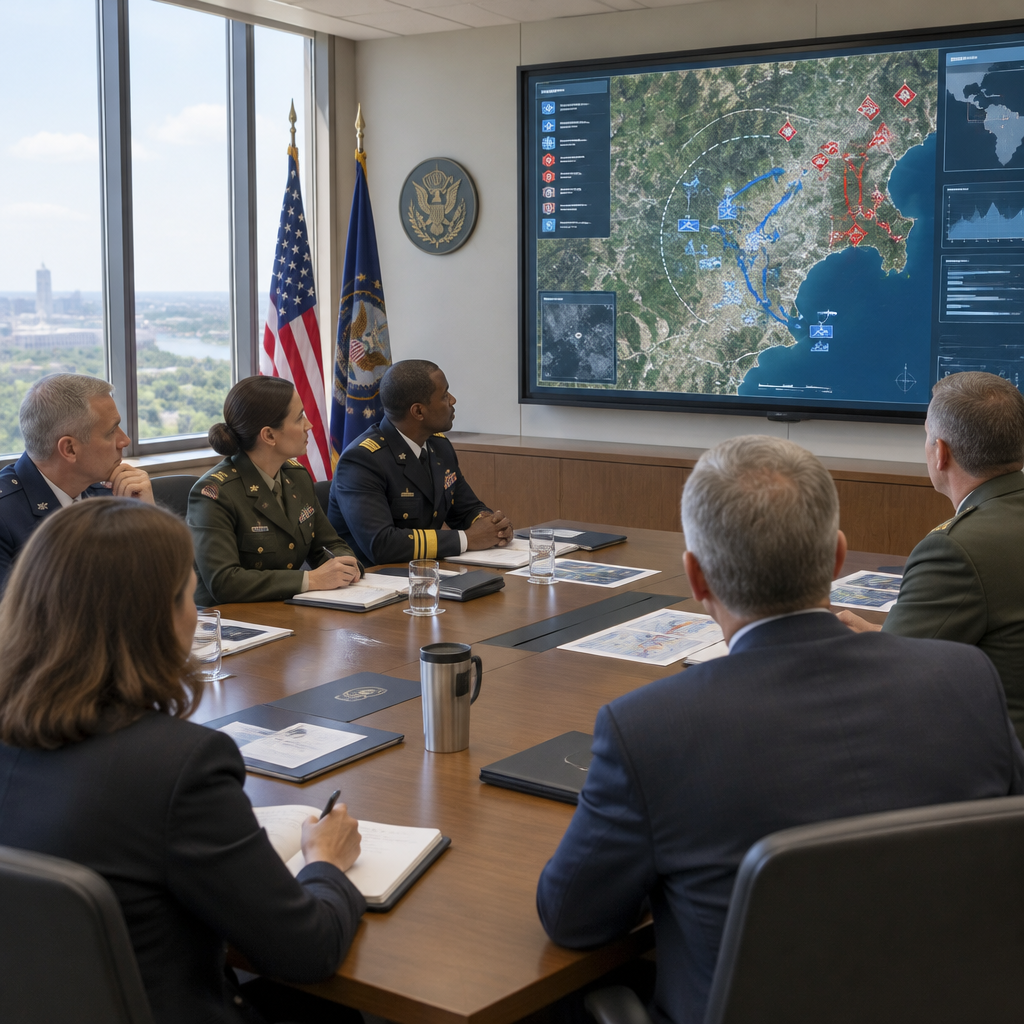
Recent field exercises, officials and industry speakers told a trade event near Washington, D.C., have highlighted a single recurring problem: units collect large volumes of information but the mechanisms to move that intelligence up and down echelons and turn it into timely action are insufficient. Project Flytrap’s managers and a junior signal officer who helped handle data for the exercise described the problem as not an absence of data, but a failure of data management and flow between combat units, communications units, and headquarters.
Capt. Gabriel Glazer on decision speed and the need for lower-level fixes
Capt. Gabriel Glazer, a graduate student at Carnegie Mellon University who most recently served in the 2nd Cavalry Regiment, told the Armed Forces Communications and Electronics Association audience that the modern battlefield is “massively complex” with too many variables for existing structures to account for in real time. “It is, frankly, almost impossible for any unit, the way it is structured now, to account for them,” he said, and leaders “can’t make the best decision at a speed at which it’s going to be relevant.”
Glazer urged that, while the Army continues to test a next-generation command-and-control platform that links larger formations, the service also needs lower-level fixes. He said platoon leaders will want information from division and corps headquarters but will also require systems that let them react locally — for example, to an approaching drone swarm — and simultaneously feed that tactical data upward so higher echelons can act.

This site is the portfolio.
OSINTSights runs on Cloudflare Workers, D1, R2, and Vectorize, with an AI pipeline on Hetzner ARM. Nubivance designed, built, and operates it. We do the same for clients.
See what we buildJames Craven and the ‘people-speed’ seam in command-and-control
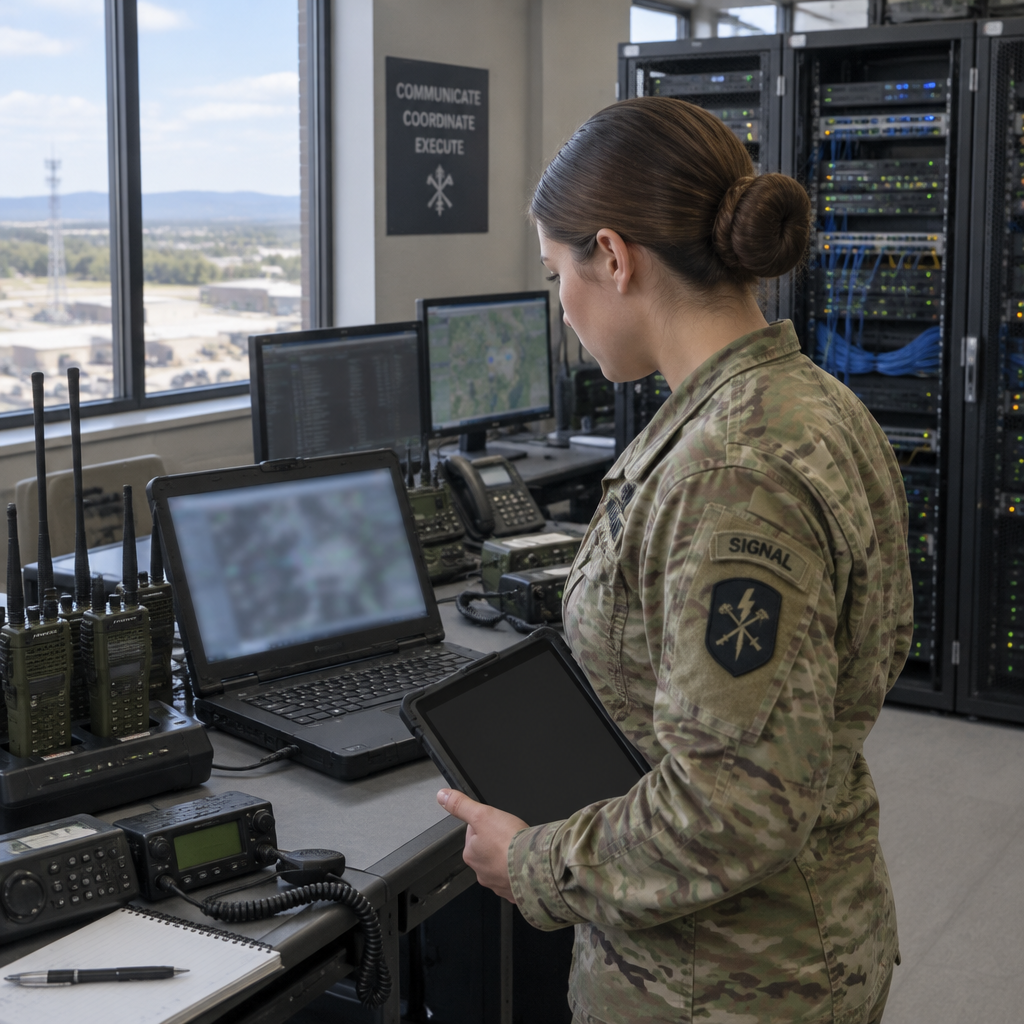
James Craven, Anduril’s NGC2 program manager, described a concrete example of the delay: an indication of an anti-radiation missile threat must travel from the intelligence shop to the operations shop to set the division’s electromagnetic posture and then to the signals battalion to reconfigure radios. “There's a seam and gap there, but it occurs at people speed,” Craven said. “It's not going to be fast.” His description framed the problem as one of latency introduced by human handoffs and organizational stovepipes — not a lack of sensors or data per se.
Melissa Daminski of L3 Harris: AI as a native capability for the electromagnetic domain
Industry speakers argued artificial intelligence could reduce those frictions. Melissa Daminski of L3 Harris said “AI is going to be native,” particularly for cellular and spectrum operations. She outlined a dual-sided requirement: systems must sense the electromagnetic environment and maneuver inside contested 5G or 6G signals as adversaries do, and they must have “AI and other smarts” to make decisions such as when to leave a channel and move to another one.
Glazer echoed the idea that AI could shorten the time for intelligence to flow from individual ground units up to division and corps headquarters and then back down through the formation. For now, however, he said the Army Data Operations Center is troubleshooting individual data-flow problems as they arise rather than relying on an integrated, automated pipeline.
What this means for platoon leaders, division and corps headquarters, and signals battalions
- Platoon leaders: They will need systems that present higher-echelon information in forms they can act on immediately and that also let them make autonomous, rapid decisions against threats like drone swarms, while still reporting actionable data up the chain.
- Division and corps headquarters: Higher echelons must receive timely, accurate tactical data from subordinate units and be able to push coherent, automated guidance downward — a flow that current human-dependent handoffs are impairing.
- Signals battalions and communications units: They are the final link for physically protecting networked assets and changing radio configurations, but their actions depend on rapid decisions from intelligence and operations shops; that interdependence exposes the “seam and gap” described by industry representatives.
Field exercises like Project Flytrap are forcing the Army and its industry partners to confront where human processes slow technical systems. The service’s next-generation command-and-control tests are widening the aperture of linked formations, but participants argue the immediate priority is eliminating the people-speed seams at the tactical edge. The Army Data Operations Center is already addressing problems case-by-case; whether those fixes coalesce into lower-level, AI-enabled systems that let platoon leaders both act locally and feed higher commands in real time remains the pressing question.