“The important thing here is continuing what the RACER program started, which was like, ‘What’s the best you can do in off-road autonomy?’” — Michael Rose, chief technology officer for CPE Mission Autonomy.
Michael Rose and CPE Mission Autonomy
On the sidelines of the GVSETS Conference, Michael Rose, the chief technology officer for CPE Mission Autonomy, described a deliberate pivot in how the Army will evaluate unmanned ground-vehicle autonomy. Rose said CPE Mission Autonomy has built an “environment” in which multiple companies will test their autonomy stacks on the same base platform — now the Polaris MRZR — enabling the service to “get a true head-to-head comparison of where the industry is right now.” He confirmed the move away from the Infantry Squad Vehicle (ISV) but declined to comment on the reasons for that shift, which vendors are supplying autonomy software for the MRZRs, or any upcoming acquisition decisions or price points for the revamped Unmanned Systems (UxS) program.
Polaris MRZR Alphas: 12 vehicles supplied
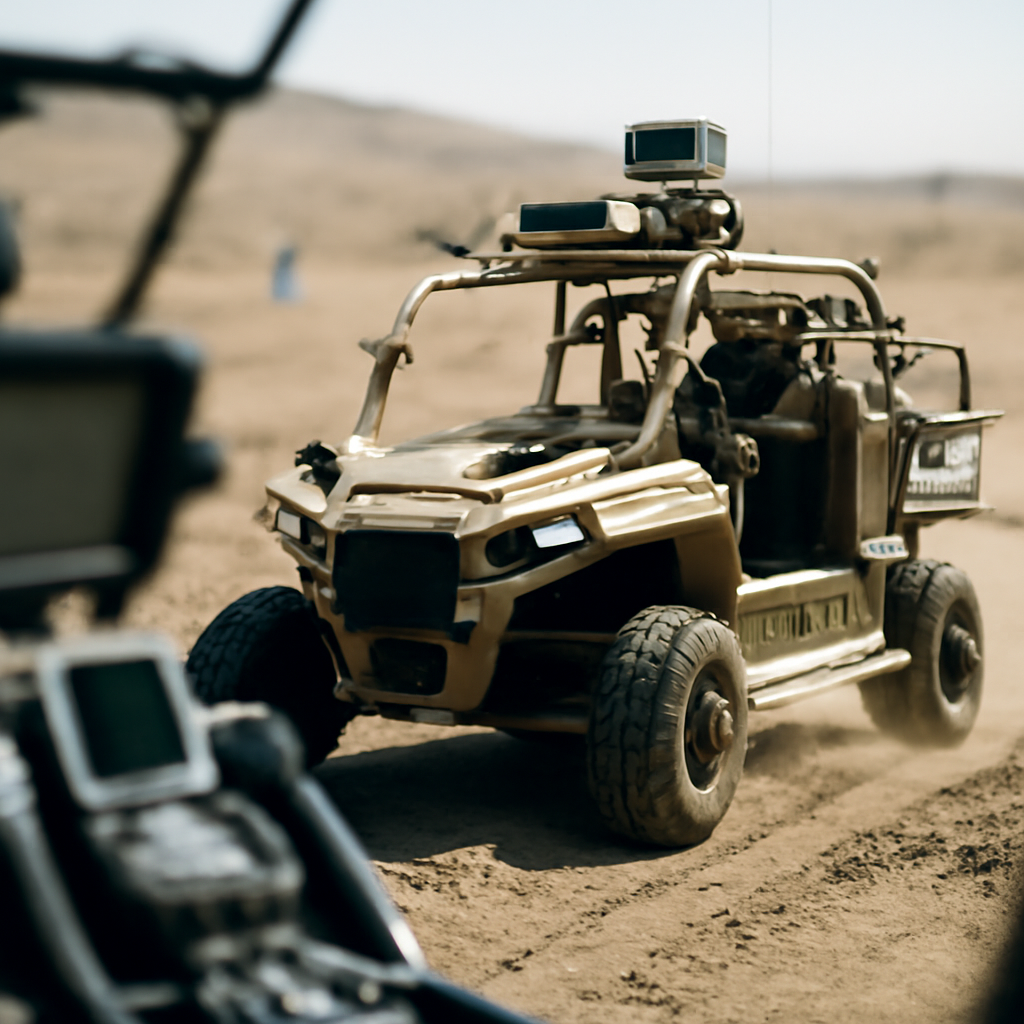
Polaris confirmed to Breaking Defense that the company has provided 12 MRZR Alpha vehicles to the Army for the initiative. According to Rose, the MRZR fleet is now the sole base platform the service will use for off‑road autonomy testing in this track of the UxS effort — replacing the ISV as the common test vehicle.

This site is the portfolio.
OSINTSights runs on Cloudflare Workers, D1, R2, and Vectorize, with an AI pipeline on Hetzner ARM. Nubivance designed, built, and operates it. We do the same for clients.
See what we buildFrom ISV to MRZR: program decisions and earlier concerns
Breaking Defense reported last fall that the Army scrapped an earlier plan to retrofit ISVs with off‑road driving autonomy software from Forterra, Overland AI and Scout AI under prototype contracts. A service spokesperson told Breaking Defense at the time that, “[b]ased on the changing technology environment,” the Army would allow UxS software vendors to select preferred robotic platforms rather than forcing them to use the ISV as a surrogate. Industry commentary cited in earlier reporting identified “underlying deficiencies” in the initial plan — including potential safety risks and the low price point of the UxS contract awards — and noted that the three companies were given a total of $15.5 million to integrate their software with the ISVs, factors that made the ISV a less ideal choice.
RACER program legacy and off‑road autonomy testing
Rose tied the MRZR transition to continuity with RACER, a former DARPA program that developed autonomy software stacks to enable Army and Marine Corps unmanned ground vehicles to maneuver on off‑road terrain. He positioned the current effort as carrying forward RACER’s core question — maximizing off‑road autonomy performance — while using a single base platform approach to produce comparable results across competing autonomy stacks. The UxS ISV competition had used a single base platform as well; the service’s current environment substitutes MRZRs as that shared surrogate for testing.
What this means for the Army, Forterra/Overland AI/Scout AI, and Polaris
- The Army: By standardizing on MRZRs for off‑road autonomy tests, the service intends to produce a direct, head‑to‑head comparison of software performance on a consistent vehicle baseline. The service has ended use of ISVs for this testing track, per Rose.
- Forterra, Overland AI and Scout AI: All three firms confirmed to Breaking Defense that they remain participants in the UxS program. Breaking Defense previously reported that Army Chief Technology Officer Alex Miller said the service was evaluating additional companies, including those from the FUZE shop, indicating a broader vendor set may be part of the MRZR testing environment.
- Polaris: The company directly supplied 12 MRZR Alphas to the Army for the initiative, making Polaris the immediate provider of the hardware baseline for the service’s off‑road autonomy comparisons.
The Army’s move to MRZR Alphas centralizes the testbed for off‑road autonomy and reframes the UxS competition as one of software stacks measured against a common hardware baseline. What remains unsaid in the published reporting is precisely which autonomy vendors will run on those MRZRs in coming trials and whether the shift will alter future procurement terms — matters Rose declined to discuss. For now, the record is clear: the ISV is out as the surrogate and a dozen MRZR Alphas are in, with the service seeking a straightforward, comparative read on industry capability.