"The grand strategy of conflict going forward is compatibility," Army Secretary Dan Driscoll told reporters Tuesday during the Army’s industry day for low-cost interceptors.
Dan Driscoll on a single, allied-facing digital marketplace
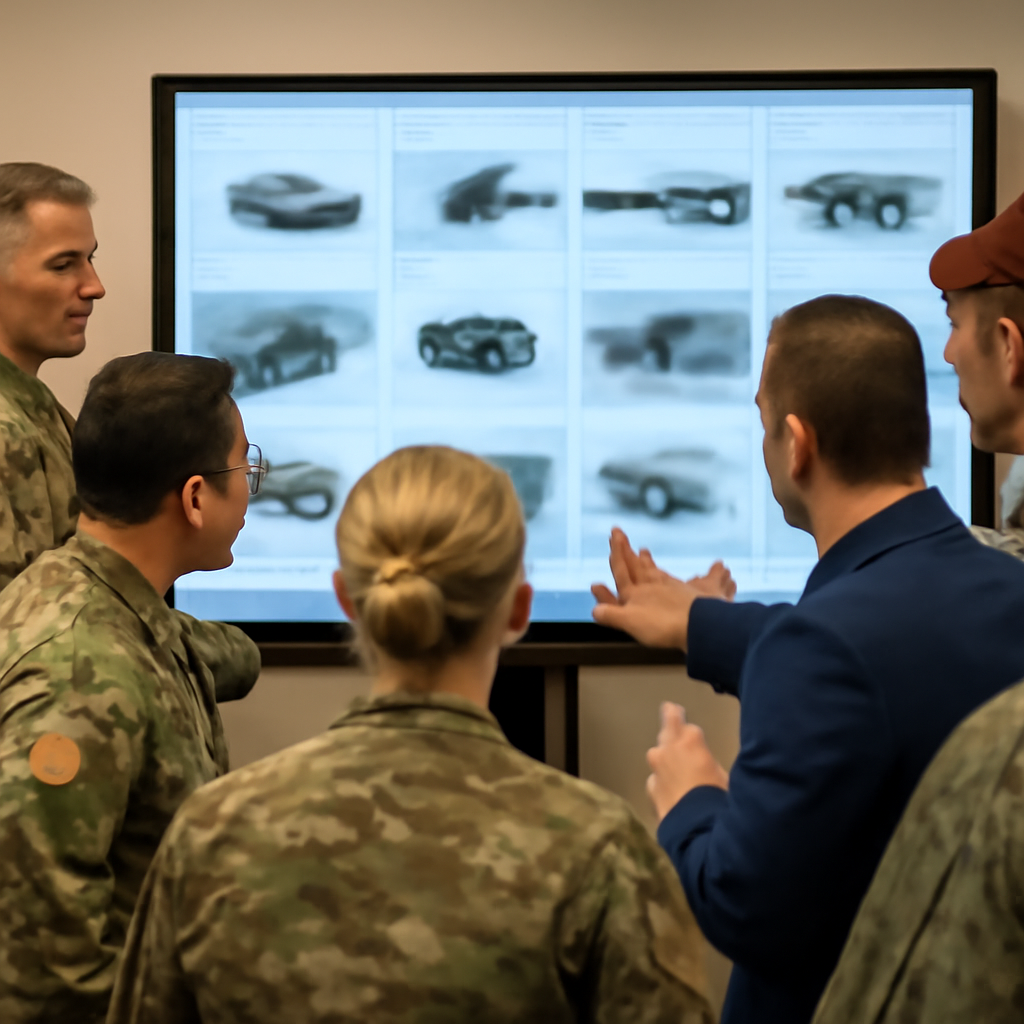
Driscoll laid out a vision of a single, Army-run digital marketplace where soldiers, allies and partners can shop for materiel in a way that prioritizes interoperability. He described the system as "almost like Consumer Reports, where we are reviewing many of the products on there, we're allowing other countries to put their reviews on there, and then…just let free market forces dictate what are the best products."
That ambition extends beyond drones and counter‑UAS tools: the secretary said the goal is to have "virtually all Army materiel available" on one platform so that orders "go directly to the vendor within 24 hours." Driscoll framed the marketplace as a way to make U.S. engagement and prepositioning of materiel abroad more flexible: a "rewriting of how we, the United States, can engage in conflict abroad."
Brent Ingraham and the unmanned marketplaces now serving allies
The Army already operates dedicated marketplaces for counter-UAS and aerial drones, and acquisition chief Brent Ingraham provided scale: the unmanned aerial system marketplace represents approximately 45 companies and has generated more than $200 million in sales. Ingraham said the service is "merging the marketplaces together" so that an order placed on the UAS or counter‑UAS storefront "automatically kicks directly over to an order that flows to that company."
Last week the Army confirmed that nine partner countries—Denmark, Finland, France, Italy, Lithuania, Netherlands, Norway, Sweden, and the United Kingdom—signed a letter of intent at Eurosatory to use the platforms. They join eight nations already signed on: Australia, Argentina, Estonia, Poland, Romania, Singapore, South Korea, and Thailand.
The Army plans to expand the platform concept: an RFI for low-cost interceptors will be released July 6 with a four‑week window for submissions, and the service aims to hold technology demonstrations by the first quarter of fiscal year 2027.

Audit-ready is a season. It shouldn't be.
Evidence in spreadsheets, controls drifting between audits, frameworks multiplying on flat headcount. Nubivance runs continuous compliance on Rapid7 Cyber GRC - SOC 2, HIPAA, ISO 27001, PCI, CMMC.
End the scrambleGen. Ronald Clark on USARPAC and unmanned surface vessels for logistics
Gen. Ronald Clark, commander of U.S. Army Pacific, emphasized the role unmanned surface vessels (USVs) could play in sustainment across the theater. He noted that "the Army primarily uses watercraft for sustainment, which is something unmanned surface vessels could help with 'at range and scale.'" Clark said the command is "working with a number of companies to try to get them to build to the requirements we need" and that his preference for platform size is flexible: when asked whether he would rather have "one 200‑foot autonomous system or 20 10‑foot autonomous systems," Clark replied, "both."
His message was practical: USVs are being evaluated as tools to provide "resiliency to the joint force through logistics and sustainment" and the theater Army is actively engaging vendors to meet defined requirements.
Pentagon Post Quantum Cryptography Strategy and the White House executive orders
The Pentagon released its "Post Quantum Cryptography Strategy" Tuesday, following two White House executive orders designed to accelerate quantum work. The orders direct the department to identify at least three new quantum sensors within the next 60 days; those sensors must then be fielded by September 2028.
Kirsten Davies, the department’s chief information officer, cautioned that updating edge systems that use quantum‑vulnerable cryptography "is important, but it's only a first step." Executives in the quantum industry responded enthusiastically: Victor Peng, CEO at PsiQuantum, said in a statement, "America’s quantum moment is arriving," and Sristy Agrawal, Mesa Quantum co‑founder and CEO, said the orders ensure "the domestic quantum ecosystem will continue to grow and flourish."
The published background in the brief described quantum computing as promising capabilities beyond modern binary computers—"discovering new materials or compounds, and breaking the encryption used to safeguard state secrets and financial data"—and positioned the executive orders as completing a trio of strategic priorities alongside AI and semiconductors.
What this means for allies, vendors, and logisticians
- Allies: Countries that signed letters of intent now have a pathway to buy from the Army’s marketplaces; interoperability and shared reviews are intended to lower barriers to partnership and supply-chain alignment.
- Vendors: The UAS marketplace already lists ~45 companies and $200 million in sales; merging storefronts and a 24‑hour vendor order flow create incentives for firms to make compatible products and to enter into rapid procurement channels.
- Logisticians and theater commands: USARPAC’s push for USVs signals a concrete procurement and experimentation vector for sustainment at range—commanders will be watching demonstrations and vendor-built platforms against defined requirements.
The Army has set a short calendar of milestones: an RFI for low‑cost interceptors on July 6, a four‑week submission window, and demonstrations targeted for early fiscal 2027. At the same time, the Pentagon must identify new quantum sensors within 60 days and field them by September 2028. Those dates frame the near-term test of whether the Army’s marketplace ambitions, USARPAC’s logistics experiments, and quantum investments translate into fieldable capabilities.