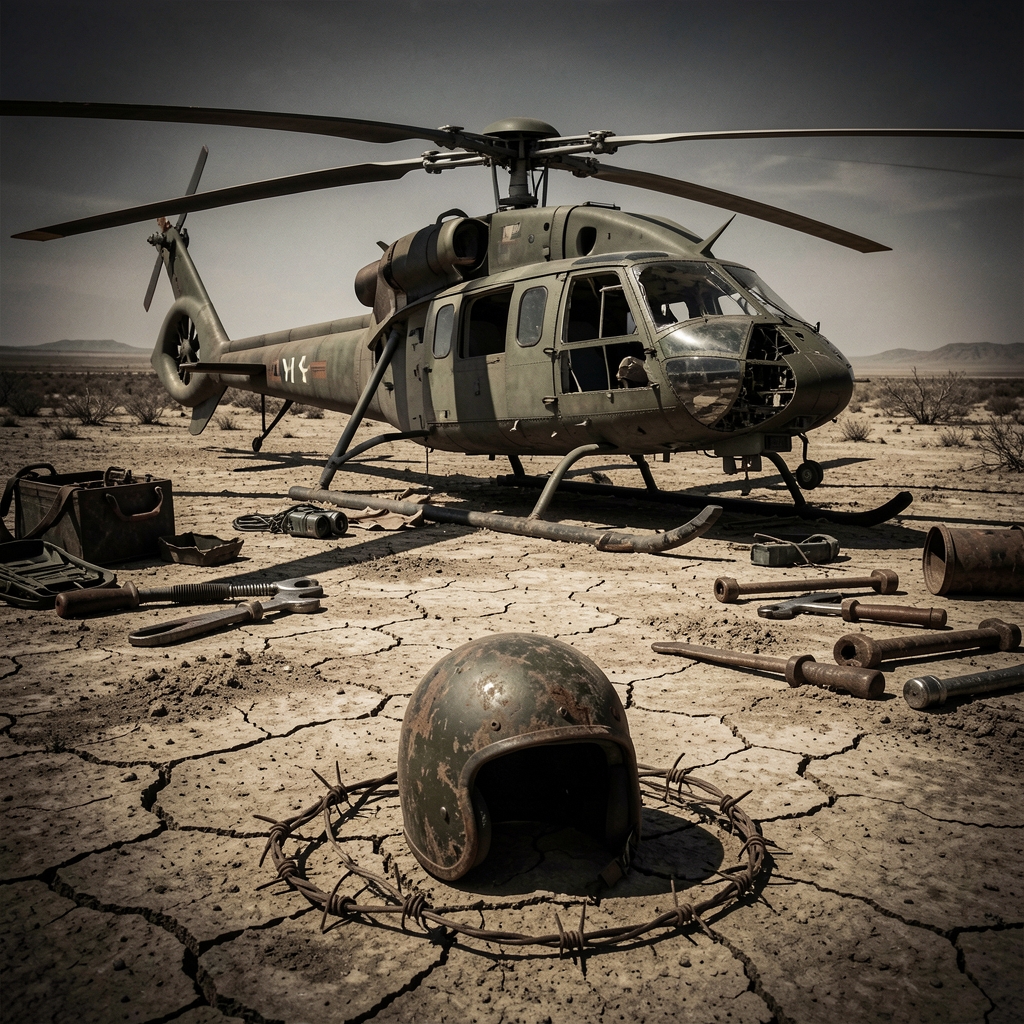
What does it mean when a single sentence from an Army official reads like a turning point? "In the past year, the Army has divested nearly 60 percent of its Apache D models," Col. Tim Jaeger, director of Army aviation at the G3/5/7, told reporters. On its face, the figure is stark: more than half of a legacy attack helicopter variant removed from service in a twelve‑month span. The ripple effects — operational, industrial and strategic — deserve scrutiny.
Background: a focused change in the aviation fleet
The only confirmed fact at hand is Col. Jaeger’s assessment of divestment: nearly 60 percent of Apache D models have been removed from Army inventories in the past year. The statement frames a concentrated reduction of a specific aircraft model rather than a broad, unspecified restructuring. That single metric, offered by the director of Army aviation at the G3/5/7, anchors any discussion about the Army’s aviation posture and ongoing overhaul efforts.
Current situation: what the reported divestment signals
When a service chooses to divest a known portion of a platform, several immediate realities follow. At minimum, units that once depended on those airframes will see a change in the composition of their fleets, training pipelines will adjust to fewer D‑model Apaches, and logistics lines tied to that configuration will be reexamined. Col. Jaeger’s statement confirms that such a rebalancing is underway and that it has moved at scale over the past year.

This site is the portfolio.
OSINTSights runs on Cloudflare Workers, D1, R2, and Vectorize, with an AI pipeline on Hetzner ARM. Nubivance designed, built, and operates it. We do the same for clients.
See what we buildWhy it matters: capability, cost and transition risks
Divesting nearly 60 percent of any named model within a year raises questions for policymakers and operators alike. For policymakers, the pace and scale of this action touch on budget prioritization and program execution — choices about where to invest and which capabilities to retain. For operators and maintainers, the practical consequences include shifts in readiness models, maintenance inventories and unit training rhythms. For logistics planners, fewer D‑model airframes imply changes to spare parts demand, depot throughput and long‑term supply chains.
The move also carries potential transition risks. Rapid divestment can create temporary capability gaps if replacements are not fully in place or if training and sustainment do not keep pace. Conversely, when managed deliberately, such reductions can free funds and manpower for modernization, consolidation, or new systems. Col. Jaeger’s characterization of the divestment — nearly 60 percent in a single year — places the Army somewhere along that continuum, but the statement does not reveal whether mitigation measures have fully closed any gaps created during the transition.
Multiple perspectives: technologists, policymakers, users and observers
- Technologists will read this as an opportunity. A concentrated divestment can free engineering and sustainment resources to accelerate upgrades or field new architectures. But rapid fleet reductions can also disrupt testbeds and degrade institutional knowledge tied to a particular configuration.
- Policymakers must weigh tradeoffs. Large divestments permit reallocation of funds but demand confidence that operational needs are still satisfied. They also require clear accountability for how savings are realized and where reinvestment occurs.
- End users — pilots, maintainers and brigade commanders — confront immediate practical questions: how will training pipelines adjust, which airframes will be available for deployments, and how quickly will replaced capabilities arrive? The Army’s leadership will need to address these concerns to maintain unit cohesion and effectiveness.
- Adversaries and external observers will likely interpret a pronounced divestment as an indicator of doctrinal change or capability transition. Whether that interpretation is accurate depends on the broader context, which Col. Jaeger’s single statement does not provide.
Col. Tim Jaeger’s report is concise but consequential: the Army has removed nearly 60 percent of the Apache D models from its inventory in the past year. That fact raises more questions than it answers about timing, replacement, and the management of risk. Is this the deliberate shedding of an aging configuration to make way for modernization, or a step that will necessitate careful mitigation to sustain combat effectiveness? The answer will hinge on steps the service takes next — steps that, for now, remain to be publicly detailed.