“This contract structure ensures that Anduril, not the taxpayer, takes on the majority of the execution risk, aligning incentives to ensure on-time, high-quality submarine production,” Anduril said in a news release announcing its new shipyard in Baltimore County, Md.
Anduril’s Arsenal-2 and the $6.6 billion package
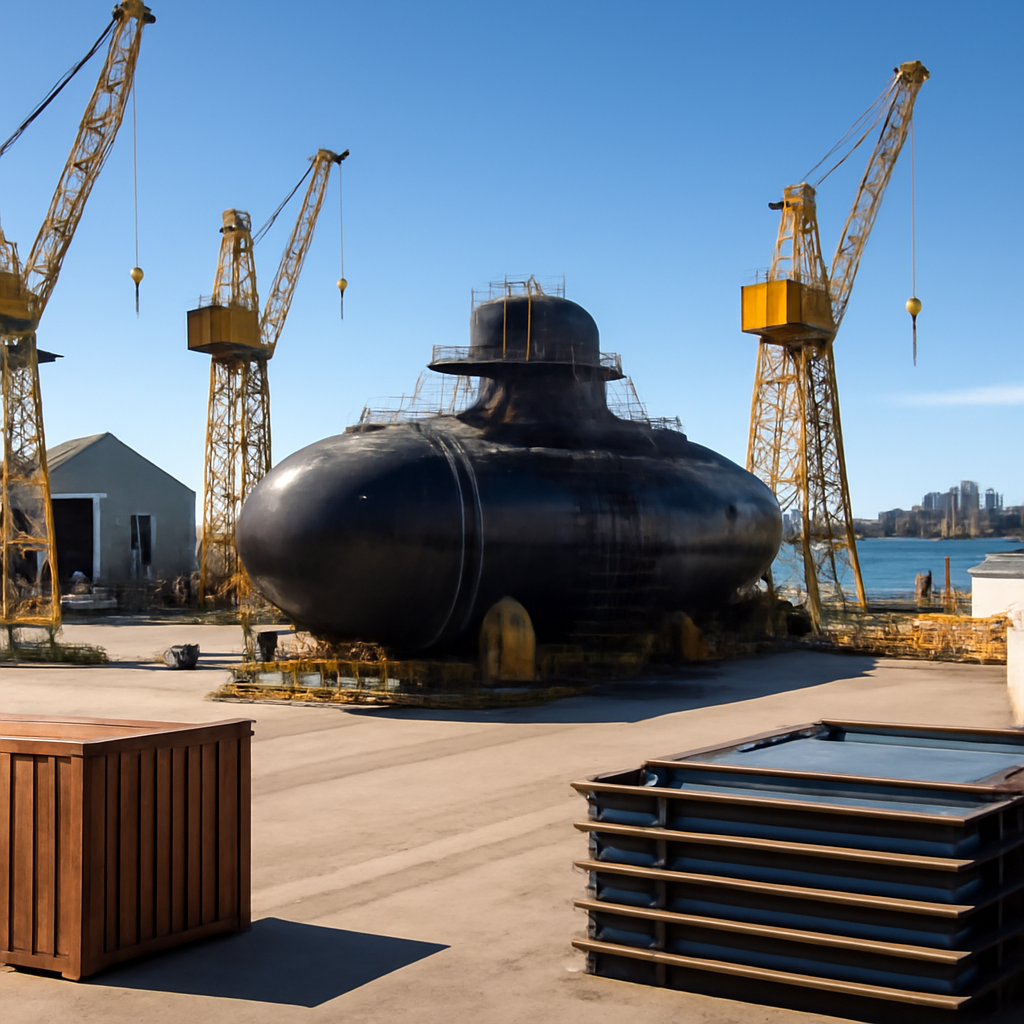
Anduril announced a $6.6 billion investment to establish a new shipyard, dubbed Arsenal-2, at Tradepoint Atlantic in Baltimore County. The funding package combines $3.7 billion in private capital from the company with up to $2.9 billion from the Navy. Anduril characterized the arrangement as its first entry into the supply chain for a major legacy defense program and said the contract structure places most execution risk on the company rather than taxpayers.
Facilities, products and the two-site approach
Arsenal-2 is planned as a 2 million-square-foot facility intended to manufacture “complex components and large scale assemblies” for Virginia-class submarines, starting with basic modules such as torpedo tubes and eventually expanding into full sections, including the bow. Anduril expects permitting to begin immediately and initial operations to launch in 2030, with construction to follow after the firm secures the necessary administrative green lights.
In parallel, Anduril will open a 160,000-square-foot facility in Orange County, Calif., to support prototyping, production of test assets and early workforce recruitment. The company said the Orange County location will provide a two-year operational head start to develop manufacturing methods, production workflows, and quality systems that will scale at Arsenal-2.

Audit-ready is a season. It shouldn't be.
Evidence in spreadsheets, controls drifting between audits, frameworks multiplying on flat headcount. Nubivance runs continuous compliance on Rapid7 Cyber GRC - SOC 2, HIPAA, ISO 27001, PCI, CMMC.
End the scrambleIndustrial-base context: production goals, delays, and supply-chain limits
The move comes amid longstanding pressure to expand submarine production. Chief of Naval Operations Adm. Daryl Caudle told the House Appropriations Committee in May that industry is expected to deliver two Virginia-class submarines annually by around 2032. The Navy’s shipbuilding plan, also released in May, identified growing the submarine industrial base as paramount to meeting those production goals.
But the Virginia-class program has faced hurdles. A Government Accountability Office report released in July cited late material deliveries and a shortage of experienced workers as factors slowing production; the GAO said shipbuilders were producing Virginia-class submarines at a rate of one per year as of June 2025. The GAO concluded that late material deliveries from suppliers and limited availability of experienced workers — amid competition in the labor market — were driving these trends.
Capacity estimates and the administration’s assessment
A senior administration official told reporters that Anduril’s planned facility would add roughly 9 million hours annually to the submarine industrial base, which the official said translates to a 15 percent increase for Virginia-class submarine production. “Having those torpedo tubes earlier would let us move production of current Virginia submarines under construction faster … This brings both resilience and capacity to the submarine industrial base that should absolutely translate to improved Virginia-class construction,” the official said.
Anduril’s president and chief strategy officer, Chris Brose, told reporters the company has been discussing the need for additional shipyard capacity with the administration and the Navy for nearly two years. “We need to grow the maritime industrial base, the submarine industrial base, so that we can produce more submarines,” Brose said. “This is not about taking food off the plate of anybody. This is about putting more food on the table and being able to meet the requirements that our country has to produce more submarines.”
What this means for the Navy, General Dynamics Electric Boat & Newport News Shipbuilding, and the Baltimore-area workforce
- The Navy: Additional domestic capacity aimed at early delivery of critical modules — notably torpedo tubes and eventually large hull sections — is intended to reduce bottlenecks tied to late supplier deliveries and to support the service’s push toward higher annual production rates.
- General Dynamics Electric Boat and HII’s Newport News Shipbuilding: The two shipbuilders that jointly build Virginia-class submarines gain a new potential source of complex components and assemblies, which Anduril said will allow more construction to occur in parallel across the industrial base.
- Baltimore-area workforce and local economy: Anduril anticipates the Arsenal-2 site will create more than 3,000 direct jobs and more than 11,000 indirect jobs at Tradepoint Atlantic, with initial operations targeted for 2030 and workforce training beginning earlier at the Orange County facility.
President Donald Trump was also expected to issue remarks in Baltimore County as part of the announcement. The firm and the Navy have framed the project as a way to add capacity and resilience to a program struggling with supply-chain timing and workforce constraints.
Next steps are concrete: permitting will begin immediately and construction will start after administrative approvals. The central open question left by the plan is whether the staged approach — prototyping and workforce development in Orange County, followed by large-scale production at Arsenal-2 — will translate into the higher, reliable production cadence the Navy seeks by the early 2030s.