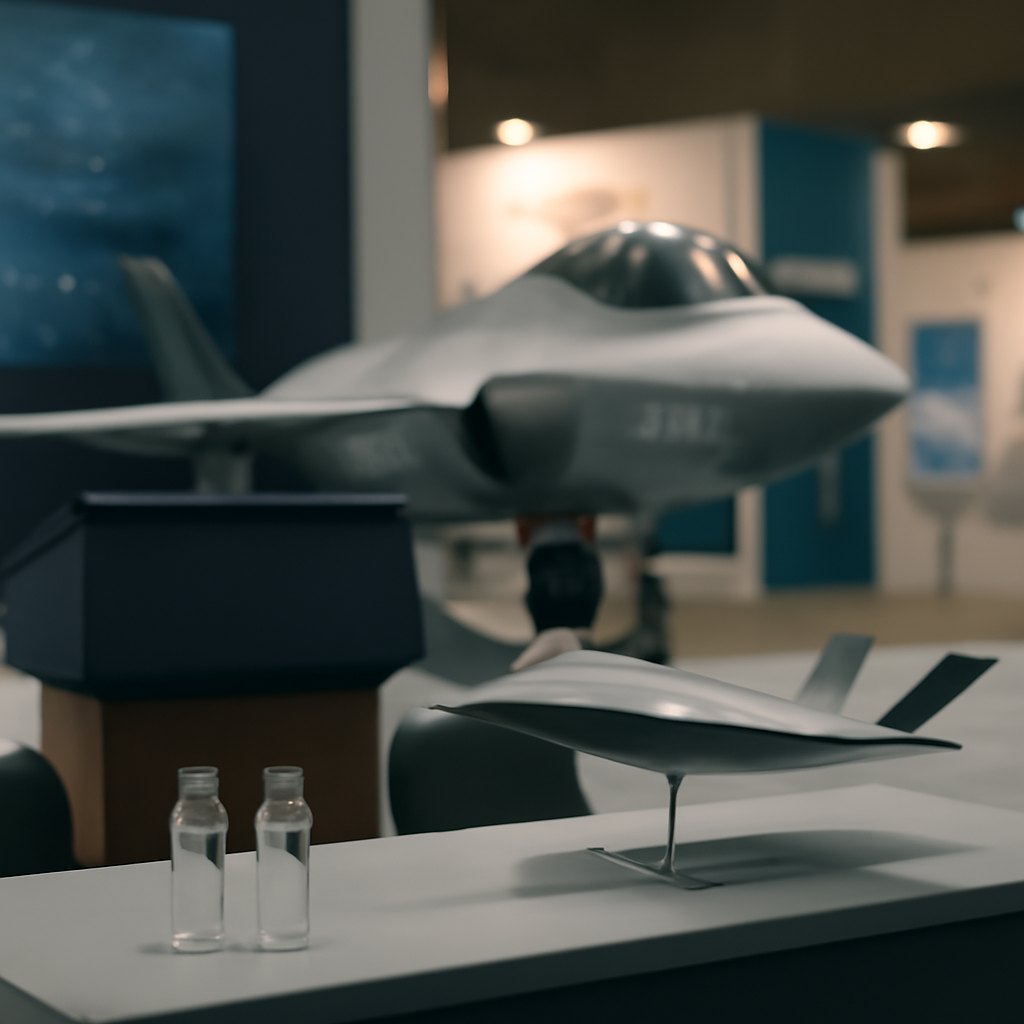
Boeing won the Navy’s F/A-XX fighter, a decision that the hosts of The Break Out laid out this week while also taking listeners to wartime Lviv to look at how Ukraine is scaling its own defense-technology base.
Boeing's F/A-XX win, as presented on The Break Out
On this week’s episode of The Break Out, Editor-in-chief Aaron Mehta and Navy reporter Diana Stancy explained what is known — and not known — about Boeing’s win for the Navy’s F/A-XX fighter. The program was described in the episode by those hosts as a clear procurement outcome: Boeing secured the F/A-XX contract for the Navy.
The F/A-XX’s expected role alongside the F-35 and F/A-18
Mehta and Stancy set out the Navy’s intended employment of the F/A-XX in context: the new fighter is expected to operate in concert with existing platforms, specifically the F-35 and the F/A-18. That expected role positions F/A-XX as a complement to the service’s current tactical aviation mix rather than a straight replacement across the board, according to the discussion on the program.

Audit-ready is a season. It shouldn't be.
Evidence in spreadsheets, controls drifting between audits, frameworks multiplying on flat headcount. Nubivance runs continuous compliance on Rapid7 Cyber GRC - SOC 2, HIPAA, ISO 27001, PCI, CMMC.
End the scrambleConcerns about Boeing executing two sixth‑generation fighter programs
The Break Out hosts also flagged internal concerns tied to the award: Boeing will be managing two sixth‑generation fighter programs simultaneously. Mehta and Stancy highlighted industry and programmatic questions about how Boeing will execute those parallel efforts. Those concerns about execution and capacity were presented as a significant part of the conversation about the program’s future risk profile.
Lviv report: scaling Ukraine’s homegrown defense-technology industry
Breaking Defense Europe Editor Elisabeth Gosselin‑Malo reported from Lviv, Ukraine, where she detailed efforts to scale a domestic defense-technology industry. Her on-the-ground reporting framed those efforts as part of Ukraine’s broader wartime adaptation, with attention paid to how the country is trying to expand locally developed technologies to meet defense needs.
Gosselin‑Malo’s reporting also emphasized the human dimension: ordinary citizens in Lviv continue to navigate the realities of everyday life in wartime while the country pursues those industrial and technological adjustments.
What this means for the Navy, Boeing, and Ukrainian defense innovators
- The Navy: Will field F/A-XX alongside its existing F-35s and F/A-18s, relying on the new airframe to complement those platforms as described on The Break Out.
- Boeing: Faces the operational and programmatic challenge of delivering two sixth‑generation fighter efforts at once; the hosts flagged concerns about Boeing’s capacity to execute both programs simultaneously.
- Ukrainian defense innovators and ordinary citizens: In Lviv, innovators are attempting to scale homegrown defense technologies amid wartime conditions, while civilians continue to manage daily life under those circumstances.
Taken together, the episode placed a single corporate procurement decision and a wartime industrial effort on the same plane of strategic consequence: Boeing’s F/A-XX win reshapes a major U.S. naval aviation program and raises questions about program execution, while on the other side of Europe Ukraine’s push to expand indigenous defense-technology production reflects the immediate pressures and adaptations of war. Both strands — procurement choices in a peacetime budget and rapid industrial scaling in wartime — will bear watching for how they alter capability, timelines, and resilience.
Original reporting: https://breakingdefense.com/2026/10/unpacking-boeings-f-a-xx-win-plus-a-report-from-wartime-ukraine/