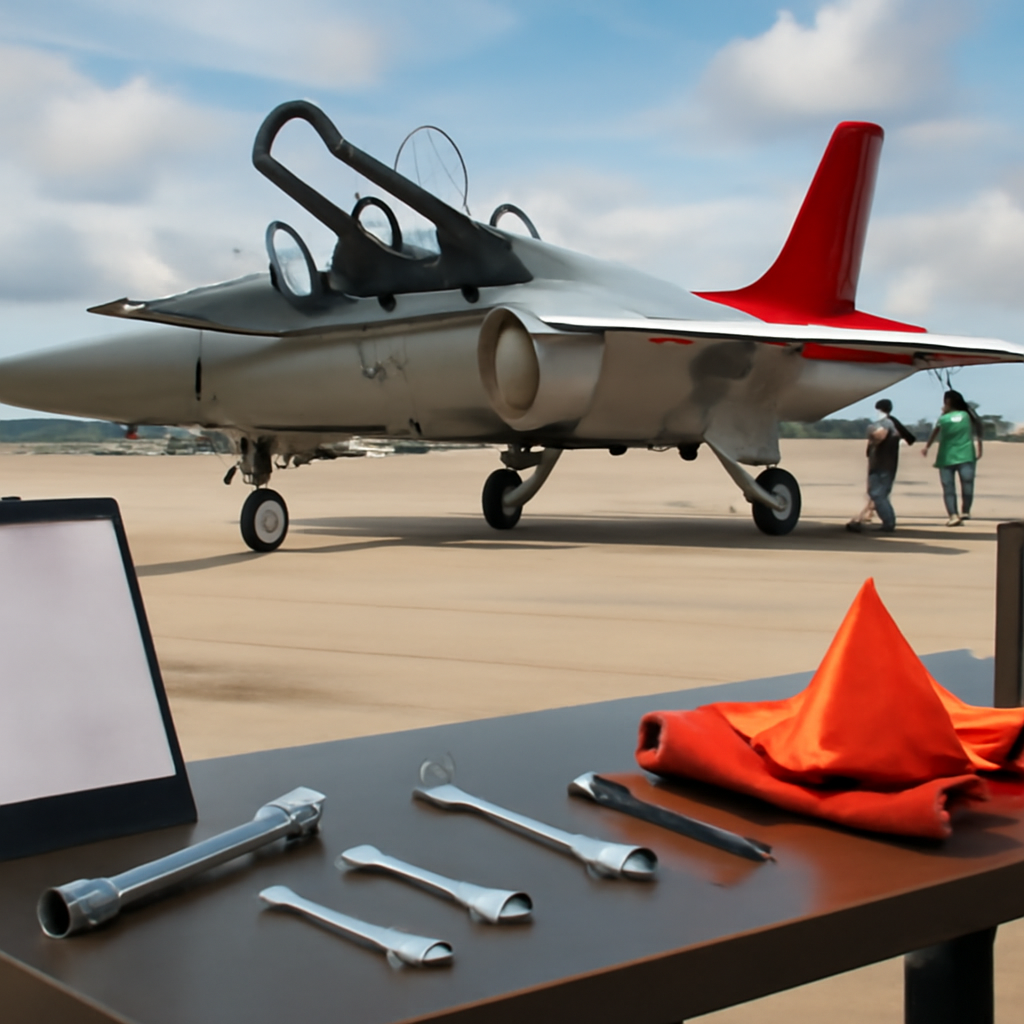
The first 82 T-7 aircraft are projected to fly with a "serious" airworthiness risk, an internal Air Force presentation dated August 2025 and reviewed by Breaking Defense says.
Air Force assessment: "serious" airworthiness risk tied to missing critical-safety data
The August 2025 briefing found Boeing had not provided certain data on the trainer’s critical safety items (CSIs) — “a part, assembly, or support equipment whose failure could cause loss of life, permanent disability or major injury, loss of a system or significant equipment damage.” Because the supplier agreements did not include those “critical characteristics,” the Air Force says it lacks the information needed to know if some CSIs meet specifications, why a part might fail, or when it needs inspection.
Program officials told Breaking Defense that inability to produce the CSI data prevents officials from applying operational limits that might otherwise mitigate the risk. Rodney Stevens, the Air Force’s program executive officer for training, confirmed the airworthiness risk tied to missing CSI data but called such problems “not uncommon” and said they are being managed as part of a broader risk burndown plan. Brig. Gen. Matthew Leard, director of plans, programs, requirements and international affairs at Air Education and Training Command (AETC), stressed the service is deliberately balancing schedule and operational risk and said the program is “confident in the safety of the new aircraft.”
Contract origins and program losses: a fixed‑price award from 2018
Boeing won the T‑7 contract in 2018 in a fixed‑price deal valued at $9.2 billion. Sources and internal documents described sustained friction over what the contract required Boeing to provide. Those struggles have produced program delays of more than two years, and the program has driven $3.2 billion in losses for Boeing, the reporting found. Formal production was approved in May, and prevailing plans call for initial operational capability — 14 aircraft ready for pilot training — in fall 2027.

Audit-ready is a season. It shouldn't be.
Evidence in spreadsheets, controls drifting between audits, frameworks multiplying on flat headcount. Nubivance runs continuous compliance on Rapid7 Cyber GRC - SOC 2, HIPAA, ISO 27001, PCI, CMMC.
End the scrambleConfiguration status accounting, sustainment and sustainment risk
The August 2025 presentation also flags failures to flow down requirements for configuration status accounting, which “provides a detailed audit trail of the aircraft configuration and its evolution over time.” The document lists near‑term impacts such as unknown aircraft configuration, parts‑ordering errors and inefficient maintenance, and warns of longer‑term risks including “runaway sustainment costs,” “compromised airworthiness” and “massive operational disruption.” The Air Force has assessed sustainment of the aircraft as “high risk.” Stevens said establishing configuration status accounting is a focus of the active management approach with Boeing and that data will be captured into an Air Force database as aircraft are delivered.
Operational tradeoffs: rain restrictions, simulator shortfalls, and an expedited training timeline
Testing and operational tradeoffs are central to current plans. The T‑7 cannot currently fly in the rain because exterior access panels do not seal properly, a problem that led program staff to tape panels during climate testing. Leard said avoiding rain is “an operational limit that we are willing to accept in the short‑term to begin training,” noting a fix is expected to be evaluated this summer.
Ground‑based training systems (GBTS) have struggled as well. An Air Force Operational Test and Evaluation Center report from November 2025 reviewed by Breaking Defense found deployed GBTS pass rates under 30 percent for key benchmarks. A March 2026 Air Force presentation rated GBTS performance as “moderate confidence/moderate risk.” Despite those numbers, AETC insisted on shipping devices to get the Advanced Pilot Training system online quickly, officials told Breaking Defense.
The service plans to start Type 1 training in production‑representative aircraft this year, and the first new pilots are expected to fly the T‑7 beginning in spring 2028. Sources warned that flying an aircraft with an incomplete flight envelope and ongoing development while training relatively inexperienced pilots is a different and riskier proposition than typical concurrency — one source said the program is “task saturating new pilots without a fully developed envelope.”
Engine procurement, technical‑data tradeoffs, and taxpayer exposure
Air Force and Boeing officials are weighing a change in how the government procures the T‑7’s engines that could cost taxpayers “up to $1.5 billion” more. The potential change — described by sources as an “additional” taxpayer cost — would come in exchange for technical data Boeing would provide on the company’s 747‑8i jumbo jet. The reporting did not say the proposal was finalized; it noted the government is mulling the trade as one possible way to obtain data the program currently lacks.
What this means for new pilots, AETC, and Boeing (and taxpayers)
- New pilots and instructors: They will begin training in production‑representative T‑7s before the aircraft’s operational envelope is fully expanded; instructors will be present, but the Air Force accepts short‑term operational limits such as no‑rain flight.
- AETC and program leadership: Officials have adopted an “active management” approach and are explicitly trading programmatic concurrency risk to avoid extending the legacy trainer, telling Breaking Defense they are “confident in the safety of the new aircraft.”
- Boeing and taxpayers: Disputes over flowed‑down data and supplier agreements have prompted program workarounds, potential shifts in engine procurement, and program losses for Boeing; sources warned some costs and schedule risk may be borne by taxpayers if contractual expectations are not enforced.
The Air Force and Boeing describe the Red Hawk as a promising trainer that requires careful, continued management. The program now depends on a trio of fixes — producing the missing CSI and configuration data, shoring up the GBTS, and resolving design issues such as the sealing problem — even as the service moves to stand up training by 2028. Whether those fixes will be complete before initial pilots fly, and at what cost, are the concrete, near‑term questions the program must answer.