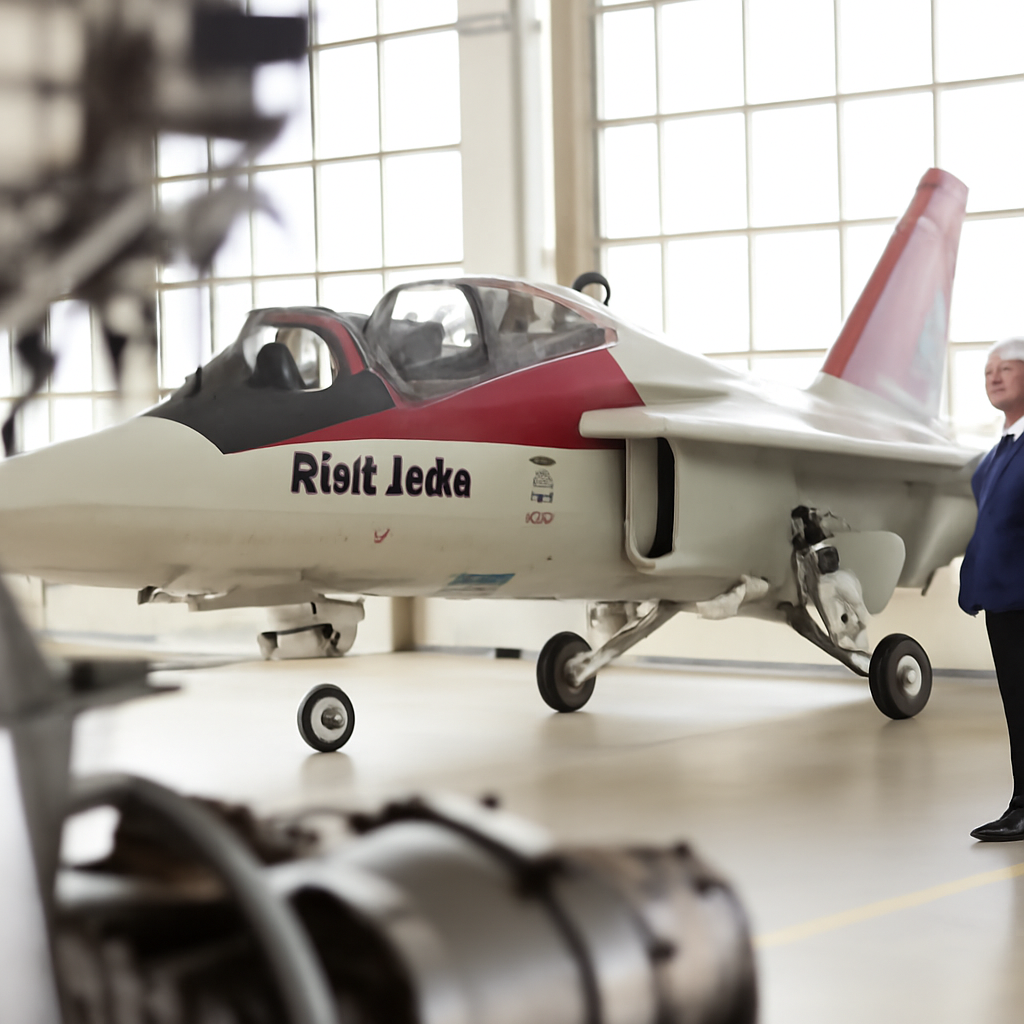
An internal Air Force presentation estimates the “additional” cost of shifting the T‑7 Red Hawk’s engines off Boeing and onto a direct contract with GE Aerospace could range from $1 billion to $1.5 billion.
MOA 2: engines moved to government‑furnished property
A December 2025 second Memorandum of Agreement (MOA 2), signed by Air Force and Boeing officials, would change how the T‑7’s engines are acquired. The document states, “The Air Force will provide Boeing all T‑7A Engines as Government Furnished Property, associated with production, commencing at Lot 5.” It also says Boeing’s obligation to provide any “associated Engine sustainment support, including spare Engines and any data deliverables associated with Engines will no longer be required.”
The Air Force’s internal presentation, apparently prepared in response to congressional direction, explains the practical result: “[d]epot standup activities can be initiated” and a “direct relationship with GE” would be established. Officials estimated the move’s “additional” costs at $1 billion to $1.5 billion.
Active management: incentives, delays and production‑representative test aircraft
The engine proposal sits inside a broader “active management” approach the Air Force implemented in January 2025 after years of tensions with Boeing. That approach provided $250 million in incentives to Boeing and delayed production by one year while procuring production‑representative test aircraft meant to accelerate fielding.
Air Force program executive officer for training Rodney Stevens told Breaking Defense the initial incentives “were largely achieved” and that active management “allows us to really robustly and actively manage the program through a mission‑outcome lens.” Stevens also said the Air Force “will do everything in partnership with AETC and hold Boeing to account” and that contracting officers “will issue contracting notices to Boeing to hold them to account” if needed.

The cyber insurance questionnaire just landed. Now what?
SOC 2, HIPAA, insurance renewals - someone has to own security strategy. Nubivance provides fractional CISO leadership without the full-time salary.
Get a security leadThe SAOC 747‑8i data concession in the same package
MOA 2 includes a provision unrelated to the T‑7 that could be decisive in negotiations: Boeing would provide the Air Force technical data for the 747‑8i to support the Survivable Airborne Operations Center (SAOC). The December 2025 document requires Boeing to “provide USAF a non‑exclusive license for My Boeing Fleet access to 747‑8i physical configuration technical data and detailed drawings on a non‑deliverable basis (Licensed Intellectual Property) supporting USAF needs for operation, maintenance, repair and overhaul of five Boeing 747‑8i aircraft… as well as any additional 747‑8i aircraft added.”
The MOA allows contractors working on SAOC to access that technical data if they agree to standard confidentiality agreements with Boeing. Sources described the package as a “big horse trade” in which the government would take engines out of Boeing’s scope in exchange for the 747‑8i data and other concessions.
What this means for the Air Force, Boeing, and GE Aerospace
- The Air Force: faces an up‑front bill — the internal estimate of $1–$1.5 billion — in order to secure direct data and depot relationships with GE and to resolve technical‑data shortfalls Boeing “advised [it was] unable to provide,” according to the internal presentation.
- Boeing: would relinquish engine responsibilities beginning at Lot 5 but would provide concessions including $50 million for spare parts and technical data access to its My Boeing Fleet for the SAOC program. Boeing told Breaking Defense it “will not forgo safety or quality” and noted the program has “safely accumulated over 344 flight test hours across more than 350 test flights.”
- GE Aerospace: issued a straightforward readiness statement to Breaking Defense: the company “has been proud to power the U.S. Air Force’s trainer jets for decades, and we are prepared to deliver the F404 engine to train the fighter pilots of tomorrow,” and said it “works with customers to provide necessary data required by contracts, while also protecting its intellectual property.”
Costs, accountability and competing views inside the program
Program supporters and critics disagree sharply about the tradeoffs. One government source said the engine pivot “could be more fruitful for the Air Force, but does come at a cost, and costs above what the contract was supposed to have.” A source with direct knowledge called the incentives “paying Boeing for work it should have already done” and warned the government is “on the wrong path of letting contractors walk all over it with no accountability.”
Industry analysts framed the choice differently. Richard Aboulafia of AeroDynamic Advisory told Breaking Defense it is “not surprising” data rights became an issue and that the Air Force might “deem[] useful to help solve the problem by eating the costs,” while Andrew Hunter, the Air Force’s former acquisition chief, noted potential advantages in having a direct relationship with GE and leveraging broader government buying power.
Rodney Stevens emphasized the Air Force has not formally moved forward the MOA 2 plan, saying, “We are only having preliminary conversations with Boeing and T‑7A stakeholders as we await additional Air Force‑level decisions.”
The package folds technical‑data access for a national‑priority platform — the SAOC — into a program already under active management. The Air Force and Boeing have signed MOA 2, but implementation rests on decisions yet to be taken at higher levels and on whether the estimated $1–$1.5 billion in extra cost is deemed acceptable in exchange for the data and operational relationships the MOA promises.