“We need to look at our schedule and adjust as necessary,” a top official said.
The June 15 crash in California and its immediate effect
On June 15, a B-52 Stratofortress crashed in California during a test flight tied to the Air Force’s radar modernization program, killing an eight-person crew. The crash paused test flights for the program, which is intended to keep the service’s 75 Cold War‑era bombers in the skies until at least the 2050s. Officials told reporters at the Life Cycle Industry Days conference in Dayton, Ohio, that the Air Force plans to resume radar development using another Stratofortress, but it is not yet clear when flight testing will restart.
Col. Spencer Turner on testing capacity and schedule adjustments
Col. Spencer Turner, the B-52 system program manager, reiterated that “the original acquisition plan and execution strategy was always to have two test aircraft,” and said the “modification effort on that second aircraft is ongoing.” Turner added he expects the Air Force to complete the installation of the full radar suite onto that aircraft “this year.” He conceded the crash will force schedule reviews: “Obviously, the crash was not in our original schedule. So we need to look at our schedule and adjust as necessary.”

Audit-ready is a season. It shouldn't be.
Evidence in spreadsheets, controls drifting between audits, frameworks multiplying on flat headcount. Nubivance runs continuous compliance on Rapid7 Cyber GRC - SOC 2, HIPAA, ISO 27001, PCI, CMMC.
End the scrambleRaytheon-built AESA radar, Boeing delivery, and the B-52J goal
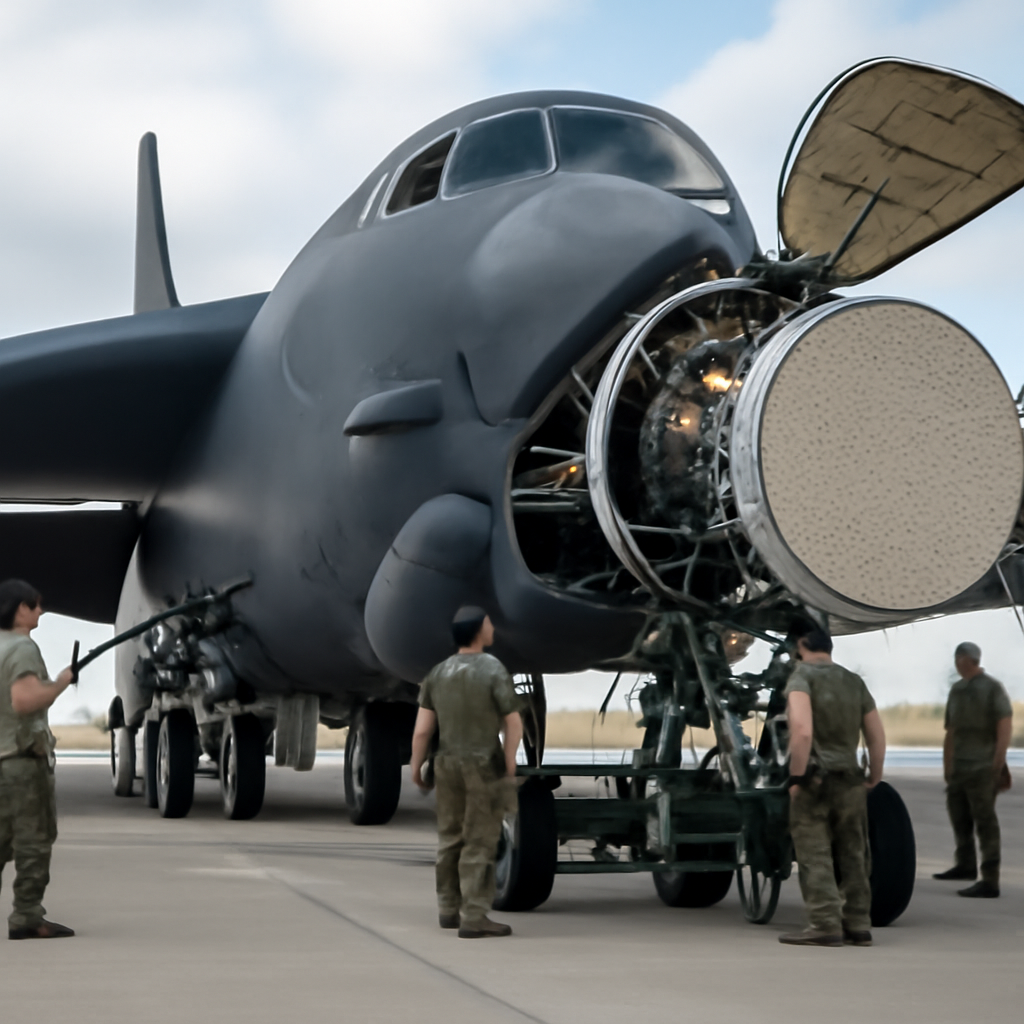
The modernization effort centers on a Raytheon-built Active Electronically Scanned Array radar intended to upgrade the B-52’s situational awareness and survivability. Boeing delivered the first test B-52 aircraft to Edwards Air Force Base in late 2025, according to a company press release. In a December news release, Troy Dawson, Boeing Bombers vice president, said: “The new radar will significantly increase B-52 mission effectiveness by improving situational awareness, speeding target prosecution and enhancing aircrew survivability in contested environments.” The upgraded bombers will be designated the B-52J, and the Air Force intends the long-range fleet to include the Stratofortresses alongside the next‑generation B-21 Raiders.
Budget, oversight, and testing criticism
The radar modernization plan has faced heavy criticism and programmatic pressure. Last year, cost overruns in the radar modernization program triggered a Nunn‑McCurdy Act breach. The Government Accountability Office warned in its annual weapons systems assessment that the production design “was planned with very little development flight testing completed” and cautioned that “beginning production with limited testing of a fully integrated system often results in costly and time‑intensive rework if the program discovers issues later.” The combination of a breach, GAO concerns about limited flight testing, and the June crash raises questions about how the program will reconcile schedule, budget, and technical risk.
What this means for Boeing, Air Force acquisition leaders, and warfighters
- Boeing: The company had delivered the first test aircraft to Edwards AFB in late 2025 and has been public about the radar’s mission benefits. Boeing, like the Air Force, faced direct questions about whether two dedicated test aircraft will remain part of the plan; spokespeople for Boeing did not immediately respond when asked if those plans continue following the crash.
- Air Force acquisition leaders: Col. Turner expects the second aircraft’s full radar installation “this year,” but also acknowledged the need to rework the schedule. Col. Timothy Spaulding, the portfolio acquisition executive for bombers, said the service has the option of pulling B-52s out of the boneyard at Davis‑Monthan Air Force Base for future fights—“We can and have looked at bringing B-52 out of Arizona,” he said—but he warned that resurrecting aircraft from the boneyard “is not necessarily an easy thing to do, and there's some limitation to how far you might go on that number.”
- Warfighters and planners: The modernization is explicitly tied to maintaining long‑range bomber capability; program leaders and industry frame the radar upgrade as improving “situational awareness, speeding target prosecution and enhancing aircrew survivability in contested environments,” per Boeing’s Troy Dawson. The timeline for realizing those benefits depends on when integrated flight testing resumes and how the program addresses the testing shortfall highlighted by the GAO.
The Air Force’s path forward is narrowly defined by two concrete facts in the record: one upgraded B‑52 had already been delivered to Edwards Air Force Base, and a second is being modified with an expectation of full radar installation this year. Beyond that, the fatal June 15 crash has left testing paused, schedule adjustments likely, and unanswered questions about whether the program will expand the pool of test aircraft. Spokespeople for the Air Force and Boeing did not immediately respond when asked if there remain plans for two dedicated test aircraft after the crash—so the next measurable steps will be the completion of the second aircraft’s installation and a formal decision to resume flight testing.