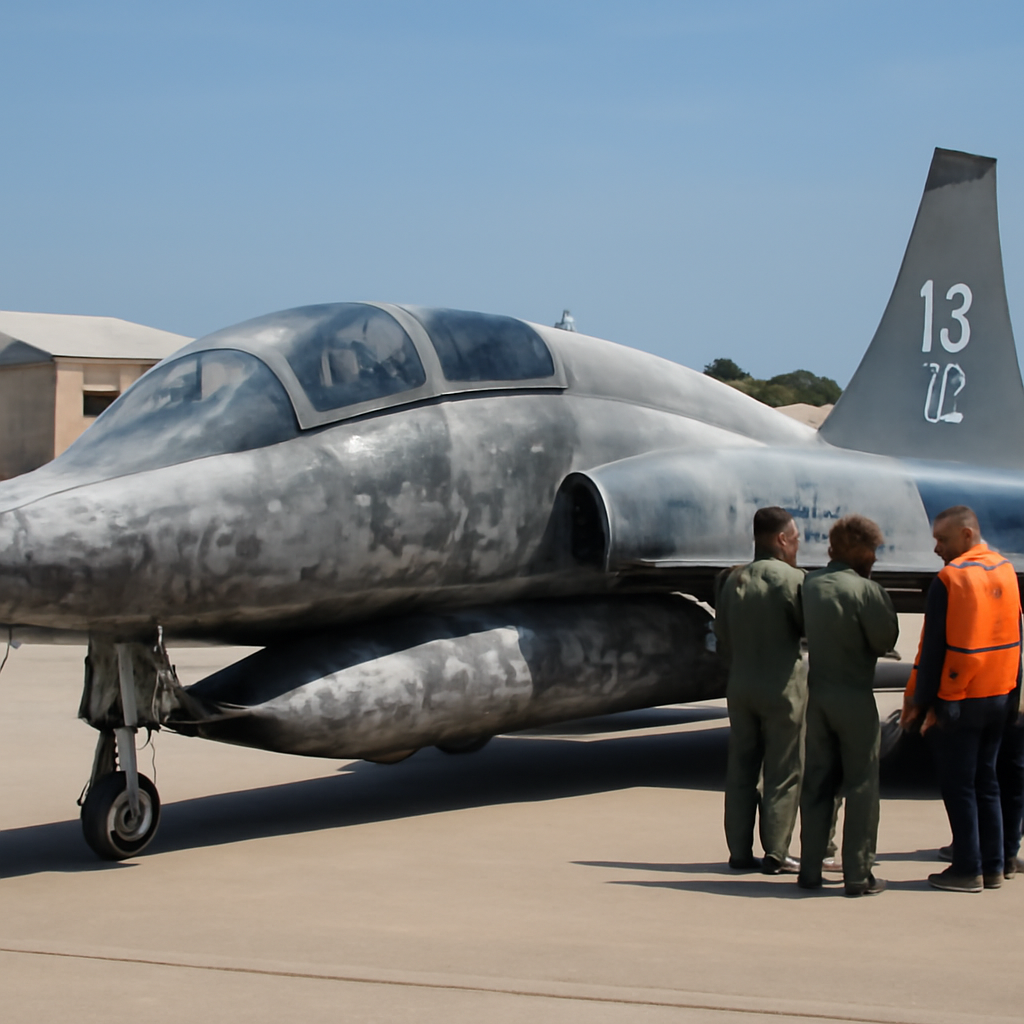
The May 12 mishap at Columbus Air Force Base
On May 12 a T-38 Talon experienced a crash while operating from Columbus Air Force Base in Mississippi. The two pilots aboard the aircraft both safely ejected, the Air Force said. The service has not provided additional technical details about the cause in its public statement; instead, the message accompanying the grounding emphasizes safety and the need to preserve evidence for the investigation.
Fleet-wide operational pause and its terms
The Air Force press release described the action as a "fleet-wide operational pause" that applies to the entire T-38 fleet and takes effect immediately. The pause is intended to enable the ongoing accident investigation to "locate and assess evidence" and to ensure "the continued safety of Air Force personnel and equipment involved in flying T-38 operations while the investigation progresses." The release makes clear that the duration of the pause is undetermined and will depend on further engineering analysis.
Individual aircraft will not return to flight simply on the basis of the pause being lifted. Each T-38 may resume flying only after passing the specific inspection process the Air Force will develop and after any required corrective maintenance is completed.

This site is the portfolio.
OSINTSights runs on Cloudflare Workers, D1, R2, and Vectorize, with an AI pipeline on Hetzner ARM. Nubivance designed, built, and operates it. We do the same for clients.
See what we buildInvestigation, inspections, and the return-to-flight process
The Air Force said inspections looking for underlying issues are expected to start "as early as this week." Those inspections will form part of an engineering analysis and an inspection protocol intended to "clear aircraft for a safe return to flight." The service emphasized that it will withhold a timeline for the fleet's full return until those analyses and inspection processes are complete.
The grounding follows a familiar pattern for military aviation: services commonly ground fleets after a mishap when preliminary data suggest other aircraft could be at risk of a similar event. The Air Force framed its action in those terms, stressing evidence preservation and personnel safety as principal objectives.
Impact on pilot training and operations
The T-38 serves as a central training platform: the Air Force described it as "a critical tool for Air Force pilot training," one young aviators use to learn fundamentals before moving on to platforms like fighter jets and bombers. The aircraft "entered service in 1961" and, the Air Force noted, its age has made it "increasingly difficult to maintain."
To preserve training continuity while the T-38 pause remains in effect, the service said aircrews will "maximize simulator training to maintain proficiency and currency requirements." Individual units that rely on T-38s for syllabus events will therefore lean on simulators and on any other available training assets that remain cleared to fly.
Northrop Grumman, the builder of the T-38, "did not immediately respond to a request for comment," according to the press release.
T-7 Red Hawk replacement and program status
The Air Force reiterated the longer-term plan to replace the legacy Talon with the new T-7 Red Hawk, which is built by Boeing. The service said the Red Hawk's "more modern design" can better prepare pilots for next-generation aircraft. Earlier this month the Air Force approved the T-7 for production and said it expects the jet will be ready to fly new pilots in 2028.
The juxtaposition of a fleet pause for the aging T-38 and a programmatic move to a modern trainer underscores a near-term operational tension: keeping pilot training pipelines supplied in the face of an inspection-driven pause, while progressing a production program aimed at eventual replacement.
For now the key facts are straightforward: a May 12 crash at Columbus AFB prompted an immediate, fleet-wide operational pause to allow investigators to "locate and assess evidence"; inspections may begin "as early as this week"; the pause will remain in place until engineering analysis and an inspection process can clear aircraft to return to flight; and simulators will shoulder more of the training load in the interim. How quickly inspections will yield conclusive results—and which corrective actions, if any, will be required—remains to be determined.