"The reason why the A-10 is really good at that is because it's a core mission of that platform," Gen. Kenneth Wilsbach told lawmakers Wednesday, and then added that as the A-10 moves into retirement "there will be other platforms that it will become their core mission."
Gen. Kenneth Wilsbach’s testimony to the House Armed Services Committee
At a House Armed Services Committee hearing, the Air Force’s top uniformed officer, Gen. Kenneth Wilsbach, laid out a transition in how the service intends to sustain combat search and rescue support as the A-10 Thunderbolt II — long the centerpiece of that role — is retired. Wilsbach acknowledged the A-10’s proficiency in the "sandy package" mission set and told lawmakers that other aircraft, notably F-35s and F-15s, "have the capability" to take on those tasks as the Warthog is phased out.
A-10 retirement timeline and the extension to 2030
The Air Force has delayed the full retirement of the A-10, announcing it will keep three squadrons flying: one through 2029 and two through 2030. Air Force Secretary Troy Meink said that the work by the White House, Congress, and the Defense Secretary to extend the A-10’s retirement to 2030 "allows us to make sure that we don't have a break in that capability."
The A-10's recent operational record, the service noted, includes heavy use in the Iran war — from strafing boats in the Strait of Hormuz to participating in the rescue of a downed F-15 airman — reinforcing its long-standing role in close air support and combat search and rescue.

This site is the portfolio.
OSINTSights runs on Cloudflare Workers, D1, R2, and Vectorize, with an AI pipeline on Hetzner ARM. Nubivance designed, built, and operates it. We do the same for clients.
See what we buildF-35s and F-15s proposed as replacement platforms — and the critiques
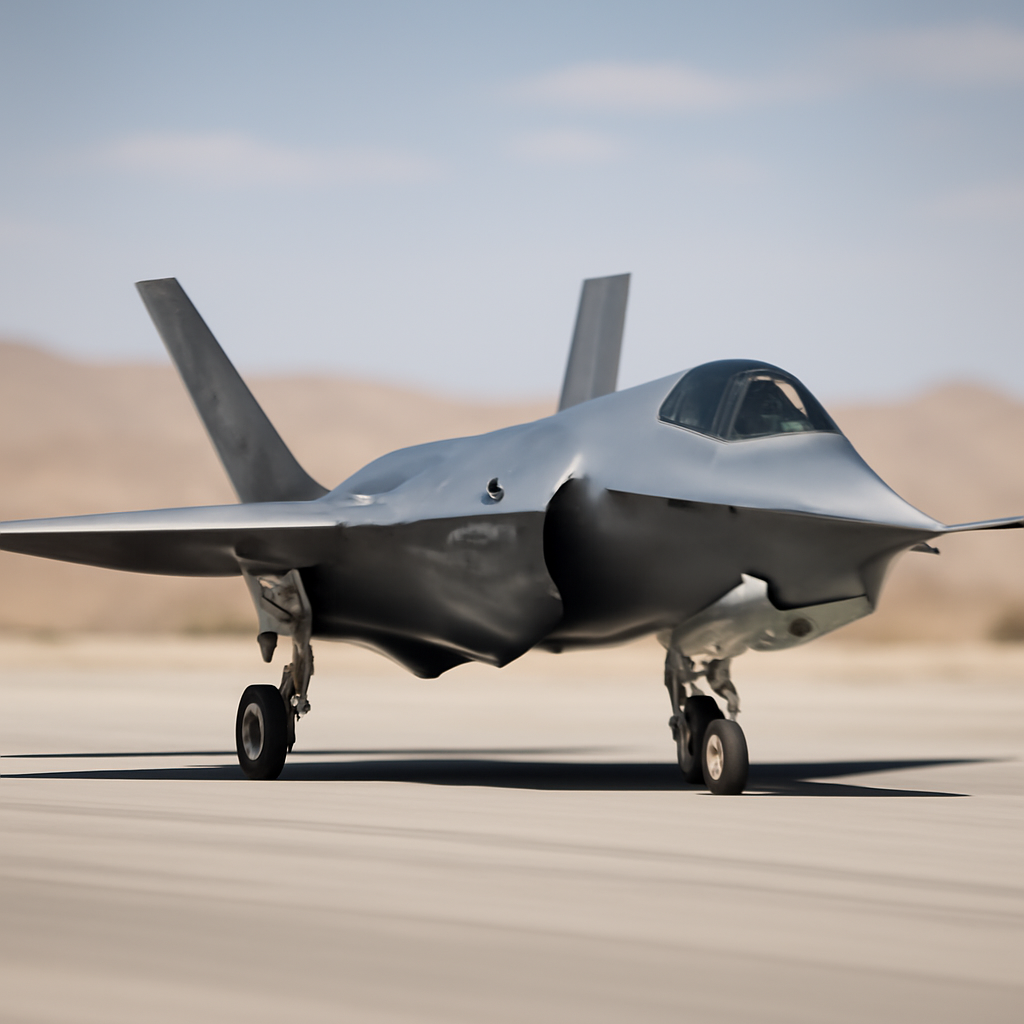
Wilsbach proposed that multirole fighters such as the F-35 Lightning II and upgraded F-15 Eagles could assume the A-10’s combat search and rescue support role. But that assertion met immediate skepticism from outside analysts and some lawmakers. Dan Grazier, a senior fellow at the Stimson Center, said he is "highly doubtful that neither the F-35 or the F-15 will ever be able to match the A-10's capabilities" and added that Wilsbach "admitted that the F-35, even though it was sold as a replacement for the A-10, still isn't a viable replacement."
The debate draws on the aircrafts' histories laid out in public records cited by advocates and critics alike: an internal report obtained by the Project on Government Oversight raised early concerns about whether the F-35 could effectively replace the A-10, and during the F-15’s development the phrase "not a pound for air-to-ground" was used to describe its pivot away from bombing missions. Proponents point to both platforms' later upgrades and their branding as multirole fighters capable of close-air support, intelligence-surveillance-reconnaissance, and air-to-air operations.
Training, budget, and operational trade-offs
Lawmakers pressed Wilsbach on how the Air Force will preserve the specialized skills that A-10 pilots bring to combat search and rescue. Rep. Austin Scott, R-Ga., asked whether F-35 and other pilots will be "specifically trained for combat search and rescue." Wilsbach's response was direct: "We'll have to... It's our mission."
To fund additional training, Wilsbach noted that the fiscal year 2027 budget requests $10 billion in flying hours, which he said would cover expanded combat search and rescue training for the service's pilots. Rep. Sarah Elfreth, D-Md., also raised similar concerns about maintaining readiness as the aircraft transition unfolds.
Operational trade-offs were part of the congressional critique. Rep. Derrick Van Orden, R-Wis., warned that the F-35's "price tag, loiter time, and flight hour costs are all significantly higher than the A-10," and, drawing on his combat experience, said "loiter time matters" for those on the ground. He argued that the service cannot have "a gap in close air support" that would leave deployed forces without the ability to "kill the enemy that is in that hallway, vice dropping something from an F-35."
How lawmakers, pilots, and defense analysts are responding
Lawmakers are pressing for budgetary and training assurances that the A-10’s unique mission sets will not be lost during the transition; the FY2027 flying-hours request was cited as the mechanism to provide that training. Pilots trained on the A-10 will be central to any handover, since Rep. Austin Scott emphasized that "A-10 pilots are specifically trained for combat search and rescue." Defense analysts such as Dan Grazier are publicly skeptical that upgraded multirole fighters can fully match the A-10's capabilities, framing the transition as an unresolved strategic risk.
For now, the Air Force has synchronized three elements: a delayed retirement through 2030, public commitments to cross-platform training, and a fiscal-year request that leadership says will fund the necessary flight hours. Whether upgraded F-35s and F-15s can replicate the A-10’s blend of loiter time, survivability, and pilot specialization — and how quickly aircrews can be retrained without a capability gap — remains the central question left on the table.