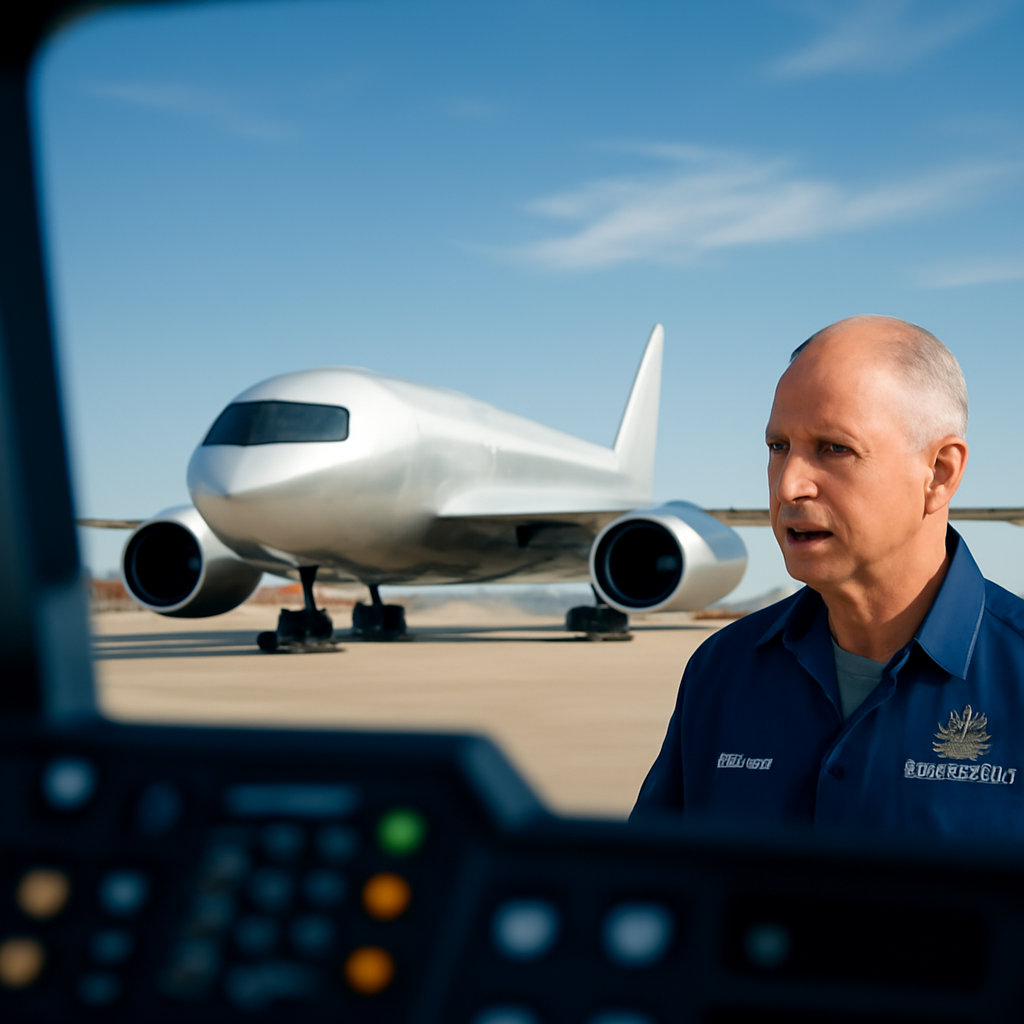
"I do not believe that it has to be manned, a future air-refueling solution," Lt. Gen. Daniel Tulley told reporters, laying out a question that is shifting the Air Force's planning for its next-generation tanker.
Lt. Gen. Daniel Tulley and Air Mobility Command's strategic questions
Speaking at the Air, Space, & Cyber 2026 conference in National Harbor, Md., Lt. Gen. Daniel Tulley, who leads Air Mobility Command, framed the service's search for a successor to today's tankers as less about a single aircraft and more about connectivity, self-defense and manning models. "Thinking beyond the current KC-46 buy and the program extension. Whatever that next tanker looks like—our advanced tanker system—it's got to be connected. It's got to be able to defend itself," Tulley said, then asked whether that future platform "need be manned," whether it could be "optionally manned, or could it be autonomous, or is there a family of solutions maybe that would answer that question?"
Boeing KC-46 Pegasus, recent expenditures, and the FY2027 shift
The Air Force is continuing procurement of the Boeing KC-46 Pegasus while also sketching longer-term options. According to Tulley, the service spent $12 million this year to explore buying a new tanker. In the 2027 budget request, however, the Air Force zeroed out funding to continue those specific explorations and instead requested $13 million for what the budget labels "advanced tanker systems." That reallocation signals a pause in the exploratory buy and an attempt to fund broader systems-level work on future tankers.

Audit-ready is a season. It shouldn't be.
Evidence in spreadsheets, controls drifting between audits, frameworks multiplying on flat headcount. Nubivance runs continuous compliance on Rapid7 Cyber GRC - SOC 2, HIPAA, ISO 27001, PCI, CMMC.
End the scrambleNavy MQ-25 progress as a catalyzing development
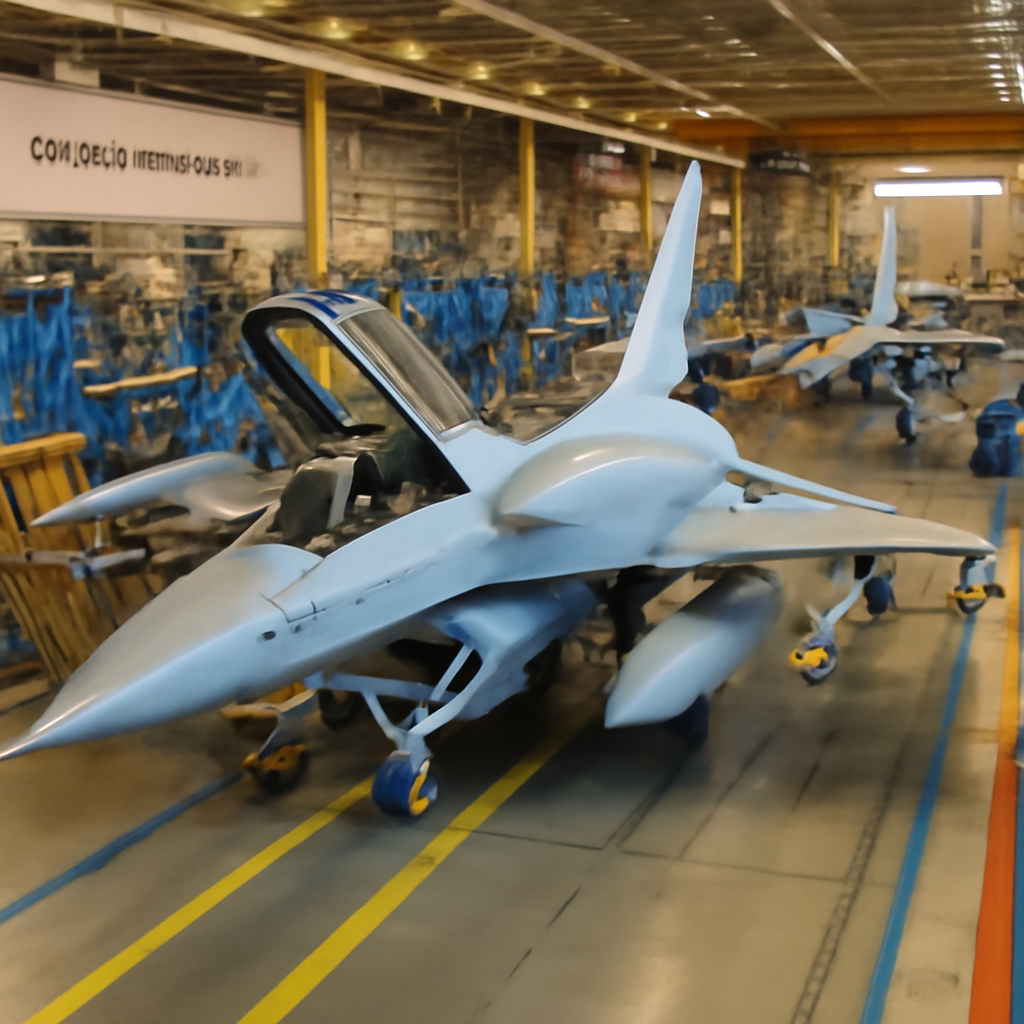
Tulley repeatedly pointed to the Navy's work on an unmanned refueling aircraft as a practical demonstration that alternative manning models are attainable. The Navy announced that the Boeing MQ-25 Stingray—first flown earlier this year—has received approval to enter low-rate production. The service also ordered three more aircraft, bringing its total to 14. Tulley said that development "suggests that his own service might eventually not need manned tankers," and used the MQ-25 milestone as a concrete benchmark while asking how the Air Force would bring an unmanned or optionally manned solution "to bear in scope, scale, and range."
Technical constraints: range, fuel capacity, and the limits of current autonomy
Tulley underscored that a tanker suitable for Air Force missions would be a very large aircraft with substantial fuel capacity and long endurance. The Air Force's KC-46, Tulley noted, "can fly nearly 7,400 miles and carry more than a thousand tons of fuel," while the Navy's MQ-25 "can fly about 500 miles and carry up to 7.5 tons of fuel." Those differences illustrate why an unmanned tanker for the Air Force would be a different technical challenge than the MQ-25.
On the question of autonomy, Tulley conceded that "we're not yet to where we're employing fully autonomous large aircraft," while observing that many large, modern aircraft have autopilot capabilities that can fly programmed routes and perform automatic landings. He flagged the remaining difficulty: integrating such autonomy into a system that controls and taxis the aircraft as part of a broader operational enterprise, and managing exceptional situations that currently require human judgment.
Merlin Labs' C-130J effort and the certification hurdle
Matthew George, CEO of Merlin Labs, described progress on autonomy for large airframes and positioned his company as an active partner in the Air Force's progress toward optionally manned or unmanned tankers. "We're the furthest along in the world on making that real—in our opinion," George said, adding that Merlin Labs plans to implement autonomy on the C-130J, which he characterized as "the same general size class" as the Boeing KC-135 Stratotanker.
George stressed two linked realities: the technological advances and the non-technical limit represented by certification. "None of this matters unless it's certified and safe. So for us, getting certification done is important, and that's what we're working really closely with the Air Force on this year," he said. He also described an operational approach that starts with autonomy augmenting human crews and then scales toward full autonomy when the systems and certification are ready. Merlin Labs said its technology completed a critical design review, but the company offered no date for when an autonomy-led flight would occur.
What this means for technologists, policymakers, and procurement leaders
- Technologists and safety teams: Expect priorities on handling "edge cases"—emergencies, weather rerouting and other scenarios where human judgment is currently decisive—and on rigorous certification pathways that demonstrate safety for large, long-endurance aircraft.
- Policymakers and regulators: Will be asked to define certification and safety standards for autonomy on very large aircraft; George and Tulley both emphasized that certification is a gating factor for operational use.
- Procurement leaders and Air Mobility Command planners: Must weigh near-term buys of KC-46 Pegasus aircraft against funding for "advanced tanker systems" and the possible future of optionally manned or unmanned platforms, as reflected in the $12 million spent on exploration and the $13 million FY2027 request for advanced systems.
The record in September 2026 contains concrete milestones—the MQ-25's entry into low-rate production, Merlin Labs' critical design review, and the Air Force's reallocated $13 million request—that make autonomy for large tankers more tangible than a purely speculative future. Yet the account from Tulley and the comments from Merlin Labs leave two specific questions at the center of any near-term decision: when will autonomy for large, long-endurance aircraft demonstrably handle the edge cases Tulley and George flagged, and how quickly will certification regimes be established to permit operational use? Those are the benchmarks the Air Force will watch as it decides whether future tankers must be manned or can become unmanned assets at scale.
Original story: Air Force contemplates unmanned tankers — Defense One