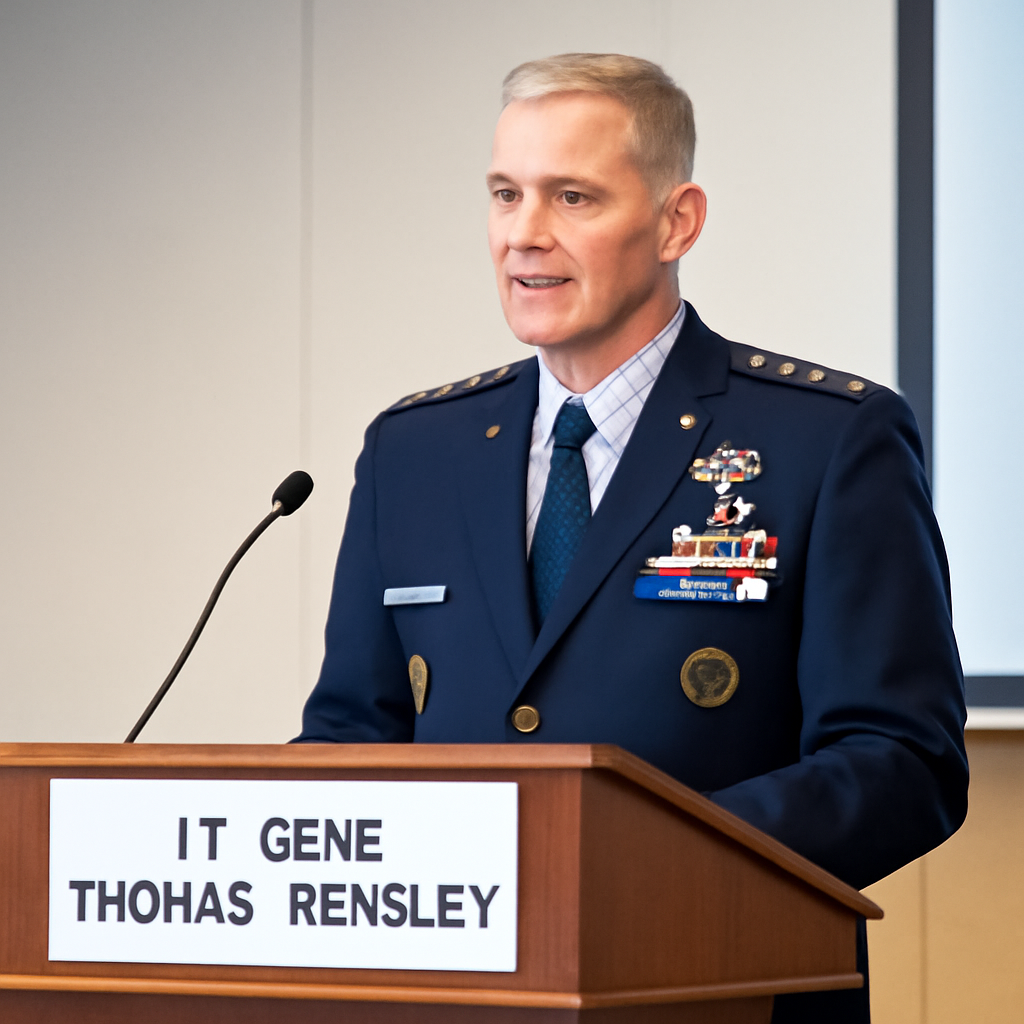
"At the end of the day, autonomous, agentic AI orchestrated attacks are possible today," Lt. Gen. Thomas Hensley said, framing the shift that the Air Force’s cyber arm is preparing to meet.
Lt. Gen. Thomas Hensley sets the context
Lt. Gen. Thomas Hensley, commander of 16th Air Force/Air Forces Cyber, delivered the assessment during a presentation at the annual Department of the Air Force Information Technology and Cyberpower conference in Montgomery, Ala., on Wednesday. He described frontier AI models as a recent development and said they have created an inflection point for defensive planning. "Last year was anybody talking about frontier AI models? ... Was anybody really talking about this kind of capability? No," Hensley said, arguing that early adopters are "first movers" and others can be "fast followers" who "glean off of the work that the first movers have done."
Defensive cyber operations campaign plan follows an offensive blueprint
Hensley said the defensive campaign plan follows the development of an offensive cyber operations campaign plan produced last year, though he did not describe that earlier plan. The defensive effort is organized around four named lines of effort intended to harden networks and limit what adversaries — including those using agentic AI — can accomplish if they gain access.

The cyber insurance questionnaire just landed. Now what?
SOC 2, HIPAA, insurance renewals - someone has to own security strategy. Nubivance provides fractional CISO leadership without the full-time salary.
Get a security leadHarden and blunt attacks: persistent monitoring and active hunting
The first line of effort centers on what Hensley called the "bread and butter" — hardening systems and "blunt[ing] the attack." That includes persistent monitoring by airmen in security operations centers and network operations centers, rapid response by cyber protection teams, and proactive threat hunting with specialized equipment. The emphasis is operational: keep watch across the network, respond to incidents, and find adversaries before they can achieve objectives.
Deliberate defense for nuclear command, logistics and critical infrastructure
The second line, labeled "deliberate defense," prioritizes specific networks: nuclear command, control and communications networks, global logistics, and critical infrastructure. Hensley singled out those capabilities as priority targets for focused defensive measures, indicating that the campaign plan directs resources to ensure those systems receive elevated protection and monitoring.
Proactive cost imposition: message, confuse, divert, and counterattack
The third line is "proactive cost imposition." Hensley rejected a purely passive defensive posture: "We're not just going to sit here and let the adversaries attack us without imposing some sort of cost against them," he said. He listed several levers — messaging to adversaries, deception to confuse them, diversion to waste their time, and options to "attack them for attacking us" — as part of an approach intended to shape adversary behavior and raise the effort required to succeed against U.S. networks.
Defensive architecture design: zero trust, ICAM, MFA and microsegmentation
The fourth line is "defensive architecture design," an enterprise-level effort driven by the chief information officer to implement concepts and architectures for stronger defense. Hensley named zero trust, Identity, Credential, and Access Management (ICAM), multi-factor authentication (MFA) and microsegmentation as concrete examples. The stated goal is to "properly verify users and, even if an adversary gets into the network, to prevent them from getting to where they want to go or accessing the information they seek — even if it’s an AI agent."
What this means for security teams, policymakers, and adversaries
- Security teams: The plan signals increased emphasis on continuous monitoring, threat hunting, and rapid incident response across DoD networks, with prioritized defenses for nuclear C3, logistics, and critical infrastructure.
- Policymakers and IT leadership: The chief information officer-driven architectural changes — zero trust, ICAM, MFA, microsegmentation — will require policy, procurement and implementation decisions to align enterprise systems with the campaign plan's objectives.
- Adversaries: Hensley’s emphasis on "proactive cost imposition" indicates an intent to change the calculus for attackers through deception, diversion and countermeasures that aim to impose time and resource costs on exploit attempts, including those driven by frontier AI capabilities.
The Air Force’s defensive campaign plan is, in Hensley’s words, an attempt to harden network perimeters and interiors at a time when new AI-enabled tools are emerging. Whether that hardening, combined with measures to confuse and counterattack adversaries, will keep pace with developments in frontier AI is an open operational question — one Hensley framed around the tension between first movers and fast followers.