"This contract provides for the continuing enhancement of propulsion technology across all areas and lifecycle phases of propulsion development," the contract award reads.
The Advanced Propulsion Acquisition Contract: $16.1 billion potential over 15 years
The Air Force has issued a group contract vehicle described as potentially worth $16.1 billion over the next 15 years for “advanced propulsion enterprise work.” The opportunity was framed earlier this year in industry solicitations as the "Advanced Propulsion Acquisition Contract," and the formal award establishes an expected work period that could stretch to November 2041.
Fifty‑eight awardees, $1,000 each — the start of a long runway
The award was issued to a total of 58 vendors. Each of those firms has been awarded $1,000 at contract outset. The notice describes the contractors as ranging “from startups to established engine primes,” and says they were each competitively picked. The structure leaves the awardees on the contract vehicle but delivers only a modest initial payment.

The cyber insurance questionnaire just landed. Now what?
SOC 2, HIPAA, insurance renewals - someone has to own security strategy. Nubivance provides fractional CISO leadership without the full-time salary.
Get a security leadContract structure and funding: IDIQ and uncertainty
The vehicle is an indefinite delivery, indefinite quantity (IDIQ) contract, meaning the Air Force is not necessarily obligated to spend the full $16.1 billion. Earlier notices published in March made two points that remain central to understanding the award. One March notice stated the service had not yet secured funding for the initiative and would not issue contracts until doing so, as reported by Air & Space Forces Magazine. Another March notice described the initiative's intent: to “enable[] a rapid response applicable to all areas and lifecycle phases of propulsion development, including technology maturation, concept development, concept demonstrations, integration, procurement, production, fielding, operations, and sustainment to quickly meet current and future propulsion system requirements, while maximizing the use of the digital environment.”
Air Force outreach and follow-up: no immediate response
The Air Force did not immediately respond to a request for comment seeking further clarity on the contract’s funding and expected scope of work. The award notice itself sets out the program-level language about lifecycle phases and digital environment use, but it does not, in this reporting, attach specific task orders, dollar amounts beyond the initial $1,000 awards, or a timetable for funding allocations beyond the potential 15‑year span.
How startups, engine primes, and procurement leaders are situated
- Startups and engine primes: Both categories are named among the 58 awardees. Their inclusion places them on an IDIQ vehicle for propulsion work and confers a competitive position to receive task orders if and when the Air Force allocates funding under the contract.
- Procurement leaders in the Air Force: The solicitation history shows a program intended to enable rapid responses across development, production, and sustainment phases and to leverage the digital environment. March notices make clear that funding had not been secured at that time, placing emphasis on decisions to follow about budgetary commitments and task‑order issuance.
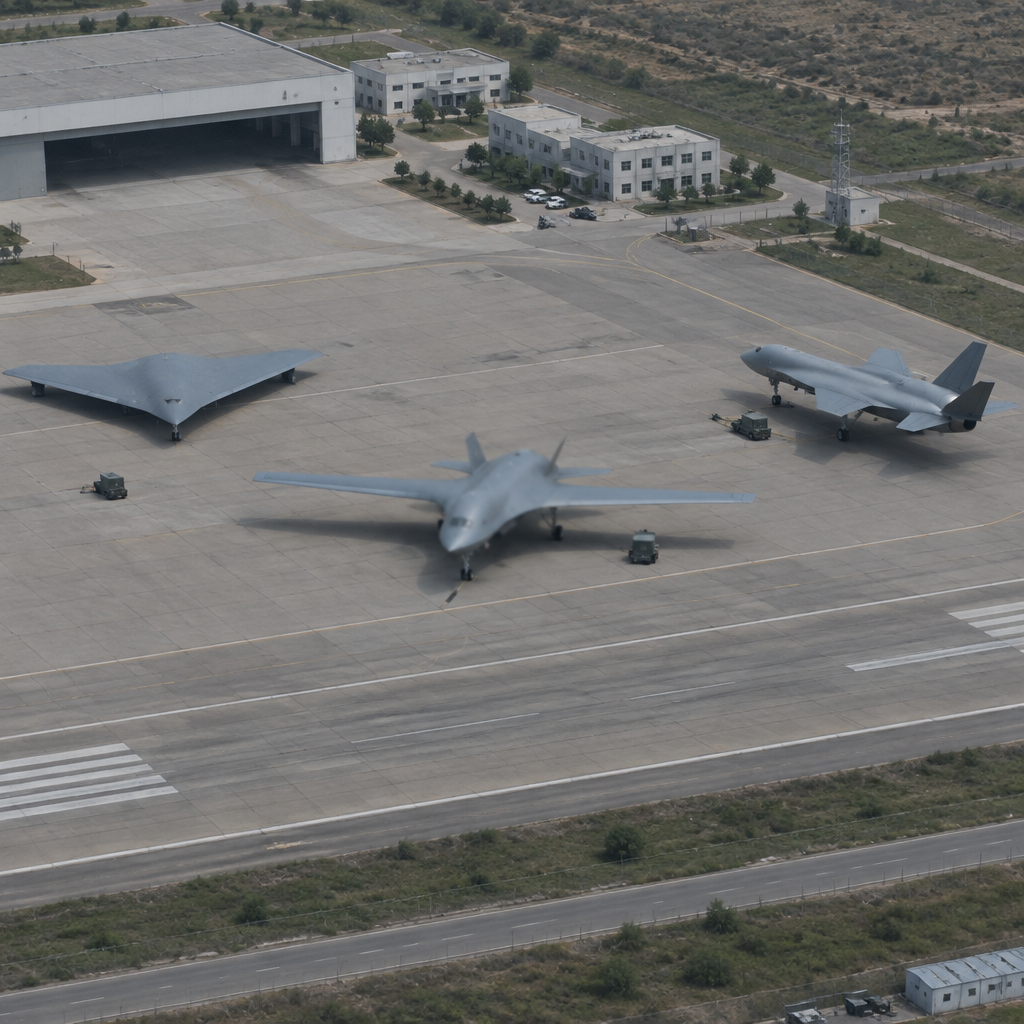
- Program offices and platform planners: The award arrives as the service seeks new propulsion options for a range of platforms—cited specifically in the notice as including drone wingmen, large mobility aircraft, and an advanced engine that could power future platforms like the F‑47 stealth fighter—creating a potential acquisition pathway for propulsion requirements that span sizes and mission sets.
The Air Force's award creates a broad supplier pool with an explicit 15‑year horizon and program language that spans all lifecycle phases and a digital emphasis. But the concrete financial commitments beyond the symbolic $1,000 initial awards remain governed by the IDIQ structure and whatever funding the service secures going forward. The principal next steps implicit in the record are task‑order competitions and funding decisions that will determine how much of the $16.1 billion envelope, if any, is actually expended over the period that could extend to November 2041.